Bastet: The Eye of Ra
Bastet
The Eye of Ra
A perfume for the goddess named after a jar of perfume: lioness of the sun, guardian of the house, and the most beloved cat in the history of the world.
- Perfumer
- Jake Smoak
- Concentration
- Extrait
- Character
- Animalic Floral Oriental
- Year
- 2025
Bastet was composed to smell like a temple at the moment the sun enters it. Bright at the door, cool and dreaming at the water, and at the innermost sanctuary, something warm and alive and unmistakably feline, waiting on a throne of ancient wood.
The figure at the center of it is Bastet, whose name is written with the hieroglyph for a sealed jar of perfume. Most people know her as the cat goddess, and that is true, but it is the last chapter of a much longer story. For two thousand years before she was ever a cat, she was a lioness, and she was the sun's own eye turned on its enemies. This is the story of how a weapon became a guardian, and why the Egyptians loved her more than almost any other god they had.
A word of respect before I begin. The temples of Bastet fell silent long ago, and the religion that built them is gone from the world in its original form. But there are people today who have taken up her worship again, and the Egyptians who honored her for three thousand years were not telling a story. They were praying. I have tried to write about her with that in mind.
She was a weapon first, and a guardian after.
My Vision Behind the Perfume
I wanted to build a perfume the way the Egyptians built a temple: as a path from the outer light to the inner dark, with the god waiting at the end of it.
So the structure follows the architecture. The opening is the forecourt at dawn, all citrus and white flower and the first rays of Ra. The heart is the sacred lake, cool water and blue lotus and the reeds along the bank. And the base is the sanctuary itself, a throne of fifty-year-old sandalwood in a dark room, with amber and orris and smoke, and at the very center, the animal. The civet is Bastet herself. Everything else in the bottle is the temple built around her.
Then I learned what her name meant, and understood that I had been building a perfume for the goddess of perfume all along.
She of the Ointment Jar
Her name is Bastet, or in the older form simply Bast, and it is written in hieroglyphs with the sign for a bꜣs, a sealed alabaster jar of the kind Egyptians filled with perfume and protective ointment. The most widely accepted reading of her name today is "She of the Ointment Jar." The Greek word alabaster may even descend from her, by way of the jars that carried her name.
This was not a small thing in Egypt. Perfume was sacred there. Priests burned kyphi in the temples at nightfall, a compound of resins and wine and honey and spice that took weeks to prepare. The wealthy wore cones of scented fat that melted through the evening. Ointments protected the skin against the sun and the dead against decay, and the jars that held them were among the most precious objects a person owned. Tutankhamun was buried with an alabaster jar whose lid was carved as a lioness, and the lioness was Bastet.
In some traditions her son is Nefertem, the god of perfume itself, who rose from the blue lotus at the first dawn. In others it is Maahes, the lion. Either way, she stands at the head of a family that smells of flowers and sacred oil.
That is what makes her the right goddess for this house. Every other fragrance in the hall borrows a figure from myth. Bastet is a figure from myth who was, in her own right, a goddess of what we do.
The Eye of Ra
The Lioness Before the CatThe oldest traces of her are almost five thousand years old. On stone vessels found in the galleries beneath the Step Pyramid at Saqqara, from the Second Dynasty around 2890 BCE, she appears already, and she appears as a lioness. For the first two thousand years of her worship she was never shown any other way.
To understand what she was, you have to understand the Eye of Ra. The sun god had a power he could send out from himself, and it took the form of a goddess. When Ra's enemies rose against him, or when humanity turned to rebellion, he sent his Eye, and the Eye came as a lioness and killed until the fields ran red. The Eye was his daughter, his weapon, and his fury. Several goddesses carried the title. Bastet was one of them.
Her sister in this was Sekhmet, the lioness whose name means "the powerful one," and who was so terrible in her rampage that Ra himself had to trick her into stopping. He had the fields flooded with beer dyed red, and she drank it believing it was blood, and slept, and the world survived. Egyptians came to see the two lionesses as a pair. Sekhmet was the Eye raging. Bastet was the Eye appeased, the same fire brought home and made gentle.
That is why the offerings to her were wine and red beer. You do not bring wine to a house cat. You bring it to a lioness you would very much like to keep calm.
The cat came late. From about the tenth century BCE, when a line of kings made her city of Bubastis the capital of Egypt, her images began to soften. The lioness became a cat, or a woman with a cat's head, holding a sistrum and surrounded by kittens. The protector of the king became the protector of the household, of women in childbirth, of children, of the home and everything in it. She kept the Eye's fire, and she kept its title. She simply learned to sit by the hearth with it.
That transformation is the whole meaning of her, and it is the thing most people have never heard. The gentlest goddess in Egypt was made of the same fire as the fiercest.
The Cat Beneath the Tree
There is a picture the Egyptians painted again and again, in tombs and on papyrus, for more than a thousand years. A cat stands beneath a tree. In one paw it holds a knife. Beneath the knife, cut in half, lies an enormous serpent.
The serpent is Apep, the embodiment of chaos, who lives in the darkness beneath the world. Every night, as the sun travels through the underworld, Apep rises to swallow it, and every night he must be defeated or the sun will never rise again. The cat is the Great Cat of Heliopolis, and the Egyptians were clear about who it was: it was Ra himself, in the form of a cat, and the cat was Bastet's. The Book of the Dead says it outright. The tree is the sacred ished tree, the tree of life, and the cat kills the serpent at its foot at the moment of dawn.
So when the sun rose over Egypt each morning, it rose because a cat had won a fight in the dark. That is the scale of what she was. The house cat curled on the threshold was the same animal that kept the universe turning.
Bubastis
The House of BastetHer city stood in the eastern Delta, and its Egyptian name was Per-Bast, the House of Bastet. The Greeks heard it as Bubastis. Its ruins lie today beside the town of Zagazig, and the temple that stood there was, in the opinion of the one Greek who saw it, the most beautiful in all of Egypt.
That Greek was Herodotus, who came to Egypt around 440 BCE and wrote down what he found. The temple, he says, sat on an island ringed by two canals of Nile water, with a grove of tall trees within its walls and the shrine of the goddess at the center. The city had been raised on higher ground over the centuries, so that from anywhere in Bubastis you could look down into the sanctuary of the goddess.
And then he describes the festival. Every year some seven hundred thousand people, by his count, came down the Nile by boat to Bubastis. The women played castanets and sistrums, the men played flutes, and everyone sang and clapped. As the boats passed each town along the river they pulled in close to the bank, and the women shouted and mocked the townswomen on the shore, and danced, and some of them stood up and lifted their skirts. When they reached the city they made their sacrifices, and more wine was drunk at that festival, Herodotus says, than in all the rest of the year put together.
Egyptians called it sacred drunkenness. It was the same logic as the red beer. You honor the Eye of Ra with wine, and joy, and noise, and you keep her happy, because you have seen what happens when she is not.
Her cats were sacred. When a house cat died in Egypt, the household shaved their eyebrows in mourning, and the body was taken to be embalmed. More than three hundred thousand cat mummies have been found at Bubastis alone. A Roman visitor named Diodorus recorded that a soldier who killed a cat by accident was torn apart by a mob before the king's officials could intervene, in an age when Egypt could not afford to offend Rome. And there is a story, told by a later Greek writer, that when the Persians invaded Egypt in 525 BCE they drove cats before their army and painted cats on their shields, and the Egyptian soldiers would not fight.
The Moon Mistake
You will read, in a hundred places, that Bastet is a goddess of the moon. She is not, and it is worth knowing where the error came from.
The Greeks, when they arrived in Egypt, matched every Egyptian god to one of their own. Bastet, guardian of women and children, they matched to Artemis. Artemis carried the moon. So Greek and Roman writers handed the moon to Bastet, and the idea has been repeated ever since. The Egyptians would have found it strange. Bastet's own titles call her the Lady of the East, where the sun rises. She is the daughter of Ra. She is his Eye. She is the cat who kills the serpent at dawn so that the sun can come up.
The moon was never hers. She belongs to the sun, and this perfume opens with it.
Bergamot and Egyptian Orange Flower
The Chariot of RaBastet opens at the temple gate at dawn.
Bergamot strikes first, the peel oil of a small bitter citrus grown along one coast of Calabria, cold-pressed and bright and clean, struck like a temple bell. It is the first ray of Ra coming down the Nile in beaten gold.
Beside it, orange flower. This is the blossom of the bitter orange tree, and Egypt is one of the great producers of it in the world; the groves along the Nile give up their flowers by hand for a few weeks each spring, and it takes close to a ton of them to make a kilogram of absolute. The scent is white and narcotic and faintly green, the breath of a garden waking to the sun. A regal beginning. Sharp, hypnotic, and majestic.
Blue Lotus
The Flower of VisionsThen the river pulls you under.
Blue lotus is Nymphaea caerulea, the sacred water lily of the Nile, and it is the single most Egyptian material in this bottle. It opens to the sun at dawn and closes and sinks beneath the water at dusk, and the Egyptians, who watched it do this every day, made it the flower of rebirth. The sun itself was born from a blue lotus at the beginning of the world, and so was Nefertem, the god of perfume. It is painted in tombs, carved on columns, and pressed to the noses of the dead.
The priests steeped it in wine and drank it for visions. The flower carries a mild and dreaming euphoria, and its scent is cool, sweet, faintly green, with a soft powdery depth beneath. The true absolute is rare, and it gives up its scent slowly and reluctantly, which is fitting for a flower that spends half its life under the water.
In the perfume it is the sacred lake within the temple walls, cool and still and holy, the water Herodotus saw ringing her shrine.
Ylang-Ylang, Petitgrain, Coffee Blossom
The Waters of the NileThree notes keep the heart moving like a river.
Ylang-ylang is the flower of a tropical tree, distilled in the Comoros and Madagascar, and its scent is golden and creamy and almost overwhelming at full strength. The grade used here is the finest fraction, the first and purest part of the distillation, stripped of everything heavy until only the silken center remains. It blooms above the lotus like sun on the water.
Petitgrain is distilled from the leaves and twigs of the same bitter orange tree that gave the opening its flower. Green, sharp, and woody, it threads through the heart like the reeds along the bank.
And coffee blossom, the rarest of the three. Coffee trees flower for only a few days a year, in a sudden white blaze that smells of jasmine and honey, and the absolute drawn from those flowers is one of the least known materials on any perfumer's bench. In the heart it drifts past like a dark and honeyed pulse, the first hint of the rites to come.
Fifty-Year Sandalwood
The ThroneNow the goddess reveals herself, and she sits on the most storied wood on earth.
True sandalwood is Santalum album, the species that made the forests of Mysore in southern India legendary and that Indian temples have burned for three thousand years. It is a slow tree that steals its nourishment from the roots of its neighbors, and the precious oil forms only in the heartwood, only with age. Young plantation wood smells thin. A tree left to stand for half a century smells of cream and warm skin and something very close to holy. Mysore's forests are guarded now and nearly exhausted, and old Santalum album from anywhere is among the rarest woods a perfumer can buy.
A word of provenance, because this house does not blur these things. The sandalwood in Bastet is Santalum album, the true species, extracted from logs estimated at fifty years of age and grown in Indonesia rather than in Mysore itself. It is a select extract with a santalol content of seventy percent, thick and golden-amber, and it smells the way old sandalwood is supposed to smell: buttery, creamy, faintly of rice pudding and nutmeg on the opening, then clean musk and warm skin and a long, resinous, animalic glow. It is the same wood the temples of India burn. It simply grew a little further east.
In the perfume it is the throne. Everything in the sanctuary rests on it.
Orris
The Costliest BreathBeside the throne, a hush.
Orris is the rhizome of the iris, and it is among the most expensive raw materials in all of perfumery, for a reason that has nothing to do with the flower. The rhizomes are dug from the earth and then aged for three to five years before anything can be extracted from them, because the scent does not exist in the fresh root. It forms slowly, in storage, as the root dries. After all that waiting the yield is famously tiny, and what survives is a cool, powdery, violet-tinged softness like suede warmed by a hand.
The Egyptians did not have orris. I put it here because the sanctuary needed silence, and nothing in perfumery is quieter or more costly than this.
Alligator Wood
The Offering to SobekBastet's temple stood on an island, and the river that ringed it belonged to another god.
Sobek is the crocodile, lord of the Nile and of the marshes, feared and honored in equal measure. The Egyptians raised crocodiles in temple pools and hung them with gold, because a river god you have not appeased is a river that takes your children. Every temple that stood beside the water owed him something.
So there is an offering to him in this bottle. Alligator wood is distilled from the alligator juniper, a tree of the American Southwest named for its bark, which is cracked into square plates like the hide of the animal. Its oil is earthy, resinous, and raw, with the dry sharpness of a high desert and something dark and rooted underneath. It is the one material here that is not sweet, and that is the point. It is the mud of the riverbank and the old untamed forest beyond the temple wall.
The tree wears a crocodile's hide, near enough. It seemed the right thing to lay at Sobek's feet.
Egyptian Amber and Coffee Absolute
The Altar FireTwo things burn on the altar, and one of them I made myself.
The honest word first. The Egyptian amber in Bastet is an accord I composed, a blend built to smell of golden resin and sacred warmth, in the tradition of the amber perfumes that have long been sold under Egypt's name. There is no tree or animal that produces it. It is neither the fossil amber of the Baltic nor the ambergris of the sea, and I name it as my own work so that you never mistake it for either. It pools around the throne, golden and sacred, and it holds the sanctuary's warmth together.
Coffee absolute is the real thing, and a strange one. It is extracted from roasted beans, and it is far rarer on a perfumer's bench than the drink would suggest, a dark, bitter, smouldering material that behaves like incense. In the base it burns like ground beans laid on the altar fire, the pulse of the morning rites kept in her honor.
Civet
Her SecretAnd then, at the center of the sanctuary, the animal.
I will be plain about it, because this house is built on plain speech. The civet in Bastet is the real material. It is the paste of the African civet, a cat-like creature of the Ethiopian highlands, gathered from the animal's scent gland and tinctured by hand over long months until it opens. At full strength it is feral, fecal, and shocking. In dilution it transforms into one of the most beautiful things in perfumery: warm, radiant, faintly floral, with a narcotic creaminess that clings to skin like fur. No synthetic has ever fully copied it. The Egyptians would have known it, or something very like it, in the jars of their own temples.
The trade has a history that deserves to be named. For a long time civets were kept badly for this paste, and the Western perfume houses answered by walking away. The boycott did not help the animals. It drove the trade into the dark, left the farmers poorer and with less means to change anything, and gave the largest houses a quiet back door to keep using civet unseen. I chose instead to buy it openly, from a supplier who works directly with Ethiopian farmers toward better practice, on the belief that demand for an ethical product is the only lever that has ever changed a trade. You may weigh that as you like. What I will not do is hide the animal, or call it something it is not.
In the perfume it is Bastet herself. Fat, creamy, narcotic, the feline soul of the goddess wrapped in incense and fur and shadow. Everything else in the bottle is the temple. This is the one who lives in it.
The Labor of the Materials
Nearly everything in this bottle comes from something alive, and nearly all of it is scarce.
Orange flower and coffee blossom are gathered by hand in a window of days. Blue lotus gives up its absolute slowly and in small measure. Orris is dug from the ground and then waits years in storage before it is worth anything at all. The sandalwood stood for fifty years before it was cut, and no one alive today planted the tree that replaces it. Ylang-ylang is fractionated down to its finest grade and most of the distillate is set aside. The civet is tinctured for months, and its price on the open market can reach fifty dollars a gram.
None of this can be rushed. None of it can be faked without saying so. I was fortunate to have what I had for this batch, and I do not take it for granted.
- Top
- Bergamot · Egyptian orange flower
- Heart
- Blue lotus · Ylang-ylang · Petitgrain · Coffee blossom
- Base
- Fifty-year Santalum album sandalwood · Egyptian amber accord · Alligator wood · Orris · Coffee absolute · Civet
What Bastet Smells Like
Bastet opens bright and regal. Bergamot strikes like a bell and the orange flower unfolds behind it, white and narcotic, and for the first quarter hour you are standing in the forecourt with the sun coming over the wall. It is sharp and hypnotic at once, and it does not smell like anything modern.
Then the water. The blue lotus rises, cool and sweet and dreaming, the ylang-ylang blooms golden over it, the petitgrain keeps it green, and the coffee blossom drifts through with its honeyed pulse. Wearers have called this a vintage floral, and reached for Cleopatra to describe it, and that is the right instinct. It smells like a garden that has been sacred for a very long time.
The drydown is the sanctuary, and it is where the perfume earns its name. The sandalwood comes forward, creamy and old and resinous, the amber pools around it, the orris hushes everything, the coffee smoulders, and beneath all of it the civet wakes: warm, musky, animal, unmistakably feline. Dark and luxurious, one wearer wrote, and perfect for wearing during rites. It lasts for hours and it never shouts. It waits, the way a cat waits.
The Meaning of Bastet
She began as a weapon. The sun's own fury, sent out to kill. And over two thousand years, without ever giving up that fire, she became the thing the Egyptians loved most: the guardian at the door, the protector of children, the cat asleep on the threshold who was also, every single night, the one that kept the sun alive.
That is what I wanted this perfume to carry. Sunlight at the gate. Sacred water within. And at the innermost sanctuary, something warm and living and dangerous, that has decided, for now, to be gentle with you.
Her name means the jar of perfume. It seemed only right to fill one for her.
Sunlit. Sovereign. Wholly hers.
You are anointed now.
Bastetshe of the ointment jar
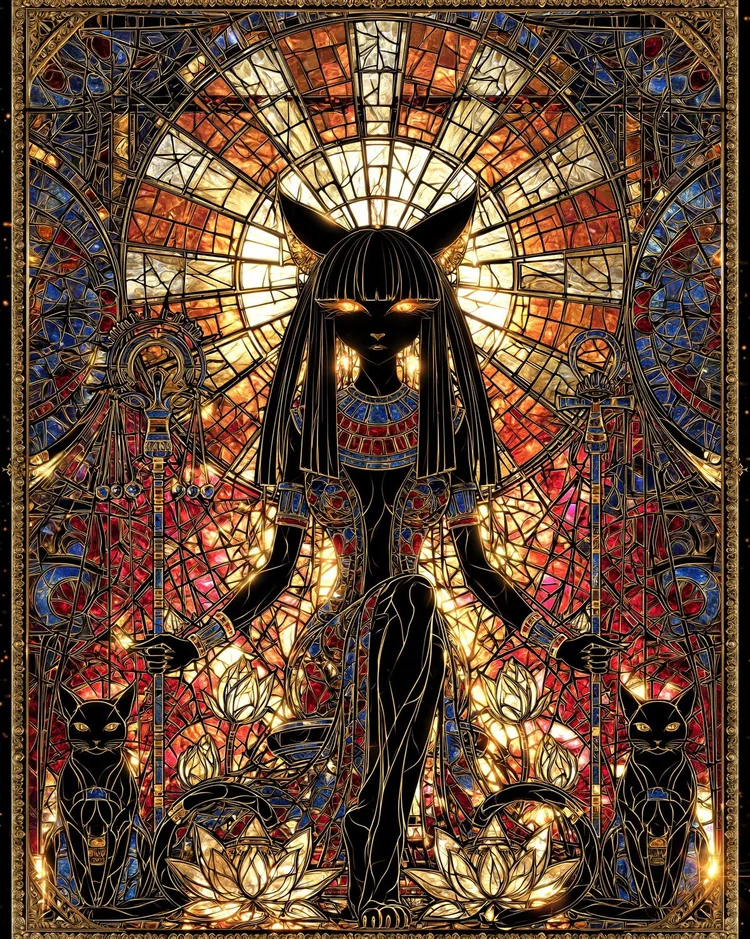
Daughter of Ra and one of his Eyes. A lioness for two thousand years, then a cat. Guardian of the home, of women and children, of joy and music and perfume. Her name is written with the sign of the sealed ointment jar, and her city was Bubastis.
Rathe sun
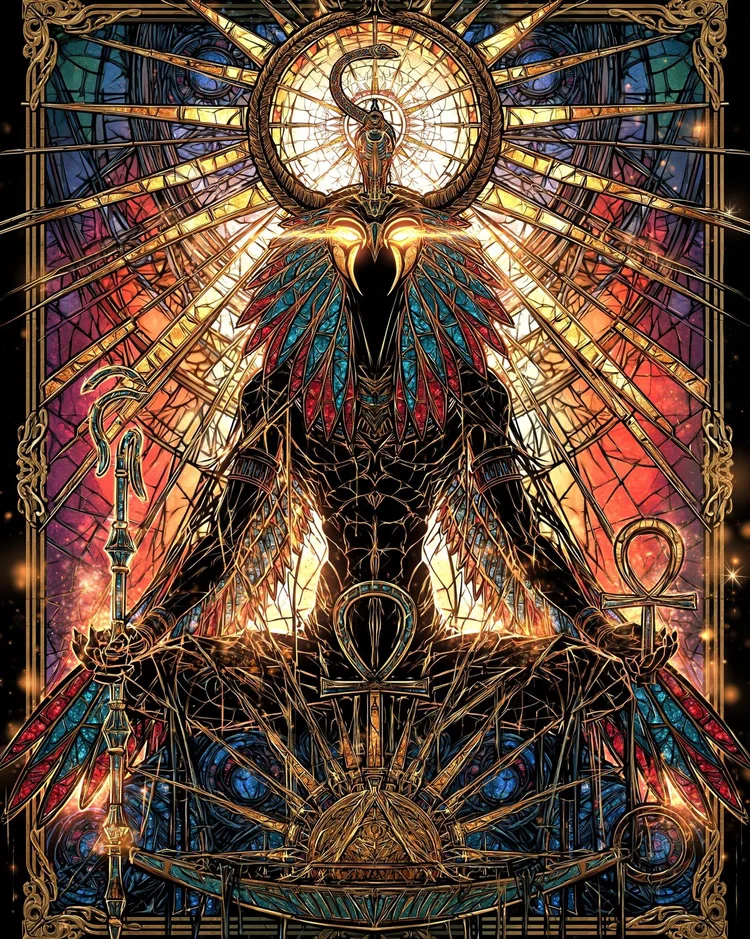
The sun god, king of the gods, who sails across the sky by day and through the underworld by night. Bastet is his daughter and his Eye. In the form of a cat, he kills the serpent Apep beneath the sacred tree each dawn.
The Eye of Rathe sun's fury
A power the sun god could send out from himself, which took the form of a goddess, usually a lioness, to destroy his enemies. Several goddesses held the title. Bastet is the Eye appeased; Sekhmet is the Eye raging.
Sekhmetthe powerful one
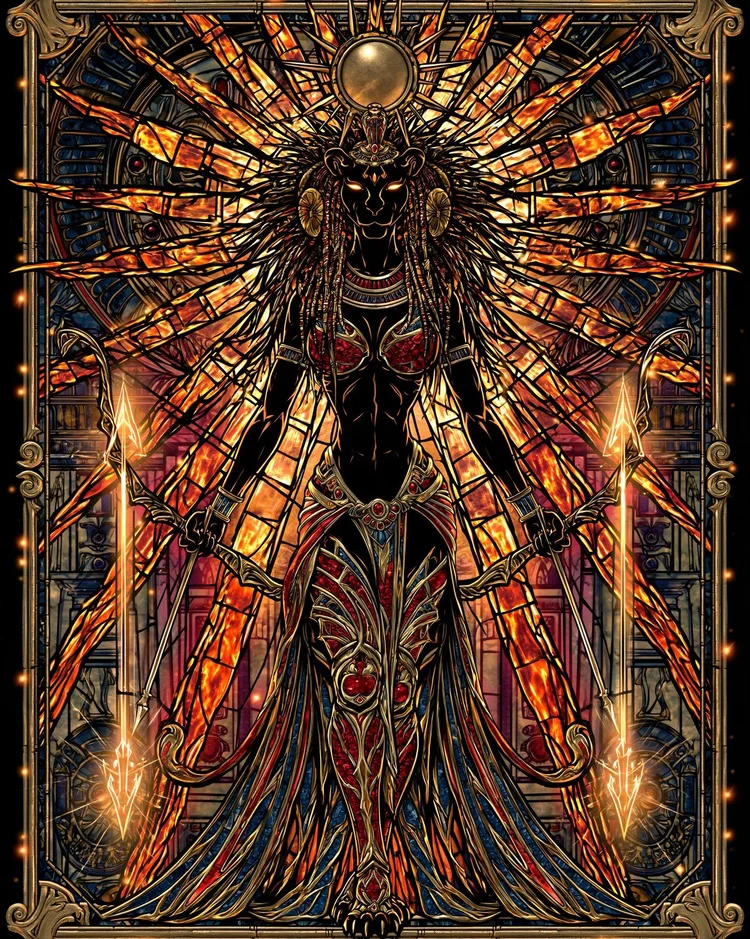
The lioness goddess of war and plague, the fiercest form of the Eye of Ra. Her rampage against humanity was stopped only when Ra flooded the fields with beer dyed red, which she drank as blood. Bastet is her gentle counterpart.
Apepthe serpent of chaos
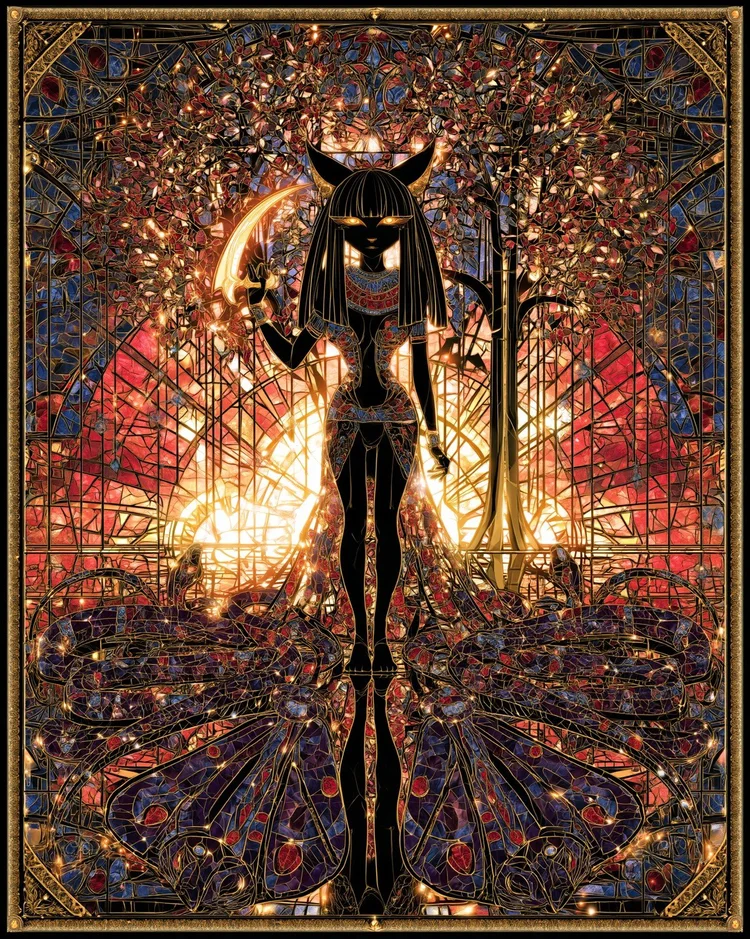
The vast serpent of the underworld who rises every night to swallow the sun. He must be defeated before every dawn, and in the oldest pictures the one who does it is a cat with a knife, beneath the tree of life.
Sobekthe crocodile
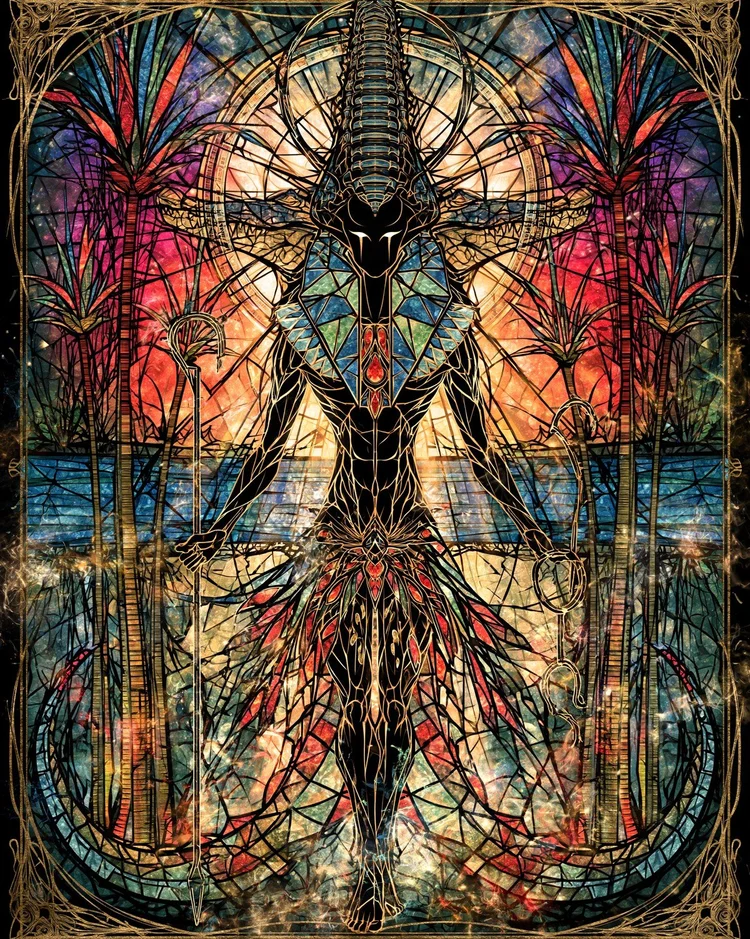
The crocodile god, lord of the Nile and its marshes, feared and honored in equal measure. Bastet's temple stood on an island in his river. The alligator wood in this perfume is an offering laid at his feet.
Nefertemthe god of perfume
The young god who rose from the blue lotus at the first dawn, god of perfume and sacred oils. In some traditions he is Bastet's son, which makes the goddess of the ointment jar the mother of perfume itself.
Maahesthe lion
A lion-headed god of war and protection, honored at Bubastis and at Leontopolis, and in most traditions the son of Bastet. He carries the lioness fire his mother set aside.
BubastisPer-Bast, the House of Bastet
Her city in the eastern Nile Delta, briefly the capital of Egypt, whose island temple Herodotus called the most beautiful in the land. Site of her great festival, and of more than three hundred thousand cat mummies.
Herodotusthe witness
The Greek historian who came to Egypt around 440 BCE and wrote down what he saw, including the temple at Bubastis and the festival of Bastet. Almost everything we know about the festival comes from him.