Provenance Materia Castoreum
MATERIA · THE BEAVER MOON COLLECTION
Castoreum
The beaver's own scent, from the Siberian river to the Canadian trapline
One winter day in the 2016 to 2017 trapping season, two trappers in snowsuits shut off their ATVs on Horseshoe Lake, in the Whiteshell country of eastern Manitoba, and walked into a hard wind toward a lodge of logs and mud. Al Kotowich, 61, drove a metal spear through the ice and chiselled out a rectangular hole. Ray Henschell, 77, scooped away the slush, and Kotowich drew up a chain with a trap and a waterlogged beaver at its end. By the end of the day three beavers rode strapped to the front of his machine1. Near the base of each tail lie two pear-shaped pouches. Dried and steeped in alcohol, their contents become castoreum, which Greek physicians prescribed and perfumers still prize23.


IWhat it smells like
Sweet castoreum hums with sensual animal warmth, kissed by raspberry. Over a long wear the house's castoreums move through four stages.
- Opening
Bright and fruity. Raspberry and a brandy sweetness ride over a sharp, inky edge.
- First hour
Warm, refined leather rises, with a thread of smoke and the tar of birch bark.
- Heart
Sweet raspberry and dark fruit settle into animal warmth, over a resinous breath of pine.
- Long drydown
Woody and balsamic. A skin-warm leather that stays close for a long time.
IIIn the house
Castoreum lives in the base of Beaver Moon, the house fragrance of the November moon, among its notes of earth, fur and the nocturnal dam. There sweet castoreum hums with sensual animal warmth, kissed by raspberry, beside the faint pepper of Siberian cedar, the cool smoky roots of Haitian vetiver and Kua myrrh. Above it lie black copal, Siberian rhododendron, Siberian and balsam fir and Thai oud from 2015, and blood orange, Madagascar elemi and neroli light the way in. The house layers four castoreums: tinctures of Siberian and Canadian castors, a tincture of its own made from fresh castors, and a refined Canadian absolute with a raspberry heart. The house takes its castoreum only from beaver already trapped. Castoreum also runs through Badlands.
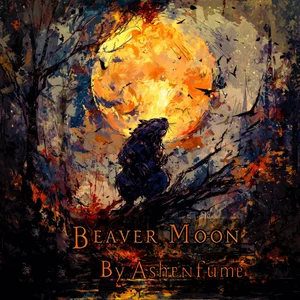 Found in
Beaver Moon
Sweet castoreum in the base, kissed by raspberry beneath the resins of the November moon.
View the fragrance

IIIThe pouch beneath the tail

Castoreum comes from a pocket. Male and female beavers alike carry a pair of castor sacs, set in hollows beneath the skin between the pelvis and the base of the tail6. Under the microscope the sac proves to be a pouch lined with layers of skin cells, and the American zoologists J. M. Walro and G. E. Svendsen called its old names, preputial gland and castor gland, misnomers6. It stores a blend of compounds that reach it in the urine, and that blend is castoreum15.
Beside it sits a second pair of pouches, the anal glands. These are true glands, and they make an oily secretion even before birth6. Trappers call them the oil sacks. They are reddish and about a third the size of the castors, which are cream coloured and textured16.
How the stored compounds turn into scent is still argued over. In 1978 Svendsen and J. D. Jollick cultured no bacteria from the castor sacs at all. Four years later Walro and Svendsen found a single kind of bacterium living in every sac they examined176.
In the hand
Fresh from the animal, a castor holds a yellowish mass with the feel of butter. Drying turns it dark brown, hard and resinous7. The dried pouch is pear shaped, about 8 to 10 centimetres long, and often still joined to its partner. An American dispensatory of 1854 compared the pair to two testicles joined by their cords, liver brown outside and paler and resinous within1819. Pharmacists in 1917 weighed Russian pouches at 75 to 240 grams and Canadian ones at 30 to 12020. In the Kirov region of Russia today, a raw pouch averages about 126 grams and a dried one ready for market about 7721.
Two beavers
Two beavers make castoreum. Carl Linnaeus named the Eurasian beaver, Castor fiber, in 1758, with Sweden as its home5. The German zoologist Heinrich Kuhl named the North American beaver, Castor canadensis, in 1820, from Hudson Strait4. The two look alike and build in the same way. Chromosome counts in the 1970s settled the split: 48 in the Eurasian beaver and 40 in the North American, two lines apart for at least eight million years22. A grown North American beaver is a metre or more long and typically weighs 16 to 30 kilograms, the largest rodent of its continent23.

Telling them apart
The beavers' own secretions tell the two species apart. In 1999 Frank Rosell and Lixing Sun gave twenty untrained volunteers the anal gland secretions of both species, along with each animal's sex and written descriptions of colour and texture. They named the species correctly every time24. Rosell and Sun went on to print a colour chart of 55 secretions, laid out like a printer's swatch book22.
The castoreum differs too. By gas chromatography it varies about 13 percent between males and females of one species and 34 percent between the two species25. Perfumers have long known the two as Canadian and Siberian castoreum.
IVSignals on the riverbank
The beaver shapes its own country. An adult cuts about a tonne of wood a year, and in Alberta's Beaver Hills, wetlands with active colonies hold nine times as much open water as wetlands without14. One run of beaver ponds in Great Britain stored about 100 tonnes of sediment, 16 tonnes of carbon and a tonne of nitrogen, and British researchers call the beaver the quintessential ecosystem engineer26. Across that country of ponds and dams, castoreum carries the news of who lives where.
Beavers mark on small piles of mud and debris at the water's edge, and every member of a family takes part except kits under five months old25. On the Bø River in Telemark, Norway, Frank Rosell and F. Bergan followed seven beaver families along 9.2 kilometres of river from January to March 1996. Snow lay to the water's edge all winter, so the beavers built their mounds of snow alone, and the seven families made 678 of them15. Over three later winters Rosell's team scraped 96 scent marks from the snow and matched them against the castor sacs and anal glands of 60 dead beavers. Every mark held castoreum, and only four held anal gland secretion. Castoreum, they concluded, is the main signal beavers use to defend a territory in winter27.
Marking peaks in spring, when the young of the year before leave home, and the marks gather at the borders28. The adult pair does most of it, the male above all, and males mark hardest in summer, while the females are nursing1529. In New York State, colonies with close neighbours built more scent mounds than isolated ones, along their trails and on their lodges and dams, and rebuilt any mound that researchers took away30. When researchers built mounds of their own and dosed them with castoreum, resident beavers flattened them and laid fresh scent on top in 80 percent of trials25.

Neighbours and strangers
Beavers read the scent closely. In Norway, residents reacted longer and harder to the castoreum and anal gland secretion of strangers than to the same secretions from their neighbours, a pattern biologists call the dear enemy effect2532. The anal gland secretion carries an individual signature and a family likeness. Each beaver's chemical profile holds steady over time and place, and relatives share more of it than strangers do33.
The message works. For two years R. G. Welsh and Dietland Müller-Schwarze scented empty beaver sites in New York State with castoreum and anal gland secretion, and beavers settled those sites less often than untouched ones. They called it the first experimental evidence that a mammal uses the scent of its own kind to choose where to live34. A message on the bank can also reach a hunter. In a Norwegian trial, the smell of wolf and lynx made adult males slower to answer an intruder's mark35.
The bark becomes the scent
Castoreum is made largely from what a beaver eats. Nearly all its compounds are small, 94 percent of them below a molecular weight of 300, and Rosell describes it as a mix of secondary metabolites most likely drawn from the diet25. Beavers eat the bark of poplar, aspen, willow, birch and maple, the same trees they build with23. Their castoreum carries salicylic acid, named for the willow, and molecules close in structure to vanillin36. When Müller-Schwarze and P. W. Houlihan set single constituents out for wild beavers, 4-ethylphenol, catechol, acetophenone and 3-hydroxyacetophenone drew the strongest response37. The beaver's message to its neighbours rests on some of the same molecules that give the perfumer's castoreum its leather and smoke.
VThe tail and the oil

The beaver's tail is a larder. Broad, flat and covered in scaly skin, it stores fat. Older beavers lay fat down in the tail in autumn and spend it through the winter, so that the tail shrinks by about half between autumn and spring, and pregnant females draw on it to feed their young38. In the Mackenzie Delta, at the northern edge of the range, winter lasts about eight months, and beavers there live through it on fat laid down in autumn39. Paired arteries and veins run side by side next to the tail and the webbed hind feet, an arrangement that helps the animal manage its heat40. The tail is also a rudder in water, a prop on land and, slapped on the surface, a warning to the family23.
A fish for fast days
The scales made the tail famous. In the first century Pliny the Elder wrote that the beaver's tail is like a fish's41. In the twelfth century Gerald of Wales reported that in Germany and the north, where beavers were plentiful, great men and men of religion ate the tails as fish in the fasting seasons. A century later Thomas of Cantimpré wrote that the tail has the taste and look of fish, and so Christians eat it when they fast, and Albertus Magnus described it as very fat and broad, with an almost scaly skin42. A story still told in Canada holds that a seventeenth-century bishop of Quebec asked whether his flock might eat beaver in Lent, and that the Church declared the animal a fish43.
In the Northwest Territories the tail is still a food. People singe or smoke it under dry willows and eat it as a snack, above all on the trail. A serving holds about 32 grams of fat. The same serving of beaver meat holds about one44. In Russia's Kirov region the tails are sold in their own right. They weigh 581 grams on average, and in the 2021 to 2022 season a buyer paid 200 to 400 roubles a kilogram21.
The oil
The oil of the beaver trade comes from the second pair of pouches. The anal glands make the oil a beaver works through its fur as it grooms, and the oil differs slightly between males and females4523. Trappers cut the oil sacks free and squeeze them into a jar. The oil goes straight onto sets as a bait for wild canines, and its smell holds through rain16. Pharmacy kept it too. An American materia medica records that the oil sacs furnished Axungia Castoris, beaver grease, once an official drug46.
The beaver lent its name to one more oil. Castor oil, pressed from the seeds of the castor plant, is recorded by 1746, and its name probably comes from its use as a stand-in for castoreum47. The trade's prize was the castor itself.
VIFrom the Budini to the bestiary
People have carried castoreum for some six thousand years. In the autumn of 2018 a throwing dart two metres long, of birchwood bound with sinew and fletched with feathers, melted out of an alpine ice patch in southern Yukon, in the traditional territories of the Carcross/Tagish and Kwanlin Dün First Nations4849. Valery Monahan, a conservator with Yukon's museums, noticed an orange residue where the sinew bound the parts together. Kate Helwig and Jennifer Poulin of the Canadian Conservation Institute identified it as castoreum, the first ever found in an ancient archaeological context. Whether it served as glue, preservative or colour is still unknown4850.
The Greek physicians
In the fifth century BC Herodotus described the Budini, a forest people who caught beavers in a deep lake ringed with marsh and reeds. They trimmed their coats with the fur and used what they called the testicles to treat diseases of the womb51. The Hippocratic writings on the diseases of women, first written down in the same century, prescribe it for what they called suffocation of the womb: "make her drink castoreum in wine"252. The ancients believed the substance came from the testes, and in their scent therapy a foul smell held to the nose drove the womb back into place52.

The beaver's bargain
That belief bred a fable. In Aesop's story a hunted beaver bites off its own testicles to end the chase, and the Roman poet Phaedrus set the tale in verse in the first century53. Pliny the Elder told it of the beavers of the Black Sea and gave the substance its physicians' name, castoreum41. In his book of animal remedies he passed on a sharper view from the physician Sextius, who denied the story, and a test for the genuine article: two pouches joined by a single ligament. Fakes, Sextius warned, were made from beaver kidneys, gum, blood or gum ammoniac. The best castoreum came from Pontus and Galatia and the next best from Africa. Pliny listed it for epilepsy, vertigo, sciatica, paralysis, toothache and earache, and burned it to rouse the lethargic54.
The fable lasted more than a thousand years. Aelian added that some beavers hid their pouches to fool the hunter55, Isidore of Seville in the seventh century derived the name castor from castration, and the medieval bestiaries drew a moral from it42. The Aberdeen Bestiary of about 1200 calls the beaver a very gentle animal and urges the reader who would live chastely to cut away his vices as the beaver casts off its testicles56. Manuscripts in the British Library show the beaver biting, throwing its prize at the hunter and rolling over to show it has nothing left57. In the thirteenth century Albertus Magnus called the story "absolutely false", and recommended beaver musk against tremor and paralysis42.

The Islamic physicians
In Persian and Arabic the beaver was bīdastar or bādastar, and castoreum gond-e bīdastar. The physicians of the Islamic world followed Galen in counting it hot and drying, a remedy for spasms, tremor, hiccups, lethargy, epilepsy, palsy and tetanus, and Ibn Sina dropped it into the ear with oil of nard against inflammation there. Because the pouches came in pairs, they too were taken for testicles, and genuine castoreum was scarce and often faked58.
In the tenth century Hamza Isfahani placed the beaver in only two places, the valley of the Aras and Atil, the Khazar capital on the Volga. The Middle Persian text Mēnōg ī xrad counts killing a beaver among thirty cardinal sins58.
The pharmacy
Castoreum held its place in European pharmacy into the twentieth century. In 1685 an Augsburg press printed Castorologia, a Latin book of 223 pages on the beaver and its medicine, written by Johannes Marius and edited by Johann Francke, with a frontispiece and copperplate engravings59. The American Eclectic Dispensatory of 1854 lists castoreum as a stimulant and antispasmodic for hysteria, epilepsy and nervous complaints, given as Tinctura Castorei, and warns of fakes made of mixed drugs scented with real castor and stuffed into a goat's scrotum19. In 1917 pharmacists still dispensed it as pills of 0.3 to 0.6 grams and as tincture20.
Russian and Canadian
The pharmacists ranked castoreum by country. In 1778 the Encyclopaedia Britannica called Russian castor the best, large, hard, round cobs with a brittle red interior, at two guineas a pound. American castor, the worst, came in long, thin cobs at eight shillings and sixpence, about a fifth of the price60. Russian castor was larger, fuller and heavier, with a stronger smell19, and an English materia medica found its odour more agreeable and less burnt. By the early twentieth century it was rarely imported, and nearly all the castoreum in trade came from Hudson's Bay18.
VIIThe fur country
The Hudson's Bay Company was built on the beaver. In October 1669 the Nonsuch reached London from Hudson Bay with more than 3,000 pounds of beaver pelts, on a venture led by Pierre-Esprit Radisson and Médard Chouart des Groseilliers. On 2 May 1670 Charles II chartered the company, with Prince Rupert as its first governor6162. For two centuries every item at a company post was priced in made beaver, the value of one prime beaver skin, paid out in tally sticks and later in brass tokens6364. The castors travelled with the pelts. The historian Stephen Bown writes that the company shipped many hundreds of thousands of them to Europe, preserved by smoking over a fire65.

The trade nearly emptied the country. Through the eighteenth century pelt exports rarely fell below 100,000 a year, and in 1928 to 1929 trappers around Rupert House on James Bay found four beaver pelts across about 25,000 square kilometres. By 2013 the journalist Frances Backhouse could put North America's beavers back at about 20 million14. On 24 March 1975 the beaver became an official symbol of Canada. It had appeared on the country's first postage stamp in 185166.
The trapline today
Ray Henschell's line runs 110 kilometres around Crow Duck Lake, a few kilometres from Horseshoe Lake. His father, Alex, trapped the same Whiteshell country for decades, went through the ice of Crow Duck Lake in the 1940s and survived about half an hour in the water167. In the 2016 to 2017 season Henschell cleared about $700 from his furs after paying for fuel1. In January 2026, at the trappers' convention in North Bay, Ontario, Faye Naveau of Mattagami First Nation remembered waking at three in the morning to watch her father skin beaver by the light of an oil lantern. About half of Canada's trappers are Indigenous68.
The Russian river
The Eurasian beaver came closer still to the end. A century ago hunting had cut it to about 1,200 animals, scattered in refuges from France to Mongolia11. An expedition led by the zoologist Sergei Ognev from 1919 to 1922 found only a few colonies in Voronezh province, about 50 beavers in all69. On 3 December 1923 the provincial forestry office created a reserve on the Usman River to guard them, and in 1927 it became the Voronezh State Hunting Beaver Reserve7069.

On 8 April 1932 the senior gamekeeper Mikhail Kryukov and the technician P. A. Mandrovsky caught the first beaver for the reserve's new nursery on the Ivnitsa River. The nursery bred 1,390 beavers, and between 1934 and 1977 about 3,000 Voronezh beavers left for 52 regions of the Soviet Union and for Germany, Poland and other countries7069. By 2020 Russia held at least 700,000 beavers and Eurasia about 1.5 million11, and about half of Russia's descend from Voronezh stock69.
Native beavers also held on at the eastern edge of the range. In 1969 the zoologist Lavrov described the Tuvan beaver, Castor fiber tuvinicus, from the Azas river in southern Siberia12, country now guarded by the Azas reserve in Tuva's Todzha district13.
Castoreum country
In Russia castoreum now drives the hunt. Beaver may be taken from 1 October to the end of February71, and for many hunters the castoreum has become the main reason to go out. With the pelt, it is worth more than the meat and travels better72. In the Kirov region hunters take an average of 6,132 beavers a year, and the region yields about 452 kilograms of castoreum. The buying price rose from about 20 roubles for a pair of pouches in 2004 to about 20 roubles a gram in 2021. Castoreum now makes up 37 percent of the value of a beaver there, the pelt 1421.
Castoreum through the centuries
- About 6,000 years ago
Castoreum is smeared on a birchwood dart later lost in a Yukon ice patch48.
- Fifth century BC
The Hippocratic recipes for women's diseases, castoreum among them, are first written down52.
- First century
Pliny records Sextius's test of two pouches joined by one ligament54.
- About 1200
The Aberdeen Bestiary turns the beaver fable into a lesson in chastity56.
- 1669 to 1670
The Nonsuch returns with beaver, and Charles II charters the Hudson's Bay Company61.
- 1685
Castorologia is printed in Augsburg59.
- 1758
Linnaeus names Castor fiber5.
- 1778
The Encyclopaedia Britannica ranks Russian castor best, at two guineas a pound60.
- 1820
Kuhl names Castor canadensis4.
- 1923
The Voronezh beaver reserve is founded on the Usman River70.
- 1969
Lavrov describes the Tuvan beaver from the Azas river12.
- 1976
Chemists find the relatives of castoramine in Canadian castoreum9.
- 2018
The Yukon dart melts out of the ice48.
- 2026
Ontario lets licensed dealers sell raw castoreum from 1 July73.
VIIIThe harvest
Castoreum is gathered in the cold months, alongside the pelt. In northern and central Ontario the beaver season runs from 5 October to 15 May, and trappers must take at least three quarters of their beaver quota74. In Russia it runs from 1 October to the end of February71. The castors come out after skinning. The Northwest Territories' guide tells harvesters to cut about two inches above the vent, through a thin membrane of muscle, and to peel away the pink-red sheath with a fingertip. The oil glands stay on the carcass75, and the auction buys the castors alone76. Taking out the castors costs a couple of minutes. Skinning, fleshing and stretching the pelt takes one to two hours77.

A week on the string
In the Northwest Territories, trappers dry castors on a string. A length of string with a knot every four inches is tied between two nails, and the castors hang from the knots so that none touch. The shed stays dry and between 15 and 21°C. On the second day each castor is opened so its centre can dry, and it is turned on days two, four and six. On the seventh day the castors come down and go into the freezer in a paper or onion bag, since castors rot in plastic75.
The old trade dried castors over fire. Hudson's Bay castoreum was smoked65, and castor sacs are still sometimes dried over burning wood, which adds a smoky odour7. The perfumery chemist Steffen Arctander held that the smoke in castoreum comes from this curing, and that its birch-tar note may come from the same source3.
Grades and prices
Castor is sold dried, weighed by the ounce and priced by the pound. The auction's Grade 1 is big, full and generally brownish, Grade 2 darker and less full, and Grade 3 virtually empty and very dry, and the auction deducts for any shrinkage after the castors arrive76. About eight dried castors make a pound7578. At Fur Harvesters Auction in North Bay, Ontario, castoreum set records in 2020, when the top grade, West Select, paid 149.60 Canadian dollars a pound79. In March 2026 the same sale paid 39.20 to 69.60 US dollars a pound across the grades80. The perfume industry is the main buyer, the flavour industry a much smaller one, and makers of trapping lures the third81.
Price has changed what trappers keep. In April 2022 the Northwest Territories began advancing 65 dollars a pound for dried castors, and the Fort Simpson trapper and elder Wilbert Antoine called it overdue, saying younger trappers throw the castors away78. From 1 July 2026 Ontario lets licensed fur dealers sell raw castoreum to manufacturers at home and abroad, since its value depends on its staying raw and untreated73.
Fresh and dried
Fresh and dried castoreum differ sharply. Fresh from the pouch it is a creamy orange-brown with a strong, penetrating odour. Dried, it becomes a reddish-brown resin with a pungent, acrid, bitter smell, and one chemist put the buttery feel of the fresh material down to a complex rich in cholesterol8. Age weakens it, and heat speeds the loss. Good castor smells strong and shows a tinge of red, and castor gone quite black has lost its scent19. The trade calls a tincture of fresh, uncured castor sweet castoreum, and its makers describe it as bright and fruity, with raspberry at its heart.
IXFrom castor to tincture
Castoreum reaches the perfumer in three main forms, and the oldest is the tincture. The British Pharmaceutical Codex of 1911 set Tinctura Castorei at one part castor to twenty of spirit82, and an American dispensatory of 1869 steeped two ounces of bruised castor in a quart of diluted alcohol for seven days83. For perfumery, Arctander gives a 6 percent tincture in pure alcohol, matured for six to eight weeks before it is filtered and made without heat3. Older perfumery practice made infusions of 500 grams to ten litres of 95 percent alcohol, and concentrated ones of five kilograms to ten litres8.
Solvents give the stronger forms. Dried, ground castors extracted with benzene, or more often with petroleum ether, give about 20 percent of a brown resinoid. Hot alcohol then takes 75 to 80 percent of that into a dark, soft absolute73. Arctander pointed out that castoreum holds no true resins, so the resinoid is really a concrete3. Across both steps about 15 to 16 percent of the dried castor becomes absolute, so each kilogram of absolute takes about six and a half kilograms of dried castors. Castoreum is also extracted with carbon dioxide8.
Where the scent comes from
Chemists have named more than 62 compounds in castoreum7. The biochemist Edgar Lederer identified many of the first in the 1940s, among them acetophenone, benzyl alcohol, benzoic acid, 4-ethylphenol, borneol, o-cresol and guaiacol884. In 1993 and 1995 Tang, Webster and Müller-Schwarze went back to male Canadian castoreum. Of fifteen phenols reported before them they could confirm five, and they found ten new ones, with thirteen new neutral compounds, most of them oxygen-bearing monoterpenes8586.
The phenols carry the leather and the smoke. 4-Ethylphenol smells phenolic and smoky, close to castoreum itself, and guaiacol smoky and spiced, with a hint of vanilla. p-Cresol is animal and phenolic, with a touch of narcissus, and o-cresol musty, medicinal and leathery87. Acetophenone is sweet and pungent, with hawthorn and almond88. Salicylaldehyde smells of bitter almond89 and borneol of camphor90.
A second family brings the pond into the material. In 1976 the chemists B. Maurer and G. Ohloff identified fourteen nitrogen compounds in Canadian castoreum, seven of them close relatives of castoramine9. Castoramine belongs to the alkaloids first found in the rhizome of the water lily Nuphar, and one castoreum alkaloid is present at under two parts in a million91. The same work found pyrazines, which smell nutty, earthy and roasted9293. Eurasian beavers graze water lily pads94, and how the alkaloids reach the castor sac remains an open question91.
Canada and Siberia
The two castoreums smell of their forests. The perfumery chemist D. P. Anonis described a tarry, creosote-like note in Russian castoreum that recalls the oil of birch bark, which the Russian beaver eats, and a pine-resin note close to galbanum in Canadian castoreum, from a diet of aspen, pine and fir bark8. Siberian castoreum also holds more castorin, a crystalline fat, up to 2 percent against at most 1 percent in Canadian8. The pouches differ in the hand. Canadian ones are pear shaped, flat and wrinkled, and Siberian ones egg shaped and smooth73.
The ranking of the two has turned over. Through the eighteenth and nineteenth centuries Russian castor was the prize. By 1960 Arctander counted Siberian material inferior, and a 2007 safety review calls Canadian castoreum generally considered superior37. Supply probably decided much of it, since by the early twentieth century nearly all castoreum came through Hudson's Bay18. Almost all modern chemistry has been done on the Canadian animal859.
The raspberry
Castoreum's raspberry shows in both its chemistry and its history. In the 1993 analysis of Canadian castoreum, raspberry ketone appears among the phenols8595. It is the main aroma molecule of the red raspberry96. Its alcohol, betuligenol, better known as rhododendrol, is also listed among castoreum's constituents897, and it occurs in birch98. Raspberry ketone is benzylacetone, the balsamic, strawberry-tasting note of Siberian rhododendron, with one hydroxyl group added to its ring9699. The link between these molecules and the raspberry a perfumer smells in castoreum still awaits a study.
The food trade found the fruit long ago. Castoreum extract is listed as FEMA 2261 and generally recognised as safe in the United States710. A flavour textbook of the 1970s praised the unusual notes it lent strawberry and raspberry flavours, usually at under ten parts per million100. American food makers used about 500 pounds of the extract in 1982 and about 97 pounds in 19877, and almost nothing in a grocery store carries it today36. Perfumers now buy castoreum chosen for that fruit, as tinctures of fresh, uncured castor and as refined absolutes made to bring the raspberry forward over the smoke.
XRare and precious
Castoreum comes from a small, hard trade. Each beaver gives two castors, and about eight dried castors make a pound75. A kilogram of absolute takes about six and a half kilograms of dried castor, the pouches of roughly 110 to 120 castors, from some 55 to 60 beavers7375. Counted the Illinois way, at the castors of six to ten beavers to a dried pound, the figure runs from about 85 to 145 beavers81. Behind each pound lie a couple of minutes of knife work for every animal and a week of hanging and turning7775.
Sweet castoreum hums with sensual animal warmth, kissed by raspberry.
The house's four castoreums
The house keeps four castoreums for Beaver Moon, each from beaver already trapped. The descriptions draw on each maker's notes.
Siberian tincture. Castoreum of the Eurasian beaver, steeped in alcohol. Its makers describe it as fine, nuanced and dry, with a natural leather. Beneath it runs the tar of birch bark that Anonis found in Russian castoreum8.
Canadian castoreum. Aged castors of the North American beaver, tinctured. Warm, animal and leathery, with the sweetness Arctander noted in the tincture and the pine-resin edge of a diet of aspen, pine and fir38.
Raspberry castoreum. A refined absolute of Canadian castoreum, extracted with solvent, purified in alcohol and diluted for use. It reads as warm, refined leather with a little smoke over a sweet raspberry heart and dark fruit, and dries down woody and balsamic.
Fresh castor tincture. The house's own, steeped from fresh castors while they are still soft. Fresh castoreum opens fruity and pungent, and as the harsh edge fades in the alcohol its tincture brings up raspberry, brandy and molasses.
XIFor the perfumer
The harvest, extraction, chemistry, standards and trade behind castoreum, for quick reference at the bench.
Extraction & yields
| Step or form | Figure | Source |
|---|---|---|
| Raw pouch, Kirov region | Average 125.7 g (15 to 270) | 21 |
| Dried pouch for market, Kirov region | Average 76.9 g (30 to 140) | 21 |
| Dried castors to the pound | About 8, so about 57 g each | 75 |
| Beavers to a dried pound, Illinois | 6 to 10, fewer for large spring beavers | 81 |
| Drying for sale | About 7 days at 15 to 21°C | 7576 |
| Resinoid or concrete, benzene or petroleum ether | About 20% of dried castor | 738 |
| Absolute from the resinoid, hot alcohol | 75 to 80% | 73 |
| Absolute from dried castor | About 15 to 16%, derived | from the two rows above |
| Soluble in 20 times its weight of 90% alcohol | 45 to 75% of the pouch | 8 |
| Tinctura Castorei, pharmacy | 1 in 20 | 82 |
| Perfumery tincture | 6% in ethanol, 6 to 8 weeks, no heat | 3 |
| Simple and concentrated infusions | 500 g or 5 kg to 10 L of 95% alcohol | 8 |
| Dispensatory tincture, 1869 | 2 oz to a quart of diluted alcohol, 7 days | 83 |
Labour in a kilogram. At 15 to 16 percent, one kilogram of absolute takes about 6.3 to 6.7 kilograms of dried castor. At about 57 grams a castor that is about 110 to 118 castors, or 55 to 59 beavers. On the Illinois count of six to ten beavers to the dried pound it is about 85 to 145 beavers. These are derived figures, shown with their inputs.
Older maceration. The pouch contents were rubbed down with powdered orris root or clean silver sand, macerated for several days with twenty times their weight of 90 percent alcohol, and filtered8. Proof spirit draws out both the bitter and the nauseous parts, rectified spirit mostly the bitter60.
Absolute. Arctander notes that the absolute is not clearly soluble in cold alcohol, and that chilling before evaporation helps. A nearly colourless anhydrol form gives some of the castoreum notes3.
Molecular composition
| Fraction | Share | Source |
|---|---|---|
| Bitter resinous substance | 14 to 58% | 20 |
| Alcohol-soluble resinous matter | 40 to 70% | 8218 |
| Alcohol-soluble resinoid in the extract | up to about 80% | 7 |
| Moisture | up to about 40% | 18 |
| Ether-soluble fat | about 8% | 18 |
| Volatile oil | 1 to 2% | 207 |
| Castorin | 0.33 to 2.5% | 7 |
| Calcium phosphate | about 1.4% | 7 |
| Ash | about 3.5% | 20 |
Published figures cover the bulk fractions. Shares for single phenols and ketones have yet to be published in the sources reviewed.
| Molecule | Class | Odour | Reported in castoreum by |
|---|---|---|---|
| 4-Ethylphenol | phenol | Phenolic, castoreum, smoke, guaiacol87 | 837 |
| p-Cresol | phenol | Phenolic, narcissus, animal, mimosa87 | 95 |
| o-Cresol | phenol | Musty, phenolic, medicinal, leathery87 | 8 |
| Guaiacol | phenol | Phenolic, smoke, spice, vanilla, woody87 | 8 |
| 4-Ethylguaiacol | phenol | Spicy, smoky, bacon, clove87 | 95 |
| p-Creosol | phenol | Clove, vanilla, medicinal, leathery, smoky87 | 95 |
| Catechol | phenol | A strong signal to beavers | 37 |
| Acetophenone | ketone | Sweet, pungent, hawthorn, mimosa, almond88 | 37 |
| 4-Methoxyacetophenone | ketone | Sweet, hawthorn, anisic, powdery88 | 37 |
| Raspberry ketone | phenylbutanoid | The main aroma of red raspberry96 | 8595 |
| Betuligenol (rhododendrol) | phenylbutanoid | The alcohol of raspberry ketone, found in birch98 | 897 |
| Salicylaldehyde | aldehyde | Bitter almond89 | 37 |
| Borneol | terpene alcohol | Pungent, camphor-like90 | 8 |
| Linalool oxides, pinocamphone, verbenone, myrtenol | oxygenated monoterpenes | New to castoreum in 1995 | 8695 |
| Trimethylpyrazine | pyrazine | Nutty, earthy, cocoa, roasted peanut93 | 92 |
| Tetramethylpyrazine | pyrazine | Nutty, musty, chocolate, coffee93 | 92 |
| Castoramine and seven relatives | Nuphar-type alkaloids | Traces, under 0.0002% for one | 991 |
The beaver's own nose. In a screen of 24 known constituents on free-ranging beavers, 4-ethylphenol, catechol, acetophenone and 3-hydroxyacetophenone gave the strongest immediate responses. 4-Methylcatechol, 4-methoxyacetophenone, 5-methoxysalicylic acid, salicylaldehyde and 3-hydroxybenzoic acid gave delayed responses37.
Revisions. Tang and colleagues confirmed only five of fifteen previously reported phenols and three of Lederer's nine neutral compounds, and synthesised eight compounds to confirm them, among them 6-methyl-1-heptanol, 4,6-dimethyl-1-heptanol, pinocamphone, isopinocamphone and two linalool oxides with their acetates8586. Older lists add pyrocatechol, hydroquinone, salicylic, hydroxybenzoic, gentisic, coumaric and cinnamic acids, phenol, p-propylphenol, chavicol, cholesterol and lactones8.
The nitrogen fraction. Maurer and Ohloff's compounds include isocastoramine, desoxynupharidine and its epimers, 7-demethyldesoxynupharidine, 5-(3-furyl)-8-methyloctahydroindolizine, trimethylpyrazine, tetramethylpyrazine, octahydrophenazine and three tetrahydroquinoxalines992. 7-Demethyldesoxynupharidine was the first known Nuphar alkaloid with fourteen carbons8. In 2009 a team at Mainz synthesised 5-(3'-furyl)-8-methylindolizidine in both forms and matched the all-cis form to the natural product101.
Canadian & Siberian
| Feature | Canadian | Siberian | Source |
|---|---|---|---|
| Animal | Castor canadensis Kuhl, 1820 | Castor fiber L., 1758 | 45 |
| Pouch | Pear shaped, flat, wrinkled, 6 to 15 by 4 to 8 cm | Egg shaped, smooth, slightly larger | 73 |
| Pouch weight, 1917 | 30 to 120 g | 75 to 240 g | 20 |
| Castorin | At most 1% | Up to 2% | 8 |
| Odour | Pine resin, galbanum | Tarry, creosote, birch bark | 8 |
| Bark eaten | Aspen, pine, fir | Birch | 8 |
| Water and ammonia test, 1854 | Orange precipitate | White precipitate | 19 |
| Price, 1778 | 8s. 6d. a pound | Two guineas a pound | 60 |
| Reputation | Generally considered superior today | Once the best, counted inferior by 1960 | 7318 |
Variation. Castoreum varies about 13 percent between the sexes within a species and 34 percent between species by gas chromatography. Anal gland secretion varies 49 percent between species25. US food law covers castoreum from both species10.
Raspberry castoreum
Food identity. Castoreum extract is CAS 8023-83-4 and FEMA 2261, and castoreum liquid FEMA 2262. The Council of Europe placed it in category 5, with upper limits of 40 mg/kg in food and 90 mg/kg in beverages. The FDA lists it as generally recognised as safe for food under 21 CFR 182.50 and for animal feed under 582.50710.
| Year | Extract | Liquid | Source |
|---|---|---|---|
| 1982 | 500 lb | 183 lb | 7 |
| 1987 | 97 lb | 152 lb | 7 |
| Later estimates | Under 292 lb a year, both forms together, to about 300 lb | 36102 | |
Where the fruit may come from. Raspberry ketone, listed among the phenols of male Canadian castoreum, and its alcohol betuligenol, listed among the older constituents, are the two candidates in the published chemistry95897. Arctander describes no fruit in castoreum3. The trade sells two kinds of raspberry castoreum: tinctures of fresh, uncured castor, and refined absolutes chosen and diluted to bring the fruit forward. Both are described here from their makers' notes.
Grades, prices & adulteration
| Sale | West Select | Grade 1 | Grade 2 | Grade 3 | Source |
|---|---|---|---|---|---|
| March 2020, CAD | 149.60 | 136.00 | 122.40 | 108.80 | 79 |
| June 2024, CAD | 76.56 | 76.56 | 58.08 | 34.32 | 103 |
| March 2025, USD | 75.20 | 64.80 | 44.80 | 28.00 | 104 |
| March 2026, USD | 69.60 | 64.80 | 44.00 to 48.00 | 39.20 | 80 |
Grades. Grade 1 big, full, generally brownish. Grade 2 darker, less full. Grade 3 virtually empty and very dry. Wet or rotten castors lose value or are destroyed7675. In the Kirov region about 96 percent of hunted animals yield castoreum that meets the Soviet export standard, which asks for a dry pair of at least 30 grams21.
Fakes through the centuries. Beaver kidneys, gum, blood or gum ammoniac in Pliny's day54. Mixed drugs scented with real castor and stuffed into a goat's scrotum in 1854, given away by a feeble odour and the lack of the small fatty follicles that cling to genuine castor19. Sacs emptied and refilled with brown wood fibre, much lighter in the hand18. Contents stretched with dried blood and resin82, or with blood, rosins, minerals and calcium carbonate up to half their weight46.
Detection. No castoreum-specific test was found. The general tools for naturals are isotope ratios of carbon, hydrogen and oxygen, site-specific NMR, carbon-14 for fossil-derived material, and GC-MS fingerprints read with multivariate statistics105.
Building the accord
In perfumery. Castoreum gives a pungent, tart, animal note and enhances woody odours. It served mainly as a fixative, in orientals, amber, chypre, Russian leather, Jockey Club and Peau d'Espagne, and in carnation, mimosa and orchid florals, and it once scented creams, face powders, hair lotions and soaps8. Arctander lists men's perfumes, fougères, chypres, oriental bases, leather and tobacco bases. It blends with amber notes, calamus, cananga, Atlas cedarwood, Moroccan chamomile, creosol, labdanum, isoeugenol, oakmoss, sandalwood, veratraldehyde and zingerone, and vanilla extracts soften a high dose in fougère and leather bases3.
With birch tar. In Russian leather variations castoreum takes away much of the harsh undertone of the birch tar, bergamot and petitgrain base. In larger amounts its persistent animal note can intrude106.
Accord materials. Isobutyl quinoline and para-tert-butyl quinoline (castoreum, leather, earthy), 4-ethylphenol (phenolic, smoke), 6-methyl quinoline (leather, tonka, tobacco, civet) and alpha-ethoxy-ortho-cresol (sweet, smoky, vanilla) all carry castoreum facets107. Dihydrocarveol, dihydrocarveyl acetate and birch tar oil were long cited as close in odour8.
| Material | Accord No. 1, after Anonis | 1977 patent base |
|---|---|---|
| Benzoic acid | 738 | |
| Benzyl acetate | 100 | |
| Dimethyl hydroquinone | 75 | |
| Cinnamyl acetate | 50 | |
| Ethyl anisate | 50 | |
| p-Cresol | 50 | 5 |
| Farnesol and its esters | 80 | |
| Methyl salicylate | 40 | |
| Birch tar oil | 30 | |
| Ethyl and methyl benzoate | 35 | |
| o-Cresol and m-cresol | 19 | |
| Castoreum absolute | 15 | |
| Salicylic acid, methyl phenyl carbinol, acetophenone, borneol and others | 23 | |
| Total | 580 (includes minor items) | 900 |
Sources: 8108. In the 1977 patent, 85 parts of o-hydroxybenzyl ethyl ether and 15 of 8-allyl-8-hydroxytricyclodecane on this base gave, in the judgement of seven trained perfumers, the most natural castoreum. A men's cologne concentrate in the patent carries 25 parts of a 10 percent solution of it per 1,000, about 0.25 percent108. Several accord materials are now controlled, so check each against the current standards.
Safety & standards
| Item | Finding | Source |
|---|---|---|
| Oral toxicity, rat | LD50 above 5 g/kg | 7 |
| Dermal toxicity, rabbit | LD50 above 5 g/kg | 7 |
| Skin, human | No irritation at 4% in petrolatum on five men, no sensitisation in a maximisation test on 25 volunteers, no phototoxicity. The review was industry funded | 7 |
| International Fragrance Association, 51st Amendment | No Standard for castoreum. Related accord materials are controlled: quinoline prohibited (2010), birch tar and cade controlled (2013), styrax controlled (2020), p-cresol restricted (2023) | 109 |
| European inventory of perfume raw materials, 2000 | Castoreum oil, CAS 8023-83-4, listed with no restriction | 110 |
| US food law | Generally recognised as safe, 21 CFR 182.50 | 10 |
The table is a record. Check the latest standards and the law of each market before formulating.
Trade & provenance
| Year | Figure | Source |
|---|---|---|
| 1669 | The Nonsuch lands more than 3,000 lb of beaver pelts in London | 61 |
| 1700s | Beaver pelt exports rarely below 100,000 a year | 14 |
| 1778 | Russian castor two guineas a pound, American 8s. 6d. | 60 |
| 1928 to 1929 | Four beaver pelts found around Rupert House, James Bay, across about 25,000 km² | 14 |
| 2004 | Kirov region, about 20 roubles a pair of pouches | 21 |
| 2017 to 2018 | 24,342 beavers harvested in Russia in the season | 11 |
| 2020 | Record castoreum price, 149.60 Canadian dollars a pound | 79 |
| 2021 | Kirov region, about 20 roubles a gram, about 452 kg a year | 21 |
| April 2022 | Northwest Territories advance 65 dollars a pound of dried castors | 78 |
| March 2026 | 39.20 to 69.60 US dollars a pound at North Bay | 80 |
| 1 July 2026 | Ontario dealers may sell raw castoreum at home and abroad | 73 |
From the record. The bacteria question in the castor sac is open: none were cultured in 1978, and one kind was found in every sac in 1982176. Herodotus's Budini sewed beaver fur as a fringe on their coats51. Lederer's first note on beaver scent chemistry appeared in Nature in 194684. In 1854 Russian castor was said to be less tenacious than American19. Trappers have long used castoreum itself as a lure111. In Sweden it has flavoured a style of snaps called bäverhojt, beaver shout112.
Found in
Beaver Moon
Four castoreums in the base of the house fragrance of the November moon.
The Beaver Moon collectionMore from the November moon
 ✦ Folio No. 25
Siberian Cedar
The stone pine of the taiga, faintly peppery beside the castoreum in the base.
Read the folio
 ✦ Folio No. 24
Siberian Rhododendron
The white wing of the Sayan Mountains, whose benzylacetone is a cousin of raspberry ketone.
Read the folio
 ✦ Folio No. 22
Myrrh
Kua myrrh, sweet and resinous as prayer smoke, beside the castoreum in the base.
Read the folio
✦ ✦ ✦
Sources & image credits112 references
- CBC News, Life on the line: are fur trappers stuck in the past or a vital piece of Canada’s living heritage? (2017).↑
- Hippocratic Corpus, Diseases of Women 2.126: hysterical suffocation, Diotima.↑
- Arctander S., Perfume and Flavor Materials of Natural Origin, Elizabeth, New Jersey (1960), pp. 37-38 and 104-105.↑
- Mammal Diversity Database, Castor canadensis Kuhl, 1820, American Society of Mammalogists.↑
- Mammal Diversity Database, Castor fiber Linnaeus, 1758, American Society of Mammalogists.↑
- Walro J.M., Svendsen G.E., Castor sacs and anal glands of the North American beaver (Castor canadensis): their histology, development, and relationship to scent communication, Journal of Chemical Ecology 8(5), 809-819 (1982).↑
- Burdock G.A., Safety assessment of castoreum extract as a food ingredient, International Journal of Toxicology 26(1), 51-55 (2007).↑
- Anonis D.P., Castoreum and castoreum substitutes, Perfumer & Flavorist 22 (1997).↑
- Maurer B., Ohloff G., Zur Kenntnis der stickstoffhaltigen Inhaltsstoffe von Castoreum, Helvetica Chimica Acta 59(4), 1169-1185 (1976).↑
- US Code of Federal Regulations, 21 CFR 182.50, certain other spices, seasonings, essential oils, oleoresins, and natural extracts.↑
- Halley D.J., Saveljev A.P., Rosell F., Population and distribution of beavers Castor fiber and Castor canadensis in Eurasia, Mammal Review (2020).↑
- Stubbe M., Dawaa N., Samjaa R., Stubbe A., Saveljev A.P. et al., Beaver research in the Uvs Nuur region, Erforschung biologischer Ressourcen der Mongolei 9, 101-106 (2005).↑
- Great Russian Encyclopedia, Azas (in Russian).↑
- Backhouse F., Rethinking the beaver, Canadian Geographic (2013).↑
- Rosell F., Bergan F., Scent marking in Eurasian beaver Castor fiber during winter, Acta Theriologica 45(2), 281-287 (2000).↑
- Noonan B., Castor: a universal attractor, Trapper and Predator Caller.↑
- Svendsen G.E., Jollick J.D., Bacterial contents of the anal and castor glands of beaver (Castor canadensis), Journal of Chemical Ecology 4(5), 563-569 (1978).↑
- Greenish H.G., Castor. Castoreum, A Text Book of Materia Medica, via chestofbooks.com.↑
- King J., Castoreum. Castor, The American Eclectic Dispensatory (1854), via Henriette's Herbal.↑
- Sayre L.E., Castoreum, A Manual of Organic Materia Medica and Pharmacognosy (1917), via Henriette's Herbal.↑
- Zarubin B.E., Kozlov Yu.A., Economov A.V., Kolesnikov V.V., Stepanov V.V., Strelyany S.F., Food and technical products of beaver hunting in Kirov region, Far Eastern Agrarian Bulletin 17(1), 40-51 (2023).↑
- Poliquin R., Pantone beaver, Cabinet 56 (winter 2014 to 2015).↑
- Smithsonian’s National Zoo and Conservation Biology Institute, Beaver.↑
- Rosell F., Sun L., Use of anal gland secretion to distinguish the two beaver species Castor canadensis and C. fiber, Wildlife Biology 5(2), 119-123 (1999).↑
- Rosell F., Territorial scent marking behaviour in the Eurasian beaver (Castor fiber L.), Denisia 9, 147-161 (2003).↑
- Brazier R.E., Puttock A., Graham H.A., Auster R.E., Davies K.H., Brown C.M.L., Beaver: nature’s ecosystem engineers, WIREs Water 8(1), e1494 (2021).↑
- Rosell F., Sundsdal L.J., Odorant source used in Eurasian beaver territory marking, Journal of Chemical Ecology 27, 2471-2491 (2001).↑
- Rosell F., Bergan F., Parker H., Scent-marking in the Eurasian beaver (Castor fiber) as a means of territory defense, Journal of Chemical Ecology 24(2), 207-219 (1998).↑
- Rosell F., Thomsen L.R., Sexual dimorphism in territorial scent marking by adult Eurasian beavers (Castor fiber), Journal of Chemical Ecology 32, 1301-1315 (2006).↑
- Müller-Schwarze D., Heckman S., The social role of scent marking in beaver (Castor canadensis), Journal of Chemical Ecology 6, 81-95 (1980).↑
- Mayer M., Aparicio Estalella C., Windels S.K., Rosell F.N., Landscape structure and population density affect intraspecific aggression in beavers, Ecology and Evolution 10(24), 13883-13894 (2020).↑
- Rosell F., Bjørkøyli T., A test of the dear enemy phenomenon in the Eurasian beaver, Animal Behaviour 63(6), 1073-1078 (2002).↑
- Sun L., Müller-Schwarze D., Anal gland secretion codes for relatedness in the beaver, Castor canadensis, Ethology 104(11), 917-927 (1998).↑
- Welsh R.G., Müller-Schwarze D., Experimental habitat scenting inhibits colonization by beaver, Castor canadensis, Journal of Chemical Ecology 15(3), 887-893 (1989).↑
- Rosell F., Sanda J.I., Potential risks of olfactory signaling: the effect of predators on scent marking by beavers, Behavioral Ecology 17(6), 897-904 (2006).↑
- Price J.T., Where does vanilla flavoring come from? Probably not beaver butts, National Geographic (2013, updated 2025).↑
- Müller-Schwarze D., Houlihan P.W., Pheromonal activity of single castoreum constituents in beaver, Castor canadensis, Journal of Chemical Ecology 17(4), 715-734 (1991).↑
- Hatcher A., Beavers prepare for winter, Cape Breton Post (13 October 2018), on Aleksiuk M., Journal of Mammalogy 51(1) (1970).↑
- Aleksiuk M., Cowan I.M., Aspects of seasonal energy expenditure in the beaver (Castor canadensis Kuhl) at the northern limit of its distribution, Canadian Journal of Zoology 47(4), 471-481 (1969).↑
- Cutright W.J., McKean T., Countercurrent blood vessel arrangement in beaver (Castor canadensis), Journal of Morphology 161(2), 169-175 (1979).↑
- Pliny the Elder, Natural History, Book VIII, chapter 47: Beavers, trans. Bostock and Riley.↑
- The Medieval Bestiary, Beaver: sources, bestiary.ca, collecting Gerald of Wales, Thomas of Cantimpré, Albertus Magnus, Aelian, Solinus and Isidore in translation.↑
- CBC News, Provider of fur, food and floods, the beaver is a Canadian symbol.↑
- Government of the Northwest Territories, Health and Social Services, Nutritional food fact sheet series: beaver.↑
- Minnesota Department of Natural Resources and Minnesota Trappers Association, Minnesota trapper education manual, Minnesota Legislative Reference Library.↑
- Culbreth D.M.R., Castor fiber, castoreum, A Manual of Materia Medica and Pharmacology, via chestofbooks.com.↑
- Online Etymology Dictionary, castor (n.).↑
- Government of Yukon, Beaver castoreum found on ancient throwing dart sheds new light on traditional hunting technology, news release 21-180 (14 June 2021).↑
- Weisberger M., Sticky orange coating on a 6,000-year-old Yukon dart came from a beaver’s anal sac, Live Science (25 June 2021).↑
- Archaeologists find beaver castoreum on 6,000-year-old throwing dart, Sci.News (16 June 2021), on Helwig K. et al., Journal of Archaeological Science: Reports 37, 102949 (2021).↑
- Herodotus, trans. Macaulay G.C., Histories 4.109, Lexundria.↑
- Totelin L., Old recipes, new practice? The Latin adaptations of the Hippocratic gynaecological treatises, Social History of Medicine 24(1), 74-91 (2011).↑
- The Beaver (fable), Wikipedia.↑
- Pliny the Elder, trans. Bostock J., Riley H.T., Natural History 32.13, Perseus Digital Library.↑
- Aelian, ed. Jacobs (1832), De natura animalium 6.34, Aelian on beavers, University of Chicago.↑
- University of Aberdeen, Aberdeen Bestiary (MS 24), folio 11r: De castore, The Aberdeen Bestiary Project.↑
- Eddy N., Beavers on the run, British Library Medieval Manuscripts Blog (7 November 2012).↑
- Aʿlam H., Beaver, Encyclopaedia Iranica IV(1), 71-74 (1989).↑
- Marius J., Francke J. (ed.), Castorologia explicans Castoris animalis naturam et usum medico-chemicum, Augsburg (1685), Biodiversity Heritage Library.↑
- Castor, Encyclopaedia Britannica, 2nd edition (1778).↑
- Reid M.C., Charting a course, Canada’s History (April to May 2020).↑
- Ray A.J., Hudson’s Bay Company, The Canadian Encyclopedia.↑
- Brown J.S.H., Made beaver, The Canadian Encyclopedia.↑
- Bergeron D., Iddon G., Broeckx K., Fur trade economics, Bank of Canada Museum (19 August 2021).↑
- Bown S.R., More than just pelts of value, Toronto Star (24 October 2020), from The Company: The Rise and Fall of the Hudson’s Bay Company (2020).↑
- Government of Canada, Canadian Heritage, Official symbols of Canada.↑
- Hoye B., It’s in the blood: how life for this modern-day trapper has very little to do with fur, CBC Radio, The Doc Project (12 February 2018).↑
- Smith K.A., Fur Harvesters Trappers Convention 2026 evokes fond memories, Anishinabek News (26 January 2026).↑
- Romashova N.B., History of conservation and research activities of the Eurasian beaver (Castor fiber) in the Voronezhsky Nature Reserve, Russian Journal of Theriology 15(1), 8-19 (2016).↑
- Starodubtseva E.A., The beaver reserve: how it all began (in Russian), Voronezh (2016).↑
- Ministry of Natural Resources and Ecology of the Russian Federation, Order No. 477 of 24 July 2020, Rules of Hunting, Appendix 3 (in Russian).↑
- Kozlov Yu.A., Economic significance of the Eurasian beaver as a source of meat products and technical raw material (in Russian), candidate dissertation, Zhitkov All-Russian Research Institute of Game Management and Fur Farming (2022).↑
- Ontario Environmental Registry, ERO 025-0781: sale of raw castoreum by licensed fur dealers (decision posted 22 June 2026).↑
- Government of Ontario, Ontario trapping regulations summary.↑
- Government of the Northwest Territories, Environment and Climate Change, Trapper reference sheet: beaver castor.↑
- Fur Harvesters Auction, Castoreum: removing and shipping castor glands.↑
- Trapping castor: thinking beyond the simple value of a beaver pelt, Trapping Today (14 January 2018).↑
- CBC News, Beaver castors being bought for $65, a long overdue addition to N.W.T. fur program (5 April 2022).↑
- Fur Harvesters Auction, 2021 castoreum update (2021).↑
- Fur Harvesters Auction, March 19 to 21, 2026 sale results (US dollars) (2026).↑
- Kelley T., Illinois Department of Natural Resources, Byproducts of the fur market, Wildlife Illinois (1 May 2019).↑
- Castoreum. Castor, The British Pharmaceutical Codex (1911), via Henriette's Herbal.↑
- Cook W., Castoreum, The Physiomedical Dispensatory (1869), via Henriette's Herbal.↑
- Lederer E., Chemistry and biochemistry of the scent glands of the beaver (Castor fiber), Nature 157, 231-232 (1946).↑
- Tang R., Webster F.X., Müller-Schwarze D., Phenolic compounds from male castoreum of the North American beaver, Castor canadensis, Journal of Chemical Ecology 19(7), 1491-1500 (1993).↑
- Tang R., Webster F.X., Müller-Schwarze D., Neutral compounds from male castoreum of North American beaver, Castor canadensis, Journal of Chemical Ecology 21(11), 1745-1762 (1995).↑
- The Good Scents Company, Phenolic odor descriptor list.↑
- The Good Scents Company, Hawthorn odor descriptor list.↑
- Salicylaldehyde, Wikipedia.↑
- Borneol, Wikipedia.↑
- Seki H., Georg G.I., Enantiospecific synthesis and biological investigations of a Nuphar alkaloid: proposed structure of a castoreum component, European Journal of Organic Chemistry 2014(18), 3777-3783 (2014).↑
- The Pherobase, Castor fiber: semiochemical compounds, database.↑
- The Good Scents Company, Nutty odor descriptor list.↑
- Law A., Bunnefeld N., Willby N.J., Beavers and lilies: selective herbivory and adaptive foraging behaviour, Freshwater Biology (2014).↑
- The Pherobase, Castor canadensis: semiochemical compounds, database listing the compounds reported by Tang et al. (1993, 1995).↑
- Raspberry ketone, Wikipedia.↑
- GRAYU phytochemical database, National Centre for Biological Sciences, Rhododendrol, PubChem CID 919205.↑
- Rhododendrol, Wikipedia.↑
- The Good Scents Company, Benzyl acetone.↑
- Berenstein N., A history of flavoring food with beaver butt juice, Vice, via Bunk History (2018).↑
- The beaver as chemist: total synthesis of enantiomerically pure nupharamine alkaloids from castoreum, Phys.org (2009), on Stoye A. et al., Angewandte Chemie International Edition (2009).↑
- Lohman S., A brief history of castoreum, the beaver butt secretion used as flavoring, Mental Floss (2017).↑
- Fur Harvesters Auction, June 15 to 17, 2024 sale results (Canadian dollars) (2024).↑
- Fur Harvesters Auction, March 19 to 21, 2025 sale results (US dollars) (2025).↑
- Saint-Lary L. et al., Authentication of natural materials: what is new?, Perfumer & Flavorist (2 November 2016).↑
- Maurer E.S., Non-floral perfumes, Journal of the Society of Cosmetic Chemists 3(3), 195-196 (1952).↑
- The Good Scents Company, Castoreum odor descriptor list.↑
- Boelens H., Wobben H.J., Perfumed compositions containing 8-allyl-8-hydroxytricyclodecane alone or combined with o-hydroxybenzyl ethyl ether, US Patent 4,057,516 (1977).↑
- International Fragrance Association, Standards, 51st Amendment.↑
- Scientific Committee on Cosmetic Products and Non-Food Products, Opinion on the first update of the inventory of ingredients employed in cosmetic products, section II: perfume and aromatic raw materials (24 October 2000).↑
- Müller-Schwarze D., Castoreum of beaver (Castor canadensis): function, chemistry and biological activity of its components, Chemical Signals in Vertebrates 6, 457-464 (1992).↑
- Castoreum, Wikipedia.↑
Photographs and plates
Lake Azas, Tuva: Shu De230, CC BY-SA 4.0. Castoreum Canadense, Deutsches Apothekenmuseum, Heidelberg: H. Zell, CC BY-SA 3.0. Beaver dam, Gatineau Park: MB-one, CC BY-SA 3.0. Beaver tract: Jacques de Sève and Juste Chevillet, Buffon, Histoire naturelle VIII (1760), public domain. North American beaver, Algonquin: Ryan Hodnett, CC BY-SA 4.0. Beaver on ice, Voyageurs National Park: National Park Service, public domain. Beaver with a fish's tail: Platearius, Livre des simples médecines, Bibliothèque nationale de France, Français 12322, public domain. Hunter and beaver: J. Paul Getty Museum, Ms. Ludwig XV 3, public domain. Fatus, qanta and beaver: Walters Art Museum, MS W.659, public domain. Hudson's Bay Company tokens: Jimtrethewey, CC0. Voronezh reserve stamp: Post of the Soviet Union, public domain. Castoreum plate: Andersch Brothers, Hunters and Trappers Guide (1906), Internet Archive Book Images, no known restrictions. Siberian pine cone: Vyacheslav Argenberg, CC BY 4.0. Rhododendron adamsii: Anbudilin, CC BY-SA 4.0. Myrrh: Nesnad, CC BY 4.0. All via Wikimedia Commons. Plates marked Illustration are renders made by Ashenfume to illustrate the text. Beaver Moon key art: Ashenfume.
Join the discussionHave you run a trapline, dried castors, or worked with castoreum at the bench? Add what you know, or ask a question.