Provenance Materia Siberian Rhododendron
MATERIA · THE BEAVER MOON COLLECTION
Siberian Rhododendron
The white wing of the Sayan Mountains
On the lower Orlik River, in the Okinsky district of western Buryatia, larch woodland climbs the Eastern Sayan to about 2,000 metres. Among the lichen and lingonberry grows a dwarf shrub whose leathery leaves leave a greasy, fragrant film on the fingers. Since 2012, families from the district have gone up into these woods to cut it with scissors made by local craftsmen, shaped to spare the young shoots. Buryats call it sagaan dali, the white wing. Perfumers know its oil as Siberian rhododendron.
Explore this folio


IWhat it smells like
Siberian rhododendron blooms cold and fruity, a wild herbal sweetness carried on the wind. Over a long wear it moves through four stages.
- Opening
To come.
- First hour
To come.
- Heart
To come.
- Long drydown
To come.
IIIn the house
Siberian rhododendron lives in the heart of Beaver Moon, the house fragrance of the November moon. There it blooms cold and fruity beside black copal, crisp Siberian fir and the syrupy resin of balsam fir, over Thai oud from 2015. Blood orange, Madagascar elemi and neroli light the way in, and beneath it lie a sweet castoreum touched with raspberry, Siberian cedar, Haitian vetiver and Kua myrrh. The house first worked with a leaf oil from the Sayan Mountains of Tyva, and now with a rare oil distilled cold in Siberia.
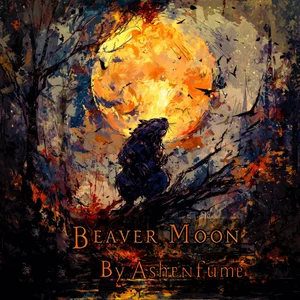 Found in
Beaver Moon
Rhododendron in the heart, cold and fruity among the resins of the November moon.
View the fragrance

IIIThe white wing

Sagaan dali is a small evergreen shrub of the heath family. Its branches are rust-coloured, and its thick, leathery leaves stay green through the Siberian winter2. Each leaf is one to two centimetres long, dull green above and rusty brown beneath8. A greasy, aromatic coating covers them and comes away on the skin at a touch2.
On the slopes of the Eastern Sayan the shrubs stand 11 to 52 centimetres tall9. A shoot grows 7 to 10 centimetres a year. After five or six years, at 25 to 30 centimetres, it bends down along the slope, puts out roots where it meets the ground and sends up new shoots, so that one plant slowly walks across the stones4. In early summer it opens flat clusters of seven to fifteen flowers at the branch tips, each one to two centimetres across, white or tinged with pink810.
A rhododendron with scales
Botanists sort rhododendrons partly by their leaves. The lepidote rhododendrons carry tiny scales, and they make up the subgenus Rhododendron, about 400 species11. Within that subgenus, sagaan dali belongs to section Pogonanthum, a small group with fringed scales and narrow-tubed flowers whose other members grow in the Himalaya and the mountains around it311. Its closest kin are the dwarf incense rhododendrons of Nepal and Tibet.
The names
The plant was first described by the Russian botanist Michael Adams as Azalea fragrans, the fragrant azalea, with a plate. The bibliographic records date the description to 1808 or 1810121. In 1870 the Russian botanist Carl Maximowicz moved it into Rhododendron as R. fragrans, a name Paxton had already given to another plant133. In 1921 Alfred Rehder of the Arnold Arboretum renamed it Rhododendron adamsii in the monograph of azaleas he wrote with Ernest Wilson114.
The peoples of its range have their own names. In Buryat it is sagaan dali, the white wing. In Yakut it is haskara, and in Mongolian telelzh dal1524. Russian floras call it Adams's rhododendron or the fragrant rhododendron, and country names include White Wing and fragrant bagulnik10. It reaches the shops as Sagan Dalya tea215.

The Siberian kin
The golden rhododendron, R. aureum, was named by the German naturalist Johann Gottlieb Georgi in 1775. It ranges from the Altai and Lake Baikal to Kamchatka, the Kurils and Japan17. Siberians call it the alpine rose, kashkara and pyanaya trava, the drunken grass18. Its Russian name sounds close to the Yakut name of sagaan dali, and the two are separate plants.
The Dahurian rhododendron, R. dauricum, is a taller, half-evergreen shrub of up to two metres, whose leaves curl into tubes in winter19. Marsh Labrador tea, R. tomentosum, long known as Ledum palustre, grows in bogs and wet tundra across the north, and in the larch woods of Okinsky it grows beside sagaan dali209. The Himalayan R. anthopogon, the type species of the section, gives off a strong, aromatic, slightly acrid smell when crushed, and its branches are burned as incense in Tantric Buddhism2122.
IVLife on limestone
Sagaan dali needs lime and light. It grows on rock, scree and stony slopes, at forest edges, among sparse conifers and in mountain tundra10. In the Baikalsky Nature Reserve, on the Khamar-Daban range south of the lake, its stands are strictly confined to outcrops of carbonate rock in the upper mountain belt23.
In the Okinsky woods, the botanists E. M. Pyzhikova and M. A. Galcheeva of Buryat State University laid out 74 sample plots and found the shrub in five populations between 1,458 and 2,007 metres. Its partners on the ground were mountain avens, lingonberry, bog bilberry, marsh Labrador tea and red bearberry, under a thin canopy of larch with young Siberian pine coming up between them. The richest stands grew in larch forest carpeted with lichen, where one plot gave 195 grams of dry rhododendron. In the damper bilberry and Labrador tea forest a plot gave 13 grams9. Across the Altai-Sayan, the plants grow shorter where the soil is poorer, drier and colder, and the largest populations survive in the places that are hardest to reach24.
It grows very slowly. Botanists at the Main Botanical Garden of the Soviet Academy of Sciences recorded this in the 1960s, and wild stands are slow to recover once they are cut4.
The scent is a shield
The fragrance of the leaf sits in its scales. Each scale is a tiny shield on a stalk, a stalk of small living cells capped by a disc of larger empty ones, set in a pit of the leaf surface ringed with breathing pores25. Inside, they hold globules of oil. The American plant scientist Ronald Doss counted the scales across many lepidote rhododendrons and found between about 109 and 4,180 to a square centimetre, each carrying 24 to 151 billionths of a gram of essential oil26.
Doss then fed the leaves to black vine weevils, a common pest of rhododendrons. The weevils ate less where the leaves held more oil, and oil extracts spread on filters put them off feeding. He concluded that the scales act, at least in part, as a defence against insects26. In a later survey he wrote that the scale oils give the leaves of these rhododendrons their smell, and that germacrone, a molecule found in sagaan dali, repelled a root weevil in the laboratory275.
A second defence
Rhododendrons carry a second, stronger guard. Grayanotoxins are diterpenes that hold the body's voltage-gated sodium channels open. They are the poison of mad honey, and the Greek soldier and historian Xenophon is credited with the first report of it, among Greek troops in 401 to 400 BC28. In 1970 the Soviet chemist N. V. Belova isolated grayanotoxin I from the leafy shoots of sagaan dali29. Across the genus, the toxin runs higher in leaves than in petals or nectar, which suggests a balance between keeping grazers away and welcoming pollinators30.
Grayanotoxins are polar, water-loving molecules, studded with hydroxyl groups28. In 2026 a Novosibirsk team extracted sagaan dali with hexane and ether, the oily solvents that gather a plant's fragrant fraction, and found no grayanotoxins in the extracts. The authors explain that polar toxins should stay behind in the leaf31. The perfumer's oil comes from the first defence, the oil in the scales.
VFrom the Lena to the teapot
The man who named the shrub is better remembered for a mammoth.
Michael Adams was born Johann Friedrich Adam in 1780 and studied at the medical school of St Petersburg3233. In 1805 he travelled east with the scientific party of Count Yury Golovkin's embassy to China. The embassy failed, and Adams was sent on to Yakutsk33. There, in the early summer of 1806, he heard of a mammoth that an Evenki hunter, Ossip Shumachov, had seen thawing out of a riverbank on the Lena delta seven years before. Adams hired four Cossacks, reached Shumachov's village at the end of June, and at the end of July set out for the carcass with Shumachov and ten local men. He brought back almost the whole skeleton, most of the skin and nearly forty pounds of hair34.


The skeleton is on display today in the Zoological Museum in St Petersburg, known as the Adams mammoth35. Botanists record the rhododendron as described from the lower Lena, the country Adams crossed that summer, so he probably gathered it on the same trip1433. He later taught botany at the Medico-Chirurgical Academy in Moscow, and died at Vereya in 18383332.
Medicine of the mountains
The peoples of the Siberian mountains have their own uses for the leaf. Buryats, Yakuts and Mongols use it in their medicine as a tonic and a stimulant2. Buryats boil the leaves into an elixir to strengthen the body. Yakut herders took the decoction to raise a sweat, bring down fever, fight infection and ease pain. Shamans in Mongolia, Buryatia and the Altai drink it as a tonic and to enter trance, and across Siberia it is known as a strong energy drink2.
A second tradition came from the medicine of Tibet, long practised in Buryatia. In Tibetan pharmacy the drug da li is the flower of the dwarf rhododendrons of the high plateau, R. primuliflorum and R. anthopogonoides, close kin of sagaan dali in the same section36. The medical classics of the Four Tantras and the Blue Beryl prescribe it for cold disorders, for diseases of the lungs, spleen and stomach, and as a tonic, and Buryat practitioners of Tibetan medicine apply the same teaching to sagaan dali4. The Tibetan word ba lu names the fragrant dwarf rhododendrons whose leaves are burned as incense, a holy plant37.
Sagan and Dalya
In a Buryat legend recorded in a 2017 collection of Buryat myths, Sagan and Dalya are two lovers parted by an evil shamaness, and the girl's tears become the shrubs. The tea carries their two names. The same 2021 study, without giving a source, also mentions a tradition that a mountain spirit lives in the plant and restores the health of warriors2. In Buddhist lore it is said to be one of seven plants that grow around the Medicine Buddha2, and a Russian travel writer reports that Tibetans called it the herb that extends life38.

The tea
In Siberia and Mongolia, sagaan dali is drunk as tea. Brewed from the flowers it turns bright yellow and smells of blossom, smooth and free of bitterness4. Buryat cooks keep an old custom of harvesting the flowers at the end of May4. In Siberian homes, a couple of leaves go into the morning teapot with thyme flowers, lemon balm and currant leaves, and the water turns the colour of grass38. It is sold across Russia as Sagan Dalya tea15.
In the laboratory
Soviet botanists began growing the shrub at the Main Botanical Garden in Moscow in the 1960s4. In 2006 chemists at the Vorozhtsov Institute of Organic Chemistry in Novosibirsk distilled its leaves and stems separately and compared their oils with those of the golden and Dahurian rhododendrons39. In 2021 D. N. Olennikov's team in Ulan-Ude and Yakutsk tested the leaf in mice. After ten days, treated mice swam 31.1 minutes before exhaustion, close to the 32.7 minutes of mice given golden root, the classic Siberian tonic. The authors called sagaan dali a probable adaptogen and asked for further study2.
In March 2026 a team led by Kirill Golokhvast of Tomsk State University published a profile of more than fifty compounds in the leaves and stems. Golokhvast called it "a kind of passport of the bioactive substances of sagaan dali"15.
VIThe rhododendron lands
The range of sagaan dali traces an arc through the high, cold mountains of Siberia. It grows in Buryatia, Irkutsk Oblast, Zabaykalsky Krai, Tyva, Krasnoyarsk Krai and Yakutia, and east to the Amur, Khabarovsk, Magadan and Sakhalin14104. In 2026 Olennikov's team gathered wild flowers from sixteen sites across this range, from the Arctic coast of Yakutia to the mountains of Mongolia4.
The Eastern Sayan. In the Okinsky district, the homeland of the Oka Soyots, the shrub grows in lichen larch woods along the Orlik River, where families have gathered the leaf for sale since 2012940.
Tunka and Khamar-Daban. South of Lake Baikal, Tunkinsky National Park holds twelve herbarium collections of the shrub, and in the Baikalsky reserve it keeps to the carbonate outcrops of the upper mountain belt23.
Tyva. Wild stands in the Kaa-Khem district at 2,250 metres were among the sites sampled in 20264. The Sayan Mountains of Tyva are the home of the house's first rhododendron oil.
Khövsgöl. At Ulaan-Uul in northern Mongolia, at 1,850 metres, pharmacy researchers gathered the flowering shoots to develop a tonic pill414. Mongolia lists the shrub among the rare plants of the Baikal basin, and holds its highest recorded stand, at 2,950 metres424.
The Lena delta. In the country of Adams's first description, on Orto-Khaya Mountain on an island of the delta at 72 degrees north, it grows in open tundra142.
The Russian Far East. At the eastern end of the arc, every region that holds the shrub lists it in its Red Book10.
VIIThe gatherers
The gathering on the Orlik River is a family business. It began in 2012, mostly among residents without other work, and it is organised by family and clan, with the harvest timed month by month. The cutting is done with the scissors the local craftsmen make, shaped to spare the young shoots and leaves. A kilogram of fresh leaf sells for about 3,000 roubles, and a dried kilogram for about 10,0009. The botanists rated the human pressure on the stands as high. Leaf and flower heads are taken in quantity across the Okinsky and Tunkinsky districts, where the populations were once described as numerous9.

The best time to cut is set by the plant's chemistry. Pharmacognosists at Irkutsk found that the leaves and the current year's shoots hold the most essential oil while the shrub is in fruit, and they named those shoots, cut at that season, as the medicinal raw material5. The flowers for tea come earlier, at the end of May4.
In June 2026 botanists from the Institute of General and Experimental Biology in Ulan-Ude and Buryat State University completed a census of 556 medicinal plants in Buryatia. They described decades of intensive, uncontrolled collection of sagaan dali and an almost complete lack of reliable data on how much of it remains7. Another 2026 study reported severe degradation, and in places complete destruction, of natural stands4. Pyzhikova and Galcheeva asked for the protective scissors to be made compulsory and for permanent monitoring plots to be laid out9.
VIIIFrom leaf to oil
The oil in the scales comes out with steam. Water and an essential oil are immiscible, so in a still each one pushes up its own vapour and the two together boil below the boiling point of water. Molecules that boil on their own above 250°C ride over with the steam and condense in the receiver, where oil and water separate43.
Sagaan dali gives a small yield. Its shoots hold up to 1.6 percent essential oil6. At that best figure, one kilogram of oil takes about 62 kilograms of shoots.
Where the scent comes from
The Novosibirsk analysis of 2006 found two molecules at the core of the oil. Nerolidol, at 9 to 29 percent, smells floral, green, waxy and woody with a touch of citrus. β-Farnesene, at 9 to 35 percent, is woody, citrus, herbal and sweet24445.
Over them sits a small family of aromatic molecules that gives the oil its fruit. Benzylacetone, present in almost every sample at 3 to 13 percent, smells of floral balsam and tastes of strawberry. Its close relative 4-phenyl-2-butanol, at up to 7.4 percent, smells of peony leaves, mimosa and heliotrope464748. A third member, 4-phenyl-2-butyl acetate, smells of green fruit4950.
A study from Irkutsk read the oil differently, finding germacrone first at 26 percent and nerolidol second at 185. Germacrone forms colourless crystals with no smell of their own51, so it adds weight to the oil and leaves the fragrance to its neighbours.
Distilling cold
In an ordinary still, heat can split delicate esters in the hot water and break down some terpenes5253. Cold distillation, as the trade generally uses the term, lowers the pressure inside the still so that the water boils at a lower temperature. At a tenth of normal air pressure, water boils at about 46°C, and at three hundredths at about 24°C54.
Studies of other plants, none of them rhododendrons, show a pattern. Under vacuum the still gives less oil555657. In turmeric leaf the vacuum oil was richer in the lighter, more volatile molecules55. In a study of wild marigold, the oil distilled at normal pressure carried a burnt note, and the vacuum oils smelled fruity and close to the living flower56.
IXThe question of safety
Sagaan dali reached the perfumer by way of the pharmacy and the teapot. Its Himalayan relative is distilled close to where it grows, and in 2025 a lama described to researchers how R. anthopogon is gathered and distilled locally for sacred use22. In Russia, a draft standard from Irkutsk grades the dried shoots of sagaan dali by their essential oil and flavonoid content, tested on five commercial batches5. In 2023 Belgorod State University patented a way to extract the oil from the shoots with a fluorinated solvent, at 2.0 to 2.7 percent yield and with 4.6 times less energy than a still49.
Rhododendron leaves are poisonous, and a 2013 review of the genus urges care with strong or long use of its medicines58. The 2026 Novosibirsk study found no grayanotoxins in its hexane and ether extracts of sagaan dali, screened by GC-MS. The authors attribute this to polarity: the toxins are water-loving and should stay out of an oily extract31. The steam-distilled oil has yet to be tested for them, and until it is, its status rests on that reasoning.
The white wing through the centuries
- 1806
Michael Adams travels down the Lena to recover the mammoth3334.
- 1808 to 1810
- 1870
Maximowicz moves it into Rhododendron as R. fragrans13.
- 1921
Alfred Rehder names it Rhododendron adamsii1.
- 1960s
The Main Botanical Garden in Moscow begins growing it4.
- 1970
N. V. Belova isolates grayanotoxin I from its shoots29.
- 1988
- 2006
Novosibirsk chemists compare the oils of its leaves and stems39.
- 2012
Commercial gathering begins in the Okinsky district9.
- 2026
Buryatia's medicinal plant census warns of decades of uncontrolled collection7.
XRare and precious
Sagaan dali grows on rock that resists any large-scale harvest, which raises the cost of everything made from it4. It is listed as rare in Buryatia and in Irkutsk Oblast, where it holds entry 160 of the regional Red Book959. Its leaf is gathered by hand on stony mountain slopes, and its shoots give at best 1.6 percent of their weight as oil6.
The house's two oils
Tyva leaf oil. Distilled from the leaves and young stems of the Sayan Mountains of Tyva. Its producer describes it as green, woody and leafy, with a body like wine, a fruity, berry-like top and a natural freshness. The published chemistry points the same way: the balsam of benzylacetone and the soft peony and mimosa of its alcohol over the green and woody nerolidol and farnesene47484445.
Cold-distilled Siberian oil. The house's newest material, distilled from the leaf at low temperature. Bench note to come.
XIFor the perfumer
The extraction, chemistry, safety and trade behind Siberian rhododendron oil, for quick reference at the bench.
Extraction & yields
Raw material. Irkutsk pharmacognosists recommend the current year's shoots, cut in the fruiting period, when leaves and shoots hold the most essential oil and flavonoids. Their draft standard for the dried shoots grades them by oil content and total flavonoids, was tested on five commercial batches, and sets a shelf life of two years5. The 2006 Novosibirsk study hydrodistilled leaves and stems separately3949.
| Material and method | Yield | Source |
|---|---|---|
| R. adamsii shoots, essential oil | up to 1.6 | 6 |
| R. adamsii shoots, fluoroketone solvent, Soxhlet, 1.5 to 3.5 h | 2.0 to 2.7 | 49 |
| R. adamsii, supercritical CO2, 370 bar, 60°C | about 1.1 (10.86 mg/g) | 46 |
| R. adamsii, supercritical CO2, 350 bar, 65°C, 1 h | 0.85 (8.5 mg/g) | 6 |
| R. tomentosum, laboratory hydrodistillation, June against November | 2.19 to 3.39 against 0.90 to 1.04 | 60 |
| R. tomentosum, industrial steam distillation, 120 to 125°C, 8 to 9.5 h | 0.45 to 0.85 | 61 |
| R. dauricum leaves, air-dry | 0.033 to 0.061 | 62 |
Labour in a kilogram. At 1.6 percent, one kilogram of oil takes about 62.5 kilograms of shoots. The basis of that figure, fresh or dry, is unstated. The two supercritical CO2 extracts were studied for their non-volatile compounds, and their scent is still to be assessed466.
Method and balance. In the 2023 patent, the hydrodistilled oil was two to three times richer than the solvent oil in benzylacetone, 4-phenyl-2-butyl acetate, trans-nerolidol and trans-β-elemene. The solvent oil was two to four times richer in the sesquiterpene hydrocarbons, the farnesenes and selinadiene49.
Season and drying, from Labrador tea. In Polish R. tomentosum, plants gave two to three times more oil in June than in November. Air-drying for eight days raised the yield per kilogram from 1.77 to 2.19 percent, and drying cut palustrol by more than half60. In a Krasnoyarsk study of R. ledebourii, monoterpenes peaked early in the season and sesquiterpenes late, and mid to late July gave the richest leaf63. Comparable data for R. adamsii oil are still to be published.
Molecular composition
The 2006 Novosibirsk paper is paywalled. Its figures below come from the two later peer-reviewed papers that quote it246.
| Molecule | Share of oil | Part | Study |
|---|---|---|---|
| (E)-β-Farnesene | 9 to 35% | leaves and stems | Novosibirsk 20062 |
| Nerolidol | 9 to 29% | leaves and stems | Novosibirsk 20062 |
| Benzylacetone (4-phenyl-2-butanone) | 3 to 12% or 3 to 13% | almost all samples | Novosibirsk 2006, as quoted246 |
| Aromadendrene | 3 to 10% | leaves and stems | Novosibirsk 20062 |
| 4-Phenyl-2-butanol | 1.9 to 7.4% | leaves and stems | Novosibirsk 200646 |
| Germacrene D and B | present | stems only | Novosibirsk 200646 |
| Germacrone | 26.24% | shoots | Irkutsk 20105 |
| trans-Nerolidol | 18.44% | shoots | Irkutsk 20105 |
| Selina-3,7(11)-diene | 8.28% | shoots | Irkutsk 20105 |
| trans-Nerolidol, spathulenol | present | hexane extract of aerial parts | Novosibirsk 202631 |
Two readings. The Irkutsk oil held 53 components, 27 of them identified, and 19 were new to the species5. Its lead molecule, germacrone, can rearrange to β-elemenone in a gas chromatograph injector above 250°C, so its measured share depends on the method64. No paper names chemotypes of R. adamsii. Region, plant part, season and analysis could each explain the gap.
| Molecule | Odour | Source |
|---|---|---|
| Benzylacetone | Floral balsam. Strawberry in flavour. Boils at 233 to 235°C | 47 |
| 4-Phenyl-2-butanol | Floral, peony foliage, sweet, mimosa, heliotrope. Boils at 239 to 240°C | 48 |
| 4-Phenyl-2-butyl acetate | Green fruit | 50 |
| (E)-β-Farnesene | Woody, citrus, herbal, sweet | 45 |
| Nerolidol | Floral, green, waxy, citrus, woody. Melon and fruity-citrus nuances in flavour | 44 |
| Germacrene B | Woody, earthy, spicy | 65 |
| Germacrone | Colourless crystals with no odour | 51 |
The leaf beyond the oil. The leaves also hold prenylated phenols related in structure to the cannabinoids: cannabigerorcinic acid and its methyl ester, daurichromenic acid and grifolic acid. In 215 Yakutian samples, the methyl ester rose from 18.35 mg/g of dry leaf in May to 39.92 mg/g in December2. Myricetin and quercetin lead the leaf flavonoids, dihydroquercetin those of the stem66. A hexane and ether extract gave more than 150 triterpenic and aliphatic components67. None of these are fragrant.
The relatives compared
| Species | Leading constituents | Source |
|---|---|---|
| R. aureum, Baikal region | calarene 10.4 to 66.4%, β-bourbonene 0.5 to 27.4%, α-selinene 2.1 to 8.0% | 16 |
| R. dauricum, northeast China | eudesmol 10.95%, β-guaiene 10.21%, germacrone 5.91% | 68 |
| R. anthopogon, Nepal, 4,000 to 4,500 m | α-pinene 37.4%, β-pinene 15.98%, limonene 13.3% | 69 |
| R. tomentosum, Poland | ledol 2.3 to 14.4%, palustrol 0.8 to 13.0% | 60 |
| R. capitatum, Gansu, CO2 extract | benzylacetone 11.3%, γ-muurolene 7.1% | 70 |
| R. thymifolium, CO2 extract | β-farnesene 5.0%, selina-3,7(11)-diene 3.9% | 70 |
Reading the table. The phenylbutanoids and the farnesene, nerolidol and selinadiene set tie R. adamsii to the Chinese mountain species R. capitatum and R. thymifolium. The pine-led R. anthopogon, the calarene-led golden rhododendron and the ledol-led Labrador tea each follow a chemistry of their own. This reading is an inference from the published figures.
Cold distillation
The term. In the trade, cold distillation generally means distillation under reduced pressure. No peer-reviewed definition was found. Lowering the pressure lowers the boiling point, and it spares the oil the hydrolysis and heat damage of an ordinary still52. Molecular, or short-path, distillation is the high-vacuum extreme, with minimal contact time and decomposition71.
| Pressure | Boiling point |
|---|---|
| 1,013 mbar (sea level) | 100°C |
| 200 mbar | about 60°C |
| 100 mbar | about 46°C |
| 70 mbar | about 39°C |
| 50 mbar | about 33°C |
| 30 mbar | about 24°C |
Calculated from the Antoine constants for water in the NIST Chemistry WebBook54. With oil in the still the mixture boils slightly lower again43.
| Plant | Yield | Composition | Source |
|---|---|---|---|
| Wild marigold, aerial parts | 0.91 to 1.16% against 1.56% | Oxygenated monoterpenes 55 to 65% against 22.9%. Vacuum oils fruity, close to the living flower. Normal-pressure oil with a burnt note | 56 |
| Turmeric leaf | 0.25% against 0.28% | Monoterpenoids 88.2% under vacuum. Ratio of monoterpenoids to sesquiterpenoids 10.5 against 1.0 | 55 |
| Lemon eucalyptus leaf | down 78.6% from 690 to 240 Torr | Citronellal still leads, citronellol share rises | 57 |
Heat artefacts it avoids. Documented changes in hot distillation include linalyl acetate breaking down to α-terpineol, nerol and geraniol, and pinenes losing 22 to 37 percent at 90 to 130°C53. Germacrene D is reported stable only to about 180°C, and germacrenes rearrange to elemenes on heating72.
An expectation for rhododendron. No published study has applied vacuum distillation to any rhododendron. By the pattern of the leaf oils above, a cold-distilled sagaan dali oil would be expected to carry more of its lighter fraction, including the fruity phenylbutanoids, and less of the heavy sesquiterpenes, at a lower yield. This is an extrapolation from other species. The distiller's own analysis is the test.
Safety
Grayanotoxin. Belova isolated andromedotoxin, grayanotoxin I, from the leafy shoots of R. adamsii in 1970, melting at 256 to 259°C and confirmed by infrared spectra. She found it also in R. aureum, R. ledebourii, R. mucronulatum, R. ponticum and R. luteum29. About 180 grayanotoxins are known across the Ericaceae28.
Extracts. In 2026, hexane and ether extracts of R. adamsii and their fractions showed no grayanotoxins by GC-MS. The authors explain that these polar diterpenoids should stay out of hydrocarbon extracts. The screen gave no detection limit31. The steam-distilled oil has yet to be tested. The authors' polarity argument would extend to it, and a direct analysis is the test.
Use. A 2013 review of the genus records poisonings from rhododendron honey and medicinal preparations and advises against long or high-dose use until toxicity is better studied58. Irkutsk researchers reported low toxicity for their R. adamsii preparations5.
Standards. As of November 2026, searches found no International Fragrance Association standard and no published skin-sensitisation data for rhododendron oil. Check the latest texts before formulating.
Authenticity
Markers. The published oils of related species point to the likely blends and substitutes. They are inferred from the tables above. No study yet describes adulteration of R. adamsii oil.
| Marker | Points to |
|---|---|
| Phenylbutanoids with nerolidol and β-farnesene | R. adamsii246 |
| Ledol and palustrol | Labrador tea60 |
| Calarene and β-bourbonene | Golden rhododendron16 |
| A profile led by α-pinene, β-pinene and limonene | R. anthopogon69 |
Chiral analysis. Enantioselective GC-MS is an established check on alpine aromatic plants. In white genepi, authentic material carries the natural ratio of α- and β-pinene, and departures flag racemic synthetics or foreign plant material73. Natural ratios for the constituents of R. adamsii remain to be measured.
The GC itself. Run injectors cool for this oil. Germacrone converts above 250°C and germacrene D above about 180°C6472.
Building the accord
The frame. The published analyses give a frame for a rhododendron accord: nerolidol and β-farnesene for the green-woody body, benzylacetone and 4-phenyl-2-butanol for the balsamic fruit, and 4-phenyl-2-butyl acetate for green fruit246474850. Each is a known aroma material. Proportions start from the 2006 ranges and are tuned at the bench.
Neighbours. On the hillside the shrub grows with Labrador tea, lingonberry and larch9, and in the teapot with thyme, lemon balm and currant leaf38, which suggests partners for a Siberian composition.
Trade & provenance
| Region | Editions and category | Source |
|---|---|---|
| Republic of Buryatia | 1988, 2002, 2013, 2023. Category 3, rare | 10923 |
| Irkutsk Oblast | 2010, 2020. Category 3, entry 160 | 1059 |
| Zabaykalsky Krai and Chita Oblast | 2002, 2014, 2016 | 10 |
| Krasnoyarsk Krai | 2005, 2012, 2022 | 10 |
| Amur, Magadan, Sakhalin, Khabarovsk | two editions each, 2005 to 2020 | 10 |
| Mongolia | Rare plants of the Baikal basin | 42 |
Prices. In Okinsky, about 3,000 roubles a kilogram fresh and 10,000 dry, as reported in 20239. Bulk oil prices, harvest tonnage and export volumes are unpublished, and the 2026 Buryat census found almost no reliable data on the plant's resources7. A 2010 study had judged the resources of Irkutsk and Buryatia sufficient5.
Protected ground. The shrub grows in Tunkinsky National Park and the Baikalsky Nature Reserve23. Altai-Sayan botanists recommend intact protected populations as controls for monitoring the harvested ones24.
From the record. Siberian plants carry 26 chromosomes, and plants from the southern Muya Range may be tetraploid14. The shrub crosses with R. parvifolium to give R. × burjaticum10. Earlier synonyms include Osmothamnus fragrans and Azalea multiflora, both of 18391. The English text of the 2021 study gives the tea name Belgorod tea, and a 2026 Russian report gives Belogorsky, the white-mountain tea27. A Tibetan dictionary pairs da li, the dwarf rhododendron used for its flowers, with ba lu, used for its leaves37.
Found in
Beaver Moon
Siberian rhododendron in the heart of the house fragrance of the November moon.
The Beaver Moon collectionMore from the November moon
 ✦ The Sayan Mountains
Siberian Cedar
The Siberian pine of the same mountains, in the base of Beaver Moon.
Read the folio
 ✦ Folio No. 22
Myrrh
Kua myrrh, sweet and resinous as prayer smoke, at the base of Beaver Moon.
Read the folio
 ✦ Folio No. 23
Oakmoss & Treemoss
The lichens of oak and pine, gathered from bark, and part of Beaver Moon.
Read the folio
✦ ✦ ✦
Sources & image credits73 references
- World Flora Online, Rhododendron adamsii Rehder, WFO Plant List (June 2025 snapshot).↑
- Olennikov D.N., Nikolaev V.M., Chirikova N.K., Sagan Dalya tea, a new "old" probable adaptogenic drug: metabolic characterization and bioactivity potentials of Rhododendron adamsii leaves, Antioxidants 10(6), 863 (2021).↑
- Cullen J., Chamberlain D.F., A preliminary synopsis of the genus Rhododendron, II, Notes from the Royal Botanic Garden Edinburgh, 327-338.↑
- Olennikov D.N., Kashchenko N.I., Chirikova N.K., Rhododendron adamsii flowers as a potential source of tea-derived flavonoid antioxidants, Horticulturae 12(4), 484 (2026).↑
- Mirovich V.M., Pharmacognostic study of the genera Origanum and Rhododendron of the East Siberian flora (in Russian), doctoral dissertation, Irkutsk State Medical University (2010).↑
- Razgonova M.P., Zakharenko A.M., Golokhvast K.S., Supercritical CO2 extraction and tandem mass spectrometry of the medicinal plant Sagan Dalya (Rhododendron adamsii), Pharmaceuticals 18(12), 1823 (2025).↑
- Pavlov D., A census of medicinal plants in Buryatia (in Russian), Hi-Tech Mail.ru (24 June 2026).↑
- Missouri Botanical Garden, Ornamental plants of horticultural value: Rhododendron, Russian Far East research pages.↑
- Pyzhikova E.M., Galcheeva M.A., Resource characteristics of Rhododendron adamsii Rehder in the Okinsky district of the Republic of Buryatia (East Sayan), Problems of Botany of South Siberia and Mongolia 22(2), 287-289 (2023).↑
- Plantarium, Rhododendron adamsii Rehder, open atlas of plants of Russia.↑
- Rhododendron subg. Rhododendron, Wikipedia, citing Goetsch L., Eckert A.J., Hall B.D., Systematic Botany (2005).↑
- Hunt Institute for Botanical Documentation, Adams M.F., Descriptio novae speciei Azaleae, Botanical Article Bibliographic Records, HI 100160.↑
- Royal Botanic Gardens, Kew, Rhododendron fragrans (Adams) Maxim., Plants of the World Online.↑
- Panarctic Flora, Rhododendron adamsii Rehder, taxon 740103.↑
- Bunina V., Russian scientists found more than 50 useful substances in rhododendron tea (in Russian), Gazeta.Ru (12 March 2026).↑
- Olennikov D.N., Dudareva L.V., Osipenko S.N., Penzina T.A., Chemical composition of Rhododendron aureum (gold rosebay) essential oil from Pribaikal'e, Journal of the Serbian Chemical Society 75(2), 209-215 (2010).↑
- Royal Botanic Gardens, Kew, Rhododendron aureum Georgi, Plants of the World Online.↑
- Plantarium, Rhododendron aureum Georgi, names and samples, open atlas of plants of Russia.↑
- Great Russian Encyclopedia, Dahurian rhododendron (in Russian).↑
- Vengrytė M., Raudonė L., Phytochemical profiling and biological activities of Rhododendron subsect. Ledum, Plants 13(6), 901 (2024).↑
- Trees and Shrubs Online, Rhododendron anthopogon, after Bean W.J., Trees and Shrubs Hardy in the British Isles.↑
- Cornara L., Valussi M., Gurung K., Lama L.S., Polito F., De Feo V., Investigation of the potential anxiolytic effects of essential oils derived from two sacred plants of tantric Buddhism: Rhododendron anthopogon and Juniperus indica, BMC Complementary Medicine and Therapies 25, 236 (2025).↑
- Sandanov D.V., Astrakhantseva E.P., Gamova N.S., Rare species of plants and fungi of Buryatia: distribution and geodata structure in the protected areas, Journal of Siberian Federal University, Biology 17(4), 353-374 (2024).↑
- Tikhonova N.A., Tikhonova I.V., Molokova N.I., Krivobokov L.V., Variability of the genus Rhododendron (Ericaceae) species in protected areas of the Altai-Sayan region, Botanicheskii Zhurnal 110(5), 447-459 (2025).↑
- Desch C., The rhododendron leaf scale, Journal of the American Rhododendron Society 37(2) (1983).↑
- Doss R.P., Role of glandular scales of lepidote rhododendrons in insect resistance, Journal of Chemical Ecology 10(12), 1787-1798 (1984).↑
- Doss R.P., Essential oils and rhododendron scales, Journal of the American Rhododendron Society 41(2) (1987).↑
- EFSA Panel on Contaminants in the Food Chain, Risks for human health related to the presence of grayanotoxins in certain honey, EFSA Journal 21(3), 7866 (2023).↑
- Belova N.V., Andromedotoxin in rhododendrons, Chemistry of Natural Compounds 6, 403 (1970).↑
- Grayanotoxin I variation across tissues and species of Rhododendron suggests pollinator-herbivore defence trade-offs, Phytochemistry 212, 113707 (2023).↑
- Kukina T.P., Elshin I.A., Sal'nikova O.I. et al., How to turn a poisonous plant into medicine: non-polar extracts of Rhododendron adamsii (Sagan Dalya) are free of grayanotoxins and inhibit the SARS-CoV-2 main protease, Molecules 31(12), 2090 (2026).↑
- Hunt Institute for Botanical Documentation, Adams, Johannes Michael Friedrich, Biographical Records, ID 50515.↑
- Jessen C., Adam, Johann Friedrich, Allgemeine Deutsche Biographie 1, 45 (1875), via Deutsche Biographie.↑
- Adams mammoth, Wikipedia, drawing on Adams M., Some account of a journey to the Frozen Sea, and of the discovery of the remains of a mammoth, Philadelphia Medical and Physical Journal 3, 120-137 (1808).↑
- Ashworth W.B., Mikhail Adams, Scientist of the Day, Linda Hall Library (1 March 2018).↑
- Pharmacognostic studies of Tibetan medicine da-li, Journal of Chinese Medicinal Materials (July 1997), 332-335, via Mandala Collections, University of Virginia.↑
- Rangjung Yeshe Tibetan-English Dharma Dictionary, ba lu, Tsadra Foundation wiki.↑
- Gruzdeva A., Traditions in a teacup: Siberian tea ceremonies, Russia Beyond (6 November 2015).↑
- Rogachev A.D., Fomenko V.V., Sal'nikova O.I., Pokrovskii L.M., Salakhutdinov N.F., Comparative analysis of essential oil compositions from leaves and stems of Rhododendron adamsii, R. aureum and R. dauricum, Chemistry of Natural Compounds 42(4), 426-430 (2006).↑
- Oehler A.C., Social memory and Oka-Soiot reindeer herders: on the challenges of reindeer in multi-species mountain households, Izvestiya Laboratorii Drevnikh Tekhnologii 14(3), 112-123 (2018).↑
- Spectrophotometric analysis of the ethanol extracts from Rhododendron adamsii Rehd., Mongolian Pharmacy and Pharmacology, 22-26 (2017).↑
- Baikal Basin Information Center, Rare species of vascular plants, map 114, Ecological Atlas of the Lake Baikal Basin.↑
- Nichols L., Steam distillation: separation theory, Organic Chemistry Laboratory Techniques, LibreTexts.↑
- The Good Scents Company, Nerolidol.↑
- The Good Scents Company, (E)-beta-Farnesene.↑
- Razgonova M., Zakharenko A., Ercisli S., Grudev V., Golokhvast K., Comparative analysis of Far East Sikhotinsky rhododendron (Rh. sichotense) and East Siberian rhododendron (Rh. adamsii) using supercritical CO2 extraction and HPLC-ESI-MS/MS spectrometry, Molecules 25(17), 3774 (2020).↑
- The Good Scents Company, Benzyl acetone.↑
- The Good Scents Company, 4-Phenyl-2-butanol.↑
- Zhilyakova E.T., Burkhanov S.V., Martseva D.S. et al., Method for isolating essential oil from Rhododendron adamsii shoots, Russian patent 2788724, Belgorod State National Research University (2023).↑
- The Good Scents Company, 4-Phenyl-2-butyl acetate.↑
- Ognyanov I., Essential oils: zdravetz (Bulgarian zdravetz oil), Perfumer & Flavorist 10 (October/November 1985).↑
- Akdağ A., Öztürk E., Distillation methods of essential oils, Selçuk University Journal of Science Faculty 45(1), 22-31 (2019).↑
- Abdelmohsen U.R., Elmaidomy A.H., Exploring the therapeutic potential of essential oils: a review of composition and influencing factors, Frontiers in Natural Products 4, 1490511 (2025).↑
- Verret J., Qiao R., Barghout R.A., Estimating vapour pressure, Foundations of Chemical and Biological Engineering I, LibreTexts, with Antoine constants for water from the NIST Chemistry WebBook.↑
- Kiran Babu G.D., Shanmugam V., Ravindranath S.D., Joshi V.P., Comparison of chemical composition and antifungal activity of Curcuma longa leaf oils produced by different water distillation techniques, Flavour and Fragrance Journal 22(3), 191-196 (2007).↑
- Kiran Babu G.D., Kaul V.K., Variations in quantitative and qualitative characteristics of wild marigold (Tagetes minuta) oils distilled under vacuum and at NTP, Industrial Crops and Products 26(3), 241-251 (2007).↑
- de Araujo J., Silvestre W.P., Pauletti G.F., Muniz L.A.R., Influence of the absolute pressure of the extraction system on the yield and composition of Corymbia citriodora leaf essential oil extracted by steam distillation, ChemEngineering 7(4), 67 (2023).↑
- Popescu R., Kopp B., The genus Rhododendron: an ethnopharmacological and toxicological review, Journal of Ethnopharmacology 147, 42-62 (2013).↑
- Government of Irkutsk Oblast, Decree No. 370-pp of 25 May 2020, list of rare and endangered species for the Red Book of Irkutsk Oblast (in Russian).↑
- Jesionek A., Zabiegała B., Buciński A., Łuczkiewicz M., From harvesting to distillation: effect of analytical procedures on the yield and chemical composition of Rhododendron tomentosum (Ledum palustre) essential oil, Acta Poloniae Pharmaceutica 76(1), 83-92 (2019).↑
- Tagil'tsev Yu.G., Kolesnikova R.D., Method of obtaining essential oil from Ledum, Russian patent 2080362 (1997).↑
- Vodchits M.P., Beda I.O., Boltyanova E.A., Volotovich A.A., Essential oil content in aerial parts of deciduous and evergreen Rhododendron species introduced in Belarus (in Russian), VII International Conference of Young Scientists, 49-52 (2013).↑
- Tikhonova N.A., Aniskina A.A., Muratova E.A., Seasonal dynamics of volatile terpenoid composition in the leaves and flowers of Rhododendron ledebourii (Ericaceae) under introduction (Krasnoyarsk), Rastitelnye Resursy 51(1), 81-88 (2015).↑
- Reichardt P.B., Anderson B.J., Clausen T.P., Hoskins L.C., Thermal instability of germacrone: implications for gas chromatographic analysis of thermally unstable analytes, Canadian Journal of Chemistry 67(7), 1174-1177 (1989).↑
- The Good Scents Company, Germacrene B.↑
- Komarova N.I., Rogachev A.D., Chernyak E.I. et al., Quantitative HPLC determination of main flavonoid content of Rhododendron adamsii leaves and stems, Chemistry of Natural Compounds 45(1), 27-31 (2009).↑
- Kukina T.P., Elshin I.A., Sal'nikova O.I., Kolosov P.V., Sandag Ts. et al., Composition of lipophilic components of Rhododendron adamsii Rehd. ether extract and activity against SARS-CoV-2 main protease, Russian Journal of Bioorganic Chemistry 49(7), 1730-1739 (2023).↑
- Hui Y., Sun M.-L., Volatile components of the essential oils from the leaves of Rhododendron dauricum by GC-MS, Bulletin of Botanical Research 32(3), 365-368 (2012).↑
- Innocenti G., Dall'Acqua S., Scialino G. et al., Chemical composition and biological properties of Rhododendron anthopogon essential oil, Molecules 15, 2326-2338 (2010).↑
- He J., Shang X., Dai L. et al., Chemical constituents, antibacterial, acaricidal and anti-inflammatory activities of the essential oils from four Rhododendron species, Frontiers in Veterinary Science 9 (2022).↑
- Ketenoglu O., Tekin A., Applications of molecular distillation technique in food products, Italian Journal of Food Science 27(3), 277-281 (2015).↑
- Andersen T.B., Cozzi F., Simonsen H.T., Optimization of biochemical screening methods for volatile and unstable sesquiterpenoids using HS-SPME-GC-MS, Chromatography 2(2), 277-292 (2015).↑
- Wüst M., Piantini U., Authenticity control of alpine aromatic plants by enantioselective gas chromatography-mass spectrometry, part 1: white genepi, CHIMIA 57(11), 741-742 (2003).↑
Photographs
Munku-Sardyk from Nukhu-Daban: Arkady Zarubin, CC BY-SA 3.0. Munku-Sardyk and its valley: Lyallla, CC BY-SA 4.0. Rhododendron adamsii, Western Sayan (two photographs): Anbudilin, CC BY-SA 4.0. Rhododendron aureum, Ergaki: Vyacheslav Argenberg, CC BY 4.0. Irkutsk Central Market: RG72, CC BY-SA 4.0. Dried rhododendron: Pannet, CC BY 4.0. Lena delta: NASA/METI/AIST/Japan Space Systems and the U.S./Japan ASTER Science Team, public domain. Adams mammoth: W. G. Tilesius, public domain. Siberian pine cone: Vyacheslav Argenberg, CC BY 4.0. Myrrh: Nesnad, CC BY 4.0. Oakmoss: pol parrhesia, CC0. All via Wikimedia Commons. Beaver Moon key art: Ashenfume.
Join the discussionHave you walked the Sayan, drunk sagaan dali tea, or worked with this oil? Add what you know, or ask a question.