Provenance Materia Balsam Fir
MATERIA · THE BEAVER MOON COLLECTION
Balsam Fir
The jam in the needles, from the blistered bark of the northern woods and the frosts of November to the heart of the Beaver Moon
In the third week of November 2025 the fir fields around New Ross, in Lunenburg County, Nova Scotia, were being cut. Colin Hughes, whose company grows around 20 million trees on 2,000 acres there, told a reporter it had been a terrible dry summer and the trees had grown well all the same. His crews take about a tenth of the trees in a season, and he was pleased with their colour and size and with how few were shedding1. Two days later he warned that his sales to the United States were down by about half2. The village had marked a hundred years of its Christmas tree trade the winter before3. Almost all of that trade is one species, the balsam fir, which makes up 98 percent of the province’s harvest4. It is cut late because it must be. Balsam fir needs a run of autumn frosts to harden off and keep its needles after cutting5, and trees cut in September or October shed worse than trees cut in November or December6. To the north, the red cliffs of Cape Blomidon above the Minas Basin are the home of Kluskap, the hero of the Mi’kmaw stories78. Drawn out of its needles with solvent, the same tree gives a dark extract that grows crystals smelling of strawberry jam9. This is the balsam fir.
Explore this folio
- IWhat it smells like
- IIIn the house
- IIIThe fir with blisters
- IVWhat the balm is for
- VA forest that dies in waves
- VIThe tree of life
- VIIPillows, tubs and wreaths
- VIIIThe lens cement of Quebec
- IXThe November cut
- XFrom needle to absolute
- XIJam in the needles
- XIIThe perfumer’s fir
- XIIIWaiting for the frost
- ✦Appendix: For the perfumer


IWhat it smells like
The tree smells of pine and resin. The absolute drawn from its needles smells of the tree and of something cooked and sweet beneath it, red fruit and jam.
- The living tree
A Mi’kmaw dictionary gives the sentence “Stoqon na mawiweljemasit”, a fir tree is very aromatic12. Its needle oil is led by β-pinene and bornyl acetate14, piney and resinous, with the sweet, balsamic smell of pine needles1819. Henry David Thoreau found that its wilted shoots smelled of strawberries20.
- The absolute, opening
It opens bright and intense, a jammy rush of raspberry and blackcurrant over the green of crushed fir.
- The heart
Candied fir sap and honey, then cooked strawberry jam, with cypress and black pine beneath and a faint breath of campfire.
- What lingers
Warm resin and the forest floor, settling into a long, soft woodiness.
IIIn the house
Balsam fir absolute lies in the heart of Beaver Moon. The fragrance tells the Mi’kmaw story of Kopit, the giant beaver, and his broken dam, set on the Minas Basin, and balsam fir is the tree of that shore. It is the one native conifer in Nova Scotia whose bark carries blisters of resin17, and in the fragrance it pools thick and sweet beneath the brighter needles. The house absolute is chocolate brown and nearly solid, and it is warmed in a bath before it will pour. It comes on as jam and candied sap over fir, and settles into warm resin. Beside it sits Siberian fir, crisp and cold with a citrus edge, so the heart holds the sweet fir of the Atlantic woods and the bright fir of the taiga together. The house reads a red-fruit thread through Beaver Moon, its own design: the strawberry of blood orange at the top, the jam of the fir in the heart, and the raspberry of castoreum in the base, where Kopit himself waits.
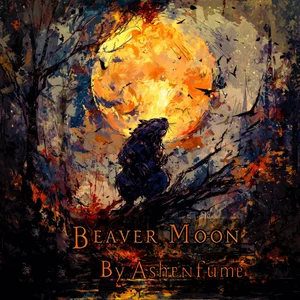 Found in
Beaver Moon
Smooth and syrupy, a warm resin pooled under the heart of the November moon.
View the fragrance

IIIThe fir with blisters
Botanists name it Abies balsamea (L.) Mill., a true fir of the pine family, Pinaceae. In French it is the sapin baumier10. Its range runs from Newfoundland and Labrador west to north-western Alberta and south through the north-eastern United States,11. In the forest it grows 12 to 18 metres tall and seldom lives past about 200 years11. Its flat needles lie in two ranks along the twig, shorter on the upper side10. Its name is a word for balm. The United States Forest Service recorded that balsamea comes from the Latin for balsam, and that the tree has also been called the Balm-of-Gilead fir and the blister fir22.
The blisters are its signature. On a young tree the bark is smooth and grey and raised with small swellings of resin, and with age it breaks into irregular scales10. In Nova Scotia it is the only native softwood that carries resin blisters on its bark17. The fir keeps its resin in the bark. Its wood normally holds no resin ducts at all, and cavities in the bark fill with oleoresin and push the smooth trunk out into blisters23. Wood scientists sort fir boards from spruce by exactly that absence24.

The peoples of its eastern range have their own names for it. The University of Maine’s bulletin on the tree opens with three of them, Pohpóhkhαwih in Penobscot, Puhpukhawihqimus in Passamaquoddy-Maliseet and Stoqon in Mi’kmaw26. The Mi’gmaq-Mi’kmaq Online Talking Dictionary, recorded with Mi’kmaw speakers, gives stoqon as the fir tree and the balsam tree, and also as the palm frond carried on Palm Sunday. Its verb stoqonaqsi means to go and look for a fir tree for Christmas12.
Balsam fir is a tree of shade. It is very tolerant of shade, and its roots run shallow11. Its cones stand upright on the topmost branches, 5 to 10 centimetres long, and ripen from late August into September. Each holds about 134 seeds. The cones fall apart on the tree, and the winged seed drops from August to November and rides the wind, most of it within 25 to 60 metres of its parent11.

It grows fast and dense where it is allowed. A fifty-year-old stand of balsam fir can hold 184 tonnes of living wood and needles on a hectare11. In Nova Scotia it grows well in nearly every part of the province, and many cutover woodlots fill back in with fir of their own accord21. It is a tree that comes back, and the reasons it must keep coming back are written in its bark and its needles.
IVWhat the balm is for
A fir carries its resin ready in the bark, ahead of any wound, in ducts and in the cavities that swell into blisters23. Its first use is defence. In a study of the white fir, a western cousin, almost every attack of the fir engraver beetle that struck a resin blister or canal in the bark failed to produce a brood of larvae, though the bark resin alone was too thinly spread to protect the whole tree27. The same liquid, gathered by the can, became the Canada balsam of the microscope trade.

The fir has a second defence that was found by accident in a laboratory at Harvard. In 1965 the Czech entomologist Karel Sláma brought his colony of the European linden bug, Pyrrhocoris apterus, to the laboratory of Carroll Williams. Reared there, the bugs failed to grow up. They moulted into giant extra larvae and died without becoming adults. The cause was the paper lining their dishes. American paper pulp held something that acted on the bugs like their own juvenile hormone, the signal that keeps an insect young2829, and the paper towels were made largely from the pulp of the balsam fir30. The molecule they had found, the paper factor, was isolated in 1966 and named juvabione. It is the methyl ester of todomatuic acid, one of a family of sesquiterpenes in the wood of true firs that mimic insect juvenile hormones and stifle their growth and reproduction30. In grand fir, a western cousin, the enzyme that starts the pathway to these molecules is switched on when the tree is wounded31.
Chemistry has its limits. The spruce budworm, Choristoneura fumiferana, a native moth, takes the fir as its favourite host and has been its most important insect enemy11. On most of its hosts the caterpillar eats only the new year’s growth. On balsam fir it eats old needles as well as new, and a few years of heavy feeding can kill the tree32. The introduced balsam woolly adelgid can kill a fir in three years11.

The largest animal to depend on the fir is the moose. Moose rely heavily on balsam fir in winter, deer gather in yards beneath it, and hares shelter in its cover11. On Isle Royale, in Lake Superior, the fir becomes the main staple of the moose’s winter diet once the summer plants are gone, and the moose browse it so hard that whole stands are stunted34. The fir answers in kind. A study from Michigan Technological University in January 2026 described the moose’s winter fir as a chemically defended and nutritionally limited food. The more fir a moose ate, the harder its body worked to detoxify it and the poorer its nutritional condition35.
VA forest that dies in waves
On the high mountains of the north-east, balsam fir forests die in a pattern that can be seen from the air. Douglas Sprugel described it in 1976. In these wave-regenerated forests the trees die continually along the front edge of a wave, worn down by rime ice, by needles killed through winter drying and by the cooling of their crowns. Each dead row exposes the trees behind it, which die in turn, and young fir springs up in the light they leave. A wave of dying trees moves slowly through the forest, with a band of vigorous young growth behind it. The waves follow each other at intervals of about sixty years, and they have been seen in the mountains of New York, New Hampshire and Maine, with very similar forests in Japan36.
The lowland forests turn over on a longer beat, driven by the budworm. Its outbreaks come every 30 to 40 years and can run for a decade or more. The last outbreak in Nova Scotia, in the 1970s and 1980s, touched more than a million hectares33. In the fir forests of the Cape Breton Highlands it killed 78 to 89 percent of the merchantable balsam fir37, and one study of that uncontrolled outbreak found fir mortality averaging 87 percent of merchantable volume ten to twelve years after it began38. The forest came back as fir. The shade-tolerant seedlings already waiting on the forest floor were released by the open canopy11, and by the mid-2000s the Highlands forest had regenerated37.
VIThe tree of life
One of the first recorded uses of Indigenous medicine in North America came on Jacques Cartier’s second voyage. In the winter of 1535 and 1536, at Stadacona, where Quebec City stands, his crew fell ill with scurvy. The Iroquoians of Stadacona gave them a decoction of the winter leaves and bark of an evergreen they called annedda, and the men recovered. The French called it the tree of life, the arbre de vie39.
Which tree it was has been argued ever since. The candidates include balsam fir, the white, red and black spruces, the white and red pines, eastern hemlock and the white cedar. The European herbals of the sixteenth and seventeenth centuries consistently describe the tree of life as a Thuja, or something like a cypress, and the name arborvitae stayed with the white cedar40. The cedar is the usual answer. The historian Jacques Mathieu argued at length that annedda was more likely balsam fir, for its place as a traditional remedy and for the far higher vitamin C of its needles41. In one comparison of the candidates’ vitamin C, balsam fir scored 270, red spruce 169 and white cedar 4540.
Across Canada the true firs belonged to the medicine of nearly every Indigenous people within their range. The ethnobotanist Nancy Turner records liquid pitch from the bark blisters, and the needles, used as poultices on sores, wounds, burns, bites and infections, and the firs used for sore throats, coughs and colds and for spiritual protection42. These are the practices of the people who used them, and they appear here as history. The resin was also gathered for its own sake. The Maine bulletin records that balsam fir resin was used by Native Americans for many ailments, and that its gathering became an industry in Quebec26.
Kluskap’s shore
The fir country of Nova Scotia is also the country of the Mi’kmaw stories. The many stories that feature Cape Blomidon show how important the place is to the Mi’kmaq, and one of the most dramatic tells of the creation of Kluskap and the Mi’kmaq on the floor of the Minas Basin, told today by the Mi’kmaw artist and storyteller Gerald Gloade8. The Mi’kmaw name for Blomidon, Metoqwatkek, means bushes extending down the bank43. Across the Basin, Five Islands is best known as the setting of the story in which Kluskap tries to drive away the Giant Beaver by throwing five great sods of mud into the bay44. A provincial park now sits high on Blomidon’s red sandstone headland7, and its clifftop is dark with conifers.

VIIPillows, tubs and wreaths
Before perfumers knew it, the balsam fir was a household tree. Its wood is light and soft, and it was once widely made into butter tubs and sugar boxes, because it carries no taste of its own and little resin to taint what it holds24. Fir has been a Christmas favourite for generations, and it was bound into wreaths and stuffed into souvenir pillows11.
The pillows began as a tourist trade. In Maine, balsam pillows were being made as early as the 1870s, by the Shaker women of New Gloucester for summer visitors, and the scent of a well-made pillow lasts a decade or more26. At the Balsam Bee of the Big Moose Community Chapel, in the Adirondacks of New York, they are still stuffed with needles ground fresh.

At the end of June 1851 Thoreau wrote in his journal of something he had noticed about the fir’s shoots. Plucked and kept in the pocket or the house for a few days, they would “emit the fragrance of strawberries, only it is somewhat more aromatic and spicy”. He thought it a very remarkable fragrance to come from a pine20. The jam that perfumers would later find in the fir’s extract had already been smelled in a coat pocket.

The wreath made the fir a winter industry. Winslow Homer drew men cutting young firs in the snow and a couple binding wreaths for the Christmas number of Harper’s Weekly in 185845. In 2015 Maine’s wreath makers sold well over a million balsam wreaths a year, and the large houses of Washington County, such as Worcester Wreath of Harrington could take on as many as 500 temporary workers each autumn46. In Nova Scotia, First Nations wreath-making is part of the same trade in fir greenery21. The Mi’kmaw language keeps the custom in a single verb, stoqonaqsi, to go and look for a fir tree for Christmas12.
VIIIThe lens cement of Quebec
The resin in the blisters was the fir’s great export long before its needles were. Canada balsam, known in North America as balsam of fir and as balsam of Gilead, was gathered principally in the Laurentian hills of Quebec. Gildemeister and Hoffmann described the harvest at the turn of the twentieth century. It ran from the middle of July to the middle of August, and the gatherers were mostly descendants of Indigenous families who camped in the forests through the season. They estimated the whole production at probably no more than 20,000 kilograms a year47. The tool was a small can with a sharp-pointed nozzle, pushed into each blister to drain it48. A tree once tapped was left to rest for two or three years, and gave less on its second tapping49.
The balsam is mostly resin. The British Pharmaceutical Codex of 1911 gave it 70 to 80 percent resin and 16 to 24 percent volatile oil, chiefly laevo-pinene, in a pale yellow, viscous liquid that often glowed with a faint greenish fluorescence, with a pleasant smell of turpentine and a bitter, acrid taste50. It stood in the United States Pharmacopoeia from 1820 to 190048. The name balsam is a misnomer in the chemist’s sense. True balsams carry benzoic and cinnamic acids, and Canada balsam holds neither13.
Its fortune was light. In a long history of the material published in 1991, the Leicester geologist Allan Mills showed that cooked Canada balsam has a refractive index close to that of the crown and light flint glasses of the optician. That made it an ideal cement for the achromatic lenses of telescopes and microscopes, and for mounting specimens under the microscope. It remained pre-eminent for over a century, until synthetic adhesives relegated it to a few specialised niches51. Mills traced the first cemented lenses to the French astronomer Alexis-Marie Rochon in the late eighteenth century52. Microscopists began mounting slides in molten Canada balsam around 1830, and in a solution of it from 1843, a method that spread through the 1850s53.

The most elegant use came in 1828, when William Nicol of Edinburgh cut a crystal of Iceland spar in two and joined the halves with Canada balsam. The balsam’s refractive index falls between the two indices of the crystal, so one of the two rays the crystal makes is reflected away at the joint and the other passes through. The Nicol prism gave the nineteenth century its standard way of making polarised light54. In the Second World War, Harry Davis of Monson, Maine, the Spruce Gum King, supplied fir resin to the United States forces for gun sights and optics26.
IXThe November cut
Every part of the fir’s harvest waits for the cold. In Maine, tips for wreaths can be harvested only in late fall, after the needles have set and the tree has stopped growing until spring. A tip is the end of a branch, 6 to 20 inches long depending on the wreath ring. The Maine Christmas Tree Association’s standard is to collect fir brush only after 1 November and after at least three consecutive nights at 20 °F or colder16. Another rule of thumb counts 20 days below 40 °F from September55.
The tippers are paid by the pound. At one Waldo County wreath company in 2011 the harvesters brought in 1,500 to 2,000 pounds of tips a day, and one father and son hauled in more than 700 pounds a day between them56. Tips sell for about 75 cents a pound, according to the retired University of Maine specialist David Fuller, and good tippers can take hundreds of pounds a day57. David Whitney, who started as a boy selling a bag of clippings to a wreath maker in Washington County, now runs Whitney Wreath from Machias with operations in Presque Isle, Alexander and Cape Breton, Nova Scotia, 15 full-time staff and up to 500 seasonal workers58. A careful tipper leaves two to four shoots on each branch so it can be tipped again in two or three years58, and a planted brush lot runs on a three-year cycle55.

The Christmas trees follow the same rule on a larger scale. In Nova Scotia balsam fir needs a series of autumn frosts to harden off and keep its needles long after it is cut5. The Dalhousie researchers Raj Lada and Mason MacDonald found that trees harvested in September or October hold their needles worse than trees harvested in November or December, and that early harvest combined with warmer autumns speeds the shedding. Once cut, the tree makes ethylene, and the gas drives the needles to drop. In normal shipping and storage, they estimated, one tree in three would shed all its needles in less than three weeks6. In November 2025 Colin Hughes raised the moisture of his cut trees to 47 or 48 percent in the yard before they shipped1.
For the perfumer, the harvest is the needles and twigs themselves9. The needles average 0.65 percent essential oil and can reach 1.4 percent or more. Fifteen-year-old trees have given about 70 percent more oil than trees of 110 years, and yields run highest from January to March and in September13.
XFrom needle to absolute
Before the extractor
What happens to the needles before the solvent decides how sweet the extract will be. A patent on the recovery of maltol from fir foliage records that drying the needles loses essential oil, cuts the yield of oleoresin sharply and severely lowers the maltol in what is recovered59. Maltol is the molecule of the fir’s jam. The needles for an absolute go to the extractor fresh and green.
Concrete and absolute
Steen Arctander set out the method in 1960. Needles and twigs are extracted with a volatile solvent, benzene, ether, acetone or petroleum ether, and the solvent is driven off to leave a concrete. The concrete is then taken up in alcohol, and the alcohol extract gives the absolute. The American absolute comes from the balsam fir, or sometimes from the needles of the eastern hemlock, and the French from the silver fir, Abies alba9.
After the extractor
The concrete changes as it stands. Arctander described it as very dark green and grainy, and wrote that on standing it grows white, needle-shaped crystals with an intensely sweet smell he likened to strawberry jam and caramelised sugar9. In 1992 a team of flavour chemists filed a patent on recovering maltol from fir balsam oleoresin made by extracting the needles of Abies balsamea with solvent. Crude resin from fir trees, they wrote, normally holds 3 to 5 percent maltol. Distilled out of 6,000 grams of the oleoresin, it came over as white, needle-like crystals, 268 grams of essentially pure maltol from a four-hour run15. The American absolute itself is dark green and syrupy9.
Steam gives a different material. Balsam fir needle oil, also sold as Canadian fir needle oil, is steam-distilled from the needles and twigs, pale yellow to almost colourless, and smells oily, balsamic, a little resinous and fresh and sweet, like spruce oil or the oil of the mountain pine60. Fresh twigs and young cones gave Gildemeister an oil with 17.6 percent bornyl acetate61. Canada balsam, the bark resin, distils to 16 to 24 percent oil of a third kind, led by laevo-α-pinene47.
XIJam in the needles
The bulk of a balsam fir’s needle oil is pine. When Régimbal and Collin analysed the needle oil of 29 trees in 1994, monoterpenes made up more than 95 percent of it. β-Pinene led at about 38 percent, then δ-3-carene at 12 and bornyl acetate at 9, with terpineols at 1.5 and thymol at 0.45 percent, and the trees fell into two chemical types14. Wild trees from Grondines, Quebec, gave a 2012 oil of 33.5 percent β-pinene, 14 percent δ-3-carene and 11.3 percent α-pinene, with limonene and β-phellandrene at about 7 percent each62. An older analysis gave 36.1 percent β-pinene, 14.6 bornyl acetate, 11.1 δ-3-carene, 11.1 limonene, 8.4 α-pinene and 6.8 camphene13.
Each carries its part. β-Pinene smells of pine, resin and turpentine18. δ-3-Carene gives a resinous, citrus edge63. Camphene brings a cool note of fir and camphor64. Bornyl acetate, in its natural laevo form, smells sweet, balsamic, woody and fresh, of pine needles19. Together they make the smell of a fir wood on a cold morning, the pine-and-spruce note Arctander gave the distilled oil60.
The jam comes from a trace. Maltol was known to older chemistry as larixinic acid65, a molecule of larch bark and conifer needles that smells of caramel, cotton candy and jam6667. Larch bark holds 0.1 to 2 percent of it15, and Siberian fir needles up to 2 percent of their dry weight68. In the balsam fir it gathers in the oleoresin the solvent draws from fresh needles5915. A molecule’s share of a material and its strength in the nose are two different measures, and a minor component can set the character of the whole69. Maltol is a few percent of the resin, it crystallises as white needles, and it smells of the jam Arctander found in the fir’s crystals159. Arctander’s absolute and his distilled oil smell like two different trees. The steam oil is pine and spruce. The solvent extract is sweet, fruity and balsamic609.
Three smells from one tree
The living tree gives the first. Its smell is the crushed needle and the burst blister, clean pine and resin, and the Mi’kmaw sentence for it says simply that the fir is very aromatic12. Thoreau found the second in shoots he had kept a few days in his pocket, a smell of strawberries, more aromatic and spicy than the fruit20. In May 1854 he noted that the larch, whose bark also holds maltol15, had a little of the sweetness of the fir70.
The distilled oil keeps the cold side of the tree, oily and balsamic, faintly resinous, fresh and sweet, close to spruce oil or the oil of the mountain pine60. The absolute holds both sides together, the forest and the jam. Arctander’s American absolute was sweet and coumarinic, somewhat fruity and intensely balsamic, and it recalled young spruces and firs after rain9. Canada balsam, the resin of the blisters, is a further smell again, agreeable and turpentine-like, with a bitter, acrid taste on the tongue50. A perfumer who works with the fir chooses among these. The needles give the cold, the blisters the resin, and the solvent the fruit.
The fir guards other molecules too. Its wood holds juvabione and its relatives, the paper factor30, and Duke records juvabione and dehydrojuvabione among the fir’s oils13. They work on insects. Their part in the smell of the absolute has yet to be studied.
XIIThe perfumer’s fir
The Victorian perfumer’s forest came out of a bottle of turpentine. George William Askinson wrote in 1892 that a very pure oil of turpentine, distilled from certain conifers, had found its way into perfumery as forest perfume or pine-needle essence, and his Forest Breeze was built on rectified turpentine with lavender and lemongrass in alcohol71.
Arctander, writing in 1960, gave the balsam fir its place. He called the American fir needle absolute dark green, syrupy, sweet and coumarinic, somewhat fruity and intensely balsamic, and “very true to nature”. The French absolute from the silver fir is amber-brown and more balsamic. The American extracts recall young spruces and firs after rain, and are juicier. The French recall fallen needles on a hot day. The odour power of the absolute is easily underestimated, and well below one percent is enough in a blend. He paired it with amyl salicylate, bergamot, coumarin, cypress, labdanum, lavandin, linalool, linalyl acetate, nerol, oakmoss, rosemary, clary sage and thyme. About 1,000 kilograms a year were made in the United States, and the absolute cost four to eight times as much as the oil9.
The distilled oil had a humbler trade. Arctander used it as a pine-and-spruce note in fresh fir-needle blends, Christmas-tree fragrances, fougères, air fresheners and household cleaners. It was rarely available in large quantities, and it was often confused or blended with other fir and spruce needle oils, or built wholly from isobornyl acetate, limonene, camphene and pinene. He expected it might one day disappear from the market60. The European silver fir oil was stretched the same way, with pinene, camphene and limonene72.
Fir against fir
Each fir of the trade has its own balance. Siberian fir oil is built on bornyl acetate, 20 to 35 percent under the international standard and 30 to 40 in the old trade analyses7374, the soft, sweet ester of a fir branch carried in from the snow. Balsam fir leads with β-pinene and carries bornyl acetate at 9 percent across 29 trees14, and at 17.6 in Gildemeister’s oil of twigs and young cones61. The firs of Hokkaido, Abies mayriana and Abies sachalinensis, gave Japan about 10 tons of needle oil in 1958, with 22 to 26 percent bornyl acetate, after postwar years of 100 to 200 tons a year for low-cost soaps and cleaners72.
The European silver fir, Abies alba, is the balsam fir’s nearest rival in the bottle. Its needles and twigs are steam-distilled in the Tirol, eastern France, Germany, Poland and what was then Yugoslavia to a colourless or pale yellow oil with a rich, balsamic-sweet and pleasant oily, pinaceous fragrance, and Arctander thought the Austrian oils especially fine. He put European output at 5 to 20 tons of true oil a year, a figure clouded by oils cut with pinene, camphene and limonene, and he blended it with coumarin, galbanum, labdanum, lavandin, linalool, oakmoss and rosemary among others72. Its absolute is the amber-brown French one, smelling of fallen needles on a hot day. The balsam fir’s is the green American one, smelling of young firs after rain9.
The fir’s extract is also a food. A later maltol patent called the resin extracted from balsam fir the most widely known of the conifer resins and noted that it is allowed in food75.
Thick and sweet beneath the brighter needles, the fir of Kluskap’s shore.
XIIIWaiting for the frost
The balsam fir is common, and its trade depends on the cold. In 2021 Christmas tree growers in Nova Scotia told CBC News the autumn frosts were becoming scarcer. Shaun Scott, whose farm near Antigonish is about 98 percent balsam fir, was trying Douglas, grand, noble, Fraser and Korean firs in case the boreal fir began to struggle in a warmer climate. The province had exported nearly 420,000 trees the year before, worth over 9.4 million dollars, about 89 percent of them to the United States5. At Dalhousie University’s Christmas Tree Research Centre, Raj Lada’s team set out to breed a SMART balsam that keeps its needles, in a six-million-dollar programme for an Atlantic industry worth nearly 100 million dollars a year76.
Trade brought its own weather. In November 2025 Colin Hughes said he had shipped as many as 155,000 trees in a season, 140,000 the year before, and would be lucky to reach 90,0001. The Christmas tree trade brings Nova Scotia more than 50 million dollars a year2.
The budworm is rising again. The outbreak that began on the north shore of the St. Lawrence in 2006 had moderately to severely defoliated more than 9.6 million hectares of Quebec forest by 201977. In May 2026 Nova Scotia announced an early treatment of about 1,200 hectares around Pleasant Bay in northwestern Cape Breton, to stop the caterpillars before they became a widespread outbreak, and noted that until recently the affected areas had been confined to the national park78. The fir forest will die and return, as it always has. The jam in its needles waits for the next November.
Balsam fir through the centuries
- 1535 to 1536
Cartier’s crew is cured of scurvy with annedda at Stadacona39.
- Late 18th century
Rochon cements the first lenses with balsam52.
- 1820
Canada turpentine enters the United States Pharmacopoeia48.
- 1828
William Nicol joins Iceland spar with Canada balsam54.
- About 1830
Microscopists mount slides in molten balsam53.
- 1851
Thoreau smells strawberries in wilted fir shoots20.
- 1855
Strong prints the Balm of Gilead fir in The American Flora25.
- 1858
Harper’s Weekly prints Homer’s Gathering Evergreens45.
- 1870s
Shaker women of New Gloucester sew balsam pillows26.
- 1892
Askinson prints his Forest Breeze71.
- 1960
Arctander describes the jam crystals of the fir concrete9.
- 1965
Sláma and Williams find the paper factor28.
- 1970s to 1980s
Spruce budworm sweeps more than a million hectares of Nova Scotia33.
- 1976
Sprugel describes the fir waves36.
- 1993
A patent recovers maltol from fir needle resin15.
- 2024
New Ross marks 100 years of its Christmas tree trade3.
- 2026
Nova Scotia treats budworm early at Pleasant Bay78.
Found in
Beaver Moon
Balsam fir absolute in the heart of the November moon.
AppendixFor the perfumer
The names, the tree in figures, the needle oil by study, the odour of its molecules, Canada balsam, the harvest rules and yields, the perfumer’s notes, the trade and the safety record of balsam fir, set out for reference at the bench.
- Names
- The tree in figures
- The needle oil by study
- What the molecules smell like
- Canada balsam
- Harvest rules and yields
- The perfumer’s notes
- Trade by year
- Safety in plain words
Names
| Language or use | Name | Source |
|---|---|---|
| Botanical | Abies balsamea (L.) Mill., Pinaceae | 10 |
| English | Balsam fir, Balm-of-Gilead fir, blister fir | 22 |
| French | Sapin baumier | 10 |
| Mi’kmaw | Stoqon, also the Palm Sunday frond | 12 |
| Penobscot | Pohpóhkhαwih | 26 |
| Passamaquoddy-Maliseet | Puhpukhawihqimus | 26 |
| The bark resin | Canada balsam, balsam of fir, balsam of Gilead, Canada turpentine | 4748 |
| The distilled needle oil | Balsam fir needle oil, Canadian fir needle oil | 60 |
The tree in figures
| Measure | Figure | Source |
|---|---|---|
| Height | 12 to 18 m | 11 |
| Greatest age | About 200 years | 11 |
| Cone length | 5 to 10 cm, upright, ripe late August to September | 11 |
| Seeds per cone | About 134 | 11 |
| Seedfall | August to November, mostly within 25 to 60 m | 11 |
| Biomass at 50 years | 184 t/ha | 11 |
| Fir waves | About every 60 years on north-eastern mountains | 36 |
| Budworm outbreaks | Every 30 to 40 years | 33 |
The needle oil by study
How to read the figures. Each study gives percent of the oil. The trees fall into two chemical types14, so single analyses vary.
| Molecule | Régimbal and Collin 1994, 29 trees | Grondines, Quebec, 2012 | Older analysis via Duke 1983 |
|---|---|---|---|
| β-Pinene | 38 | 33.5 | 36.1 |
| δ-3-Carene | 12 | 14 | 11.1 |
| Bornyl acetate | 9 | Not reported | 14.6 |
| α-Pinene | Not reported | 11.3 | 8.4 |
| Limonene | Not reported | About 7 | 11.1 |
| β-Phellandrene | Not reported | About 7 | Not reported |
| Camphene | Not reported | Not reported | 6.8 |
| Terpineols | 1.5 | Not reported | Not reported |
| Thymol | 0.45 | Not reported | Not reported |
| Monoterpenes in all | Over 95 | Not reported | Not reported |
Sources: 146213. Gildemeister’s oil from fresh twigs and young cones held 17.6 percent bornyl acetate, density 0.8881 at 20 °C and rotation minus 28.91°61.
What the molecules smell like
| Molecule | Where | Odour |
|---|---|---|
| β-Pinene | Leads the needle oil | Pine, resin, turpentine18 |
| δ-3-Carene | Needle oil | Resinous, with a citrus edge63 |
| Camphene | Needle oil | Cool fir and camphor64 |
| Bornyl acetate | Needle oil | Sweet, balsamic, woody, fresh pine needles19 |
| Limonene | Needle oil | Citrus79 |
| Maltol | 3 to 5 percent of the crude needle resin15 | Caramel, cotton candy, jam6667 |
Canada balsam
| Property | Figure | Source |
|---|---|---|
| Resin | 70 to 80 percent | 50 |
| Volatile oil | 16 to 24 percent, chiefly laevo-pinene | 5047 |
| Appearance | Pale yellow, viscous, faint greenish fluorescence | 50 |
| Optics | Cooked balsam close to crown and light flint glass | 51 |
| Season | Mid-July to mid-August, Laurentian hills of Quebec | 47 |
| Rest between tappings | Two or three years | 49 |
| Production about 1900 | Probably no more than 20,000 kg a year | 47 |
| Pharmacopoeia | United States, 1820 to 1900 | 48 |
Harvest rules and yields
Wreath tips in Maine. After the needles set, after 1 November and at least three consecutive nights at 20 °F or colder. Tips 6 to 20 inches16. Or after 20 days below 40 °F counted from September, on a three-year cycle55. About 75 cents a pound57.
Christmas trees. A series of autumn frosts to harden off5. Trees cut in September or October retain needles worse than those cut in November or December6.
Oil in the needles. Average 0.65 percent, up to 1.4 percent or more. Trees of 15 years about 70 percent above trees of 110 years. Highest January to March and September13.
Maltol. 268 g from 6,000 g of needle oleoresin, about four hours under vacuum15. Drying the needles first severely lowers it59.
The perfumer’s notes
Fir needle absolute, Arctander 1960. Solvent extraction of needles and twigs to a concrete, then alcohol to an absolute. American absolute dark green, syrupy, sweet coumarinic, fruity, intensely balsamic. French absolute amber-brown. Well below one percent suffices. Partners: amyl salicylate, bergamot, coumarin, cypress, labdanum, lavandin, linalool, linalyl acetate, nerol, oakmoss, rosemary, clary sage, thyme. About 1,000 kg a year in the United States, four to eight times the price of the oil9.
Balsam fir needle oil, Arctander 1960. Steam-distilled from needles and twigs. Pine-and-spruce note for fir-needle blends, Christmas-tree scents, fougères and household products. Often adulterated with other fir and spruce oils or rebuilt from isobornyl acetate, limonene, camphene and pinene60.
Forest Breeze, Askinson 1892. Rectified turpentine with lavender and lemongrass in alcohol71.
Trade by year
How to read the figures. Each figure keeps its year and its scope. No public price for the absolute was found outside sellers’ own pages.
| Year | Figure | Scope | Source |
|---|---|---|---|
| About 1900 | No more than about 20,000 kg | Canada balsam a year | 47 |
| 1960 | About 1,000 kg | Fir needle absolute a year, United States | 9 |
| 2011 | 1,500 to 2,000 lb a day | Tips into one Waldo County wreath company | 56 |
| 2014 | About 1.3 million trees, about $52 million | Nova Scotia exports and industry, 98 percent balsam fir | 4 |
| 2014 | Nearly $100 million, 20,000 jobs | Atlantic Canadian Christmas tree industry | 76 |
| 2015 | Well over a million | Balsam wreaths sold by Maine makers a year | 46 |
| 2020 | Nearly 420,000 trees, over $9.4 million | Nova Scotia exports, 89 percent to the United States | 5 |
| 2025 | About 50 percent down | One New Ross grower’s exports to the United States | 2 |
Safety in plain words
The resin. Canada balsam has been reported to cause dermatitis when used as a perfume13.
Oxidation. The needle oil is mostly monoterpenes14. Limonene, one of them, forms potent skin allergens as it oxidises in air8081. Keep the oil and the absolute closed, cool and dark.
Food. Resin extracted from balsam fir is permitted in food75.
The Beaver Moon collectionMore from the November moon
 ✦ Folio No. 37
Blood Orange
The strawberry-red orange at the top of the fragrance.
Read the folio
 ✦ Folio No. 36
Black Copal
The green, shadowed heart of the November moon.
Folio to come
 ✦ Folio No. 28
Siberian Fir
The crisp fir of the taiga, beside the balsam in the heart.
Read the folio
 ✦ Folio No. 1
Trat Oud
The fermented oud of the heart, leathery fruit through the timber.
Read the folio
 ✦ Folio No. 22
Kua Myrrh
Caramel and orange zest in the base, where the resin thread ends.
Read the folio
 ✦ Folio No. 17
Castoreum
Kopit himself, and the raspberry at the end of the red-fruit thread.
Read the folio
✦ ✦ ✦
Sources & image credits81 references
- Convey E., Christmas tree growers across Nova Scotia surprised by tree quality after dry summer, CTV News Atlantic, 20 November 2025.↑
- Hollingsworth P., Major dip in U.S. sales has Christmas tree growers bracing for down year, CP24 and The Canadian Press, 22 November 2025.↑
- New Ross Regional Development Society, 31st New Ross Christmas Festival: celebrating 100 years of the Christmas tree industry in New Ross, Municipality of Chester (2024).↑
- Province of Nova Scotia, Government supports tree industry, charities, news release, 2 December 2014.↑
- Short R. (photographs), Climate change could stunt the Christmas tree industry. Here’s how N.S. growers are preparing, CBC News, Nova Scotia, December 2021.↑
- Lada R.R. & MacDonald M.T., Understanding the physiology of postharvest needle abscission in balsam fir, Frontiers in Plant Science 6:1069 (2015).↑
- Cape Blomidon, The Canadian Encyclopedia (accessed 2026).↑
- Mi’kmawey Debert Cultural Centre, Kisiujek Kluskap aq Mi’kmaq: the creation of Kluskap and the Mi’kmaq, told by Gerald Gloade (accessed 2026).↑
- Arctander S., Fir needle absolute, Fir needle oil, Spruce oil and Templin oil, in Perfume and Flavor Materials of Natural Origin (1960), pp. 182 to 184 and the S and T monographs.↑
- Natural Resources Canada, Balsam fir, Abies balsamea (L.) Mill., sapin baumier, Trees, insects and diseases of Canada’s forests (accessed 2026).↑
- Frank R.M., Abies balsamea (L.) Mill., Balsam fir, in Burns R.M. & Honkala B.H. (eds.), Silvics of North America vol. 1, Agriculture Handbook 654, USDA Forest Service (1990).↑
- Mi’gmaq-Mi’kmaq Online Talking Dictionary, stoqon, with the example “Stoqon na mawiweljemasit” and the related verb stoqonaqsi (accessed 2026).↑
- Duke J.A., Abies balsamea (L.) Mill., Handbook of Energy Crops, Purdue University Center for New Crops (1983).↑
- Régimbal J.-M. & Collin G.J., Essential oil analysis of balsam fir Abies balsamea (L.) Mill., Journal of Essential Oil Research 6(3) (1994), 229-238.↑
- Fleisher A., Coleman R.J., Gloor G.J. & Gorenshteyn Y., Method for the recovery and purification of maltol, US patent 5,221,756, filed 21 February 1992, issued 22 June 1993.↑
- Cercone M. & Lilley W.D., Balsam fir tip harvesting, Bulletin #7011, University of Maine Cooperative Extension.↑
- Nova Scotia Department of Natural Resources, Balsam fir, woodlot education module 1, silvics of the province’s trees.↑
- Acree T. & Arn H., β-pinene, Flavornet, Datu Inc. (2004).↑
- The Good Scents Company, [Fir needle odour descriptor group, incl. laevo-bornyl acetate], TGSC (accessed 2026).↑
- Thoreau H.D., Journal, vol. II, 1850 to September 15, 1851, ed. B. Torrey, Boston, Houghton Mifflin (1906), entry of 30 June 1851, via Project Gutenberg.↑
- Nova Scotia Department of Natural Resources, Lesson six: a green Christmas, naturally, woodlot education module 13.↑
- Hart A.C., Silvical characteristics of balsam fir (Abies balsamea), Station Paper NE-122, USDA Forest Service, Northeastern Forest Experiment Station (1959).↑
- Greenish H.G., Canada turpentine, Canada balsam, A Text Book of Materia Medica, via chestofbooks.com.↑
- Davidson M.W., The balsam fir, Molecular Expressions, Florida State University (accessed 2026).↑
- Strong A.B., Balm of Gilead fir, plate 12, The American Flora vol. 2, New York (1855).↑
- Fuller D., Maine balsam fir: a tree of many uses, Abies balsamea, Bulletin #2541, University of Maine Cooperative Extension (2012, revised 2015).↑
- Ferrell G.T., Host resistance to the fir engraver, Scolytus ventralis: frequencies of attacks contacting cortical resin blisters and canals of Abies concolor, The Canadian Entomologist 115 (1983), 1421-1428.↑
- Sláma K. & Williams C.M., Juvenile hormone activity for the bug Pyrrhocoris apterus, PNAS 54(2) (1965), 411-414.↑
- Sláma K. & Williams C.M., The juvenile hormone. V. The sensitivity of the bug, Pyrrhocoris apterus, to a hormonally active factor in American paper-pulp, Biological Bulletin 130 (1966), via BioStor.↑
- Juvabione, Wikipedia, with its sources on Bowers et al. 1966 and the bisabolene pathway (accessed 2026).↑
- Bohlmann J., Crock J., Jetter R. & Croteau R., Terpenoid-based defenses in conifers: cDNA cloning, characterization, and functional expression of wound-inducible (E)-α-bisabolene synthase from grand fir (Abies grandis), PNAS 95 (1998), 6756-6761.↑
- Natural Resources Canada, Spruce budworm, Choristoneura fumiferana, Trees, insects and diseases of Canada’s forests (accessed 2026).↑
- Nova Scotia Department of Natural Resources, Spruce budworm, Pests of the Acadian Forest fact sheet.↑
- US National Park Service, Climate change at Isle Royale: balsam fir (accessed 2026).↑
- Forage quality shapes physiological and gut microbial responses in moose (Alces alces) of Isle Royale National Park, Michigan Technological University, College of Forest Resources and Environmental Science, 27 January 2026.↑
- Sprugel D.G., Dynamic structure of wave-regenerated Abies balsamea forests in the north-eastern United States, Journal of Ecology 64 (1976), 889-911.↑
- Steenberg J.W.N., Ring J. & Neily P.D., Live retention levels in highland fir forests following a spruce budworm outbreak, Forestry Technical Report 2026-003, Nova Scotia Natural Resources, June 2026.↑
- MacLean D.A. & Ostaff D.P., Patterns of balsam fir mortality caused by an uncontrolled spruce budworm outbreak, Canadian Journal of Forest Research 19 (1989), 1087-1095.↑
- Durzan D.J., Arginine, scurvy and Cartier’s “tree of life”, Journal of Ethnobiology and Ethnomedicine 5:5 (2009).↑
- Plant of the month: tree of life, JSTOR Daily (accessed 2026).↑
- Aneda, Wikipedia, with its sources on Jacques Mathieu’s case for Abies balsamea (accessed 2026).↑
- Turner N.J., Indigenous Peoples’ medicine in Canada, The Canadian Encyclopedia (2006, last edited 10 June 2026).↑
- Sable T., Legends and the landscape, Mi’kmaw Place Names Digital Atlas (accessed 2026).↑
- Mi’kmawey Debert Cultural Centre, Five Islands, on Kluskap and the Giant Beaver (accessed 2026).↑
- Homer W., Christmas: gathering evergreens, wood engraving, Harper’s Weekly, 25 December 1858, Cooper Hewitt, Smithsonian Design Museum, CH 18606417.↑
- Bridge the gap: Mainers head into the woods for fir tips, Bangor Daily News, 7 December 2015.↑
- Gildemeister E. & Hoffmann F., Canada balsam oil, The Volatile Oils vol. 2, §39, trans. E. Kremers, via chestofbooks.com.↑
- Culbreth D.M.R., Abies balsamea, Canada turpentine, A Manual of Materia Medica and Pharmacology, via chestofbooks.com.↑
- Felter H.W. & Lloyd J.U., Terebinthina canadensis, Canada turpentine, King’s American Dispensatory (1898), via Henriette’s Herbal.↑
- Terebinthina canadensis, Canada turpentine, British Pharmaceutical Codex (1911), via Henriette’s Herbal.↑
- Mills A.A., [The history and uses of Canada balsam], Annals of Science 48 (1991), abstract and reference list.↑
- Abrahams P., Alexis-Marie Rochon, Jean-Baptiste Grateloup, and the earliest cemented lens, presented to the Antique Telescope Society, October 1999.↑
- Canada balsam, Wikipedia, with its sources on microscope mounting from about 1830 and in solution from 1843 (accessed 2026).↑
- Nicol prism, Wikipedia (accessed 2026).↑
- Lilley W.D. & Holmes V.J., Growing a continuous supply of balsam fir wreath brush, Bulletin #7089, University of Maine Cooperative Extension.↑
- Workers hustle to get it all done at Waldo County wreath company, Bangor Daily News, 2 December 2011.↑
- Wreath-making workshop and the Maine wreath trade, with David Fuller, Sun Journal, Lewiston, Maine.↑
- David Whitney and Whitney Wreath of Machias, Sun Journal, Lewiston, Maine.↑
- Extracting maltol and water from naturally occurring plant material containing maltol and water, US patent 5,641,489.↑
- Arctander S., “Balsam fir” needle oil (Canadian fir needle oil), in Perfume and Flavor Materials of Natural Origin (1960), p. 64.↑
- Gildemeister E. & Hoffmann F., Balsam fir needle oil, The Volatile Oils vol. 2, §67, trans. E. Kremers, via chestofbooks.com.↑
- Garneau F.-X., Collin G., Gagnon H. & Pichette A., Chemical composition of the hydrosol and the essential oil of three different species of the Pinaceae family: Picea glauca, Picea mariana and Abies balsamea (2012), via AGRIS.↑
- The Good Scents Company, delta-3-Carene.↑
- The Good Scents Company, (+)-Camphene, TGSC (accessed 2026).↑
- Sigma-Aldrich, 3-Hydroxy-2-methyl-4-pyrone, synonyms larixinic acid and maltol, product H43407 (accessed 2026).↑
- Maltol, Wikipedia (accessed 2026).↑
- The Good Scents Company, Maltol, TGSC (accessed 2026).↑
- Malykhin E.V., Vaganova T.A., Kukina T.P., Popov S.A., Chibiryaev A.M., Tree green of Siberian Abies as a raw material to manufacture biologically active substances, Chemistry for Sustainable Development 15, 287-303 (2007).↑
- Ohloff G., Importance of minor components in flavors and fragrances, Perfumer and Flavorist 3 (1978), 11-22.↑
- Walden Woods Project, 28 May 1854, Concord, Mass., The Thoreau Log, quoting Thoreau’s Journal (accessed 2026).↑
- Askinson G.W., Perfumes and their Preparation, translated by I. Fürst, New York, Norman W. Henley (1892), pp. 19 to 20 (forest perfume or pine-needle essence) and 197 (Forest Breeze), via Internet Archive.↑
- Arctander S., Abies alba and Abies sp., in Perfume and Flavor Materials of Natural Origin (1960), pp. 40 to 41.↑
- International Organization for Standardization, ISO 10869:2010 Oil of fir needle, Siberian (Abies sibirica Ledeb.), ISO, Geneva (2010).↑
- Gildemeister E., Hoffmann Fr., Siberian Fir Needle Oil, in The Volatile Oils vol. 2, trans. E. Kremers, 2nd ed. (c. 1916).↑
- Radiation-enhanced recovery of maltol, US patent 5,441,612.↑
- Dalhousie University, Christmas tree research at Dalhousie University’s Faculty of Agriculture strengthened by industry partnership, media release, 27 October 2014.↑
- Natural Resources Canada, Spruce budworm, Canadian Forest Service (accessed 2026).↑
- Province of Nova Scotia, Early spruce budworm treatment planned for northwestern Cape Breton, news release, 22 May 2026.↑
- Acree T. & Arn H., limonene, Flavornet, Datu Inc. (2004).↑
- Karlberg A.-T., Magnusson K., Nilsson U., Air oxidation of d-limonene (the citrus solvent) creates potent allergens, Contact Dermatitis 26(5), 332-340 (1992).↑
- Karlberg A.-T., Shao L. P., Nilsson U. et al., Hydroperoxides in oxidized d-limonene identified as potent contact allergens, Archives of Dermatological Research 286, 97-103 (1994).↑
Photographs and plates
Cape Blomidon: Peter Sircom Bromley, CC BY-SA 4.0. Resin blister, Jacques-Cartier National Park: Cephas, CC BY-SA 4.0. Christmas tree farm near New Germany: Madereugeneandrew, CC BY-SA 4.0. Cones on Niapiskau: Cephas, CC BY-SA 3.0. Balm of Gilead fir, A. B. Strong, The American Flora, 1855: public domain. Bark with blisters, Lodgepole: Treetime.ca, CC BY-SA 3.0. Spruce budworm larva: Jerald E. Dewey, USDA Forest Service, public domain. Wind-shaped fir, Cape Breton Highlands: Z3lvs, CC0. Balsam pillows, Big Moose: BurrRose, CC BY-SA 4.0. Christmas: Gathering Evergreens, after Winslow Homer, 1858, Cooper Hewitt: public domain. Nicol prisms, Luigi Bombicci Museum: Patafisik, CC BY-SA 4.0. Pruning in Waterloo, Nova Scotia: Blake Wile, uploaded by Madereugeneandrew, CC BY-SA 3.0. Blood orange slice: Rhododendrites, CC BY-SA 4.0. Bursera copallifera: luispauperrimo, CC BY 4.0. Malinovaya ridge: Aleksandr Zykov, CC BY-SA 2.0. Agarwood: Rohitjahnavi, CC0. Myrrh: Nesnad, CC BY 4.0. Castoreum: H. Zell, CC BY-SA 3.0. All via Wikimedia Commons. Beaver Moon key art: the House of Ashenfume.
Join the discussionHave you tipped fir in a Maine November, drained a blister into a can, or worked with a balsam fir absolute at the bench? Add what you know, or ask a question.