Provenance Materia Blood Orange
MATERIA · THE BEAVER MOON COLLECTION
Blood Orange
The orange that waits for the cold, from the plain below Etna and a jumping gene to the top of the November moon
In November 2025 the citrus groves of Paternò, on the slopes below Mount Etna, were half awake. At the cooperative Il Girasole the harvest of Navelina, a blond orange, had been running since the first of the month. The red oranges were still waiting. Giovanni Scavo told a reporter that the growers were counting on the coming drop in temperature as their best ally, and named the order in which the Tarocco clones would colour, the Nucellare first, then Gallo, then Rosso, Ippolito and Lempso, then Sciara, and last Meli and Sant’Alfio1. On the slopes of Etna a winter day runs to about 15 °C, and a night can slip just below freezing for an hour or so2. Inside each fruit, those cold nights wake a stretch of mobile DNA beside a gene called Ruby, and the gene turns the flesh red3. In the third week of December the first Moro of the season came off the trees, and the consortium’s president, Gerardo Diana, said the swings of temperature had strengthened the colour inside and out4. This is the blood orange.
Explore this folio
- IWhat it smells like
- IIIn the house
- IIIAn orange of three bloods
- IVThe gene that wakes in the cold
- VWhat the peel is for
- VIFrom Portugal to Malta
- VIIThe orange at the table
- VIIIPicking under Etna
- IXFrom peel to oil
- XNinety-five parts limonene
- XIThe perfumer’s orange
- XIIWaiting for winter
- ✦Appendix: For the perfumer


IWhat it smells like
The house’s own ledger calls blood orange rounder and redder than the sweet orange, with a hint of ripe berry. The fruit gives one side of it, and the pressed oil the rest.
- The fruit
In the juice of Moro and Sanguinello, limonene, nootkatone and linalool carry the most weight in the nose13. Scratch the rind and the smell is the oil itself, sweet, light, fresh and fruity, with an aldehydic edge14.
- The oil, opening
It leaps from the bottle bright and loud, freshly squeezed orange juice with strawberries stirred through it, the peel torn open under the nose.
- The heart
Sweet and full, more juice than zest, and free of bitterness. A red-berry depth sits under the orange, with glimpses of grapefruit, kumquat and yuzu, and a sparkle like fresh orangeade. Some seasons carry more of the berry than others.
- What lingers
A pressed citrus moves quickly. What stays is the sweet side of the fruit, candied orange and boiled orange sweets, warmed by whatever lies beneath it.
IIIn the house
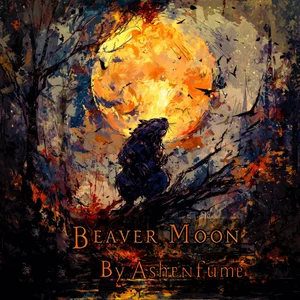
Blood orange opens Beaver Moon, with Madagascar elemi and neroli. The fragrance tells the Mi’kmaw story of Kopit, the giant beaver, and his broken dam, and its page gives blood orange the colour of the Minas Basin itself, red-brown water thick with silt, lit from above by a rising moon. The house oil is cold-pressed from the peel in Italy and labelled by its maker as Moro, the darkest of the blood oranges. Its makers advise keeping it in the cold, and the house does. It comes on as fresh juice with a strawberry depth, sweet and round. Beside it, neroli is the drowned garden of medicines, orange blossom held below the water. Neroli comes from the flower of the bitter orange, and bitter and sweet orange are both children of the pummelo and the mandarin1516, so the top of Beaver Moon holds the fruit of one orange and the flower of its sister. Elemi adds a bright, peppery lemon resin from the family of copal and myrrh, and starts the thread of resin that runs down through the fragrance.
 Found in
Beaver Moon
Blood orange at the top of the November moon, the colour of the flooded Basin.
View the fragrance

IIIAn orange of three bloods
Every sweet orange is a child of two other fruits. When a team led by Qiang Xu sequenced the Valencia orange in 2013, its genome read as a backcross hybrid of the pummelo and the mandarin, with about three parts mandarin to one of pummelo16. A wider study in 2018 traced the whole genus Citrus to the south-eastern foothills of the Himalaya, in eastern Assam, northern Myanmar and western Yunnan, where its species spread rapidly some six to eight million years ago. A fossil from Yunnan, Citrus linczangensis, is about eight million years old. The same study found that ten cultivars of sweet orange all came from one original genome, changed only by mutations in the buds15. The sweet orange has no wild form. It is a fruit made in gardens and kept alive by grafting.
Botanists name it Citrus × sinensis (L.) Osbeck, published in 1765, and Kew now folds it into the bitter orange as a form of Citrus × aurantium5. Blood oranges are one of its four groups, born from bud sports, branches that mutated on an ordinary tree and were grafted on by a grower who noticed red fruit9. In 2012 the plant geneticists Eugenio Butelli and Cathie Martin showed that the Sicilian blood oranges share a single origin. Moro, Tarocco, the Maltese blood orange, Doppio Sanguigno and the Spanish Sanguinelli all carry the same piece of inserted DNA, identical letter for letter3.
Sicily grows three of them under its protected name6. Each has its own season and its own red.
Moro
The Moro is the darkest. Its flesh runs almost violet-red, the most intensely coloured of all the blood oranges, and its pigment comes early17. It is the first red orange to reach the market, from December18, and in south-east Sicily it begins to make its pigment two or three weeks before the Tarocco, with less need of cold19. The Italian file that registered the protected name places its origin at the start of the twentieth century, in the orange country around Lentini, as a bud sport of the Sanguigno, and records that a Professor Casella described it in 193520. The Riverside citrus collection in California suggests a Sanguinello parent17. Its fruit is round and almost seedless, often borne in clusters of three or more, and its taste fades if it hangs too long on the tree17. Fruit from the triangle of Lentini, Francofonte and Scordia is prized for its firm, well-coloured flesh18.

Tarocco
The Tarocco is the half-blood, its amber flesh streaked with red that varies with the clone, the place and the day it is picked, and it carries a small collar at the stem end that Sicilians call the muso, the snout21. The registration file traces it to Francofonte in the late nineteenth century, after a note by Sebastiano Cocuzza of 1929, and gives a story for its name: the exclamation of wonder from the farmer who was first shown the fruit20. Other researchers date it to the early 1900s near Pedagaggi, in the same province of Siracusa2219. It is called the king of Sicily’s oranges, and more than twenty clones carry it from mid-December to mid-May22.
Sanguinello
The Sanguinello ripens last, from February. Its rind is garnet red and slightly rough, its amber flesh streaked with red, almost seedless and very juicy216. It was once Sicily’s leading blood orange, and its Moscato form takes its name from the flecks of colour scattered through the flesh23. Spain has a similar name and a different fruit. The Spanish Sanguinelli is a sport of the Doblefina, found in about 1929 at Castellón2419.
Further round the Mediterranean, the name Maltese travels without proof of Malta. The Maltaise demi-sanguine of today is grown and exported only by Tunisia, where it reaches its fullest on the Cap Bon peninsula and blushes red on its sunnier side25. China has a blood orange of its own, the Jingxian, first recorded in the Huaihua region in 1996, and its colour came from a separate event3.
IVThe gene that wakes in the cold
The red in a blood orange comes from anthocyanins. Cyanidin 3-glucoside and its malonyl partner make up more than 90 percent of the total8, with the malonyl form the larger, among ten anthocyanins identified in the fruit26. At equal ripeness the Moro holds the most, the Sanguinello less, and the Tarocco least27.
Most citrus never makes these pigments in its fruit, because the genes that would switch them on have been broken by mutation19. The switch in a blood orange is a gene called Ruby, which codes for a protein that turns on the anthocyanin genes. Put into tobacco, Ruby turned the leaves red328. In the blood oranges, Butelli and Martin found a retrotransposon sitting just upstream of Ruby, a stretch of 5,413 letters of DNA that once copied itself about the genome like a virus, called Tcs1. Ruby now starts reading from inside it. The element is quiet in the leaves and active in the fruit, and cold wakes it3. Plants usually keep such elements silent, and cold stress lets them loose28. The cold dependency of the colour, the researchers wrote, comes from the cold induction of the retroelement itself3. The Chinese Jingxian carries a similar element, Tcs2, inserted only 196 letters further up the same stretch3.
Why Etna
The flesh reddens best at about 8 to 15 °C, held for 15 to 30 days, with a wide swing between day and night9. All the blood varieties need strong day and night contrasts to colour deeply, and in Brazil or Florida their colour is usually weak, absent or unreliable. Reliable commercial production, the 2012 paper found, is limited to the Sicilian country around Mount Etna3. The registration file says the same of the hills and plain around the volcano: the wide daily swings of temperature drive the build-up of sugar and of pigment, and the same varieties grown under other skies fall short620. Even in Sicily the line is fine. Maria Carla Borghese, who grew organic Moro on her estate at Lentini, told a visiting writer in 2000 that the same tree ten kilometres away might give no red fruit at all23.
Picked fruit keeps reddening in a cool store. Kept a few weeks at 5 to 12 °C, it builds more pigment, and below about 3 °C the process stops and the fruit is chilled and injured8. In one trial at 5 °C, the anthocyanins of Moro rose thirty-one fold over storage, and those of Tarocco fourteen fold26.
VWhat the peel is for
The scent of an orange lives in its rind. The coloured skin is set with small glands, each a sealed sac of oil, and pressing or scratching bursts them2930. Limonene makes up as much as 97 percent of the volatile matter in the peel31. What that oil does for the tree is a story with two sides. In 2011 a Spanish team grew orange trees engineered to make far less limonene in the peel. Their fruit resisted green mould and citrus canker better than ordinary fruit, and drew fewer male Mediterranean fruit flies31. The smell of the peel, in other words, is a signal that the orange’s enemies read too. Yet the oil itself is a weapon. Greek researchers found sweet and bitter orange oils toxic to newly hatched larvae of the same fly, about as toxic as pure limonene, and suggested that the peel’s chemistry helps the fruit resist the pest32.
The flower works with bees. Citrus pollen is heavy and sticky, so wind carries it poorly, and honeybees are the best pollinators the trees have33. The flowers hold both sexes and can set fruit on their own, and the trees are generous with nectar, giving a high-quality honey in good years34. The Moro and the Tarocco are almost seedless1721. Sicilians call the blossom zagara, a word from the Arabic for flower35.
Why the fruit holds its red pigment is an open question. In leaves, anthocyanins act as a sunscreen and an antioxidant, shielding the cell from strong light and from damage in cold and drought36. What they do inside an orange has yet to be studied, and the red orange itself is a sport kept alive by people.
When the glands break
The oil that defends the fruit can also wound it. In late January 2026 Cyclone Harry blew across the Piana di Catania for two or three days. The agronomist Corrado Vigo drove from farm to farm photographing the damage, ripe fruit on the ground and fruit on the trees scarred where the wind had rubbed it against branch and neighbour and burst the oil glands, a damage called oleocellosis, in which the peel’s own oil injures the peel. He ranked the storm second only to the frost of 198737. Confagricoltura Sicilia put the losses at 30 to 80 percent of the crop, by cultivar, on hundreds of farms38.
VIFrom Portugal to Malta
The first citrus of the Mediterranean was the citron, a luxury of the Roman world, and the lemon followed. The bitter orange came with the Muslim world, probably through Sicily and Spain, from the tenth century39, and Sicily dates its citrus growing to the Arab rule of the island6. The sweet orange came later. A record in the archives of Savona in 1471 may be the first, the Genoese trade probably brought it, and the Portuguese spread it in the sixteenth century39. King João II of Portugal had an orange grove planted at his palace in Évora in 149040.
The trade left its name in the languages of the sea. In Italian the sweet orange is still portogallo, in Sicilian and southern dialects purtualli or partuàlli, in Albanian portokall and in Greek portokáli, all after Portugal4142.

The first written record of a red-fleshed orange in Italy is a hearsay. In 1646 the Jesuit Giovanni Battista Ferrari, keeper of Cardinal Barberini’s gardens, published Hesperides, a Latin treatise on the cultivation of the golden apples with a hundred copper plates of fruit at life size by Johann Friedrich Greuter and Cornelis Bloemaert43. In it he set down a missionary’s report of a Far Eastern orange with a pulp of purple colour that tasted of grapes22. One account places the fruit in the Philippines22, and another has Ferrari suggest it reached Sicily from China by way of a Genoese missionary3. Ferrari never saw the Moro, which was born three centuries later. Red oranges appear again in the books of Loureiro in 1790, Gallesio in 1811, and Risso and Poiteau, whose Histoire naturelle des orangers came out in Paris between 1818 and 1822, and in a painting by Bartolomeo Bimbi of the eighteenth century22.
By the nineteenth century the blood orange had a reputation in the north. In 1854 Charles Dickens’s weekly Household Words told its readers that the proper Maltese orange was a distinct kind with a pulp of deep blood red, in a country that took in about 300 million oranges a year, a third of them through London44. Red oranges became central to the Sicilian economy in that century18, although the agronomist Giuseppe Barbera notes that for a long time they were less valued than blond fruit, especially abroad45. The French kitchen gave the fruit a sauce. In his Guide to Modern Cookery of 1907, Auguste Escoffier made his Maltese sauce by adding the juice of two blood oranges to a hollandaise as it went to the table, and found the late oranges of the season especially suited to it46.
VIIThe orange at the table
In Sicily the blood orange is first of all a thing to eat and drink. Its juice marinates poultry, meat and fish. Sliced with fennel it makes the classic Sicilian salad, and the peel goes into zest, marmalade, jelly, compote and candied peel47. At Christmas the orange salad comes between the heavy courses, oranges with fennel, red onion, black olives, oil, salt and parsley48. In the winter of 1999 to 2000 the American writer David Karp found crowds at the kiosks of Catania drinking blood orange juice cut with mineral water after midnight, blood orange cake and gelato along the Via Etnea, marzipan made in the shape of oranges, and vendors calling the Tarocco from three-wheeled trucks as the sweetest of all23. Maria Carla Borghese had begun Le Arance della Salute in 1989, a sale of oranges to fund cancer research23.
Before it was a perfumery material, the peel was a household one. The bitter oranges of the old Islamic gardens were grown for ornament, for medicine in the belief of the time, and for liqueurs and marmalade45. In 1857 the perfumer Septimus Piesse gave a recipe for a scented sachet he called Portugal, a pound of dried orange peel with half a pound each of lemon peel and orris root, scented with an ounce of the pressed orange oil, a little neroli and lemongrass. He also taught a parlour trick that shows where the oil lives: pinch a piece of fresh orange peel near a candle and the oil that spurts out catches fire in a bright flash30.
The scent of the blossom belongs to the island’s literature. In Giuseppe Tomasi di Lampedusa’s novel Il Gattopardo, set in May 1860, the prince’s carriage crosses the orange groves of the Conca d’Oro in flower, and the scent of the zagara overwhelms everything else on the road49.


VIIIPicking under Etna
The protected Arancia Rossa di Sicilia grows in thirty-two comuni, eighteen in the province of Catania, among them Paternò, Adrano, Biancavilla, Palagonia and Scordia, eleven in Siracusa, among them Lentini, Francofonte and Carlentini, and three in Enna, Centuripe, Regalbuto and Catenanuova6. Its rules are those of a careful harvest. Each fruit is cut from the tree with small picking clippers that sever the stalk. Degreening, the forced colouring of the rind, is absolutely forbidden. A hectare may give at most 25 tonnes of Tarocco, 30 of Moro and 32 of Sanguinello, and the fruit must reach a set size and sweetness. Smaller fruit, down to 60 millimetres, may go only to juice6.
The season of 2025 and 2026 ran in the usual order. The Moro came first, in the third week of December, the Tarocco from 2 January, and the Sanguinello from early February4. Late Tarocco clones such as Meli and Sant’Alfio carry it into late spring1.
The labour is hard and often poorly paid. In February 2025 the newspaper Avvenire visited a camp of tents and shacks at Ciappe Bianche, on the edge of Paternò, facing Etna and the groves of the Simeto valley, where about sixty young men, most of them Tunisian and Moroccan, lived without power or running water. At dawn, middlemen chose who would pick that day. One of them, Firas, told the paper he picked oranges for fifteen hours at 90 cents a crate and finished the day with about 30 euros50.
The blood orange’s oil is a by-product of its juice. In the season of 2024 and 2025 the consortium certified 26.2 million kilograms of the protected fruit, 21.3 million of it sold fresh and 4.9 million sent to industry51, and in Sicily the juice plants take juice, oil, pulp and peel from the same fruit52. Before the press, the care is in speed and water. Fruit should wait in its bins for less than a day before extraction, and it is washed in fresh water or in the clean water condensed from the juice evaporators10.
IXFrom peel to oil
For most of its history Sicilian citrus oil was pressed by hand into a sponge. Gildemeister and Hoffmann described the method in 1900. A worker cut the fruit into quarters, took out the pulp and pressed the rind against a sponge, so that the oil cells broke and gave their contents up to it. When the sponge was full, the worker squeezed it out by hand. The sponges were medium horse sponges, and after about ten days of use one was spent. In a variant the fruit was halved and its contents scooped out with a kind of spoon before the rinds were pressed29. In Messina the spoon was the rastreddu and the basin that caught the oil the conculina53. Sawer’s Odorographia of 1892 gave the sponge from 9 to 14 ounces of oil from 400 lemons54. On the Riviera, at Nice and Menton, perfumers used the écuelle à piquer, a bowl set with brass needles that drained into a tube2954.
Calabria built a machine. In 1844 Nicola Barillà of Reggio invented the macchina calabrese, which pressed and scraped the whole fruit and gave more oil in less time55. The fruit sat in a fixed cup set with spikes while a ribbed upper cup turned it, at first by hand on a great wheel, later by motor, about 100 kilograms of fruit an hour56. By 1900 it was used almost only for bergamot29.
The modern Italian machines keep the old principle. The pelatrice peels the oil from whole fruit with abrasive rollers under a spray of water, up to 20 tonnes an hour, and the sfumatrice presses halved, juiced peels between a grooved belt and a perforated casing, the sponge made mechanical56. In the in-line extractor, introduced in 1950, a cup closes on each fruit and takes juice and oil at the same moment. One line holds up to fifteen extractors and each handles about five tonnes of fruit an hour5710.
What comes out is an emulsion, oil scattered in water at 0.5 to 2 percent. A first centrifuge brings it to 70 to 90 percent oil and a second polishes it to more than 99. The finished oil still holds waxes, so it is winterised, held at 1 °C or colder for thirty days or more until the wax settles, and then stored at minus 10 °C10. Recovered oil comes to about 0.3 percent of the fruit, so a kilogram of cold-pressed oil takes roughly 330 kilograms of oranges10. The method shifts the figure: an old Italian sfumatrice gave about 3 parts in a thousand, and the earlier American in-line machine about 156.
After the press
Pressed orange oil is fragile. Gildemeister wrote in 1900 that a rectified orange oil kept badly and soon took on a stale, grating smell29. The American Dispensatory of 1918 counted it among the hardest oils to preserve, to be kept in small, well-stoppered amber bottles in a cool, dark place, and an orange oil that smelled of turpentine was not to be dispensed58. Arctander listed its faults as rancidity, off-flavour and bleaching by peroxides14. Air turns limonene into hydroperoxides59. In a cold-pressed oil of a related bitter orange kept a year at 20 °C, a third of the fresh monoterpenes were lost and 34 new compounds appeared, carvone among them, and at minus 21 °C nothing changed60. Cold keeps the fruit in the oil.
XNinety-five parts limonene
An orange oil is almost all one molecule. In 1996 chemists at the University of Messina pressed oils from Italian cultivars in the laboratory and measured each. The Moro oil held 94.8 percent limonene, 1.9 percent myrcene, 0.6 sabinene, 0.5 linalool and 0.5 α-pinene. Below them lay the molecules that carry the character, octanal at 0.14 percent, decanal at 0.16, geranial at 0.09, the sinensals at about 0.03 each, and valencene at 0.181161.
Where the red goes
The red stays in the juice. Anthocyanins dissolve in water6, and the oil is a liquid of hydrocarbons, about 95 percent limonene11, so the pigment has nowhere to go. The standard for sweet orange oil allows a colour from yellow to reddish yellow62, and Arctander found the pressed oils pale orange-yellow to dark orange, the hand-pressed oils usually darker than the machine oils14. What makes a blood orange oil is its chemistry.
Why a trace can carry
A molecule’s share of an oil and its strength in the nose are two different measures. The chemist Günther Ohloff defined the odour value of a molecule as its concentration divided by the lowest concentration the nose can detect, and showed in rose oil that constituents making up only about one percent of the oil decide its smell63. In water, the nose finds limonene at about 60 micrograms a litre and octanal at about 1.4, decanal at about 2 and linalool at about 5.364. Gram for gram, then, octanal is about forty times as strong as limonene. In the Moro oil above, limonene outweighs octanal more than six hundred times, and still the trace of aldehyde and the half percent of linalool each carry a real share of the smell. The arithmetic is the folio’s own, from the cited figures, and the appendix sets it out.
When American chemists sniffed orange essence oil as it came off a gas chromatograph in 2003, no single compound smelled of orange. The strongest were octanal, lemony and green, wine lactone, linalool, floral, β-ionone, floral with raspberry, and decanal, lemony and fatty, and β-sinensal, sweet. Limonene, about 94.5 percent of the oil, showed only moderate activity65. In a cold-pressed peel oil of a Chinese sweet orange, the strongest were linalool, fruity, α-pinene, piney, and decanal, fruity, soapy and balsamic66. The smell of an orange is a chord of traces over a sea of limonene.
Blood against blond
The blood oranges carry a chemistry of their own. In the 1996 study the Moro oil held about half the octanal of the common blond orange, 0.14 percent against 0.33, and more than twice its valencene, 0.18 against 0.07. The Sanguinello held the most valencene and the most nootkatone of all eight cultivars studied1161. Nootkatone smells of grapefruit and valencene is green and oily6768. Across 190 genuine industrial oils of the 1991 and 1992 season, the blood oils had more monoterpenes and fewer aldehydes and alcohols than the blond, and their valencene rose as the season went on69. Read against the house’s own notes, a blood orange oil leans away from the sharp, waxy aldehydes of the peel toward the round body of the fruit.
Beneath the volatile oil lies a residue of one to four percent62, largely coumarins and polymethoxyflavones, heavy molecules from the peel with little smell. Their pattern depends most on when the fruit was picked and whether it was blond or blood70.
XIThe perfumer’s orange
The old trade knew sweet orange oil as Portugal. Piesse wrote in 1857 that essence of orange was more often called essence of Portugal, made by expression and by distillation from rasped peel, and that it led the toilet waters sold as Lisbon Water and Eau de Portugal. His Eau de Portugal took six ounces of orange peel oil to a gallon of spirit, with lemon, lemongrass, bergamot and a quarter ounce of rose30. Eugène Rimmel in 1865 called the rind oil of the edible orange oil of Portugal and placed its making in Calabria and Sicily, where in his day they pressed the rind in cloth bags71.
The first orange of the perfumer was the bitter one. Eau de Cologne, Rimmel wrote, drew its scent chiefly from the flowers, leaves and rind of the bitter orange71, and Askinson warned in 1892 that a formula asking for oil of orange without saying which meant the bitter72. Sweet orange entered the cologne as orange peel. Piesse’s first-quality Eau de Cologne took five ounces of it to six gallons of grape spirit, beside neroli, rosemary, citron and bergamot30.
Sicily was the trade’s workshop. In 1897 Sicily and Reggio exported 732,092 kilograms of citrus essences, three quarters of them through Messina, lemon, bergamot and orange together29. Gildemeister described sweet orange oil as a yellow to yellowish-brown liquid of characteristic orange odour, at least nine tenths limonene29. Steffen Arctander, writing in 1960, found it sweet, light and fresh, fruity and aldehydic, like a scratched sweet orange peel, and used it in colognes, fougères, chypres and aldehydic bases. The world then made more than 1,500 tonnes a year14. No perfumer of the old books wrote about blood orange oil as a material of its own. It is a modern refinement of the oldest citrus in the cologne.
Arctander also set out what the trade does to the oil after the press. Distilled orange oil, steamed from spent peel or taken from the juice evaporators, is very pale, fresh and sweet, thin and short-lived, and it turns rancid faster than the pressed oil. He gave it some use in perfume, and found it mixed into pressed oil as a cheap stretch. Taking the terpenes away concentrates the rest: a terpeneless orange is often only fifteen times as strong by weight, and the best all-round concentrate, he wrote, is six to ten times. The terpeneless oil smells very pleasant, fresh and sweet, and an oil stripped of its sesquiterpenes as well turns very sweet and sharply aldehydic14.
The colour of the Basin itself, red-brown water thick with silt, lit from above.
XIIWaiting for winter
The blood orange depends on winters that are growing less reliable. In November 2023 Coldiretti Sicilia said the red oranges were late to colour for want of cold, and the head of its Catania branch, Andrea Passanisi, expected smaller, paler fruit with the same taste73. Drought followed. The second half of 2023 was the driest in Sicily for more than a century, and in February 2024 Vito Amantia, a grower near Etna in his late sixties, said he had never seen anything like it74. In December 2024 growers counted a cost of at least 50 cents a kilogram against market prices as low as 30, and more than 2,500 hectares of groves abandoned75. Sicily’s citrus area shrank by more than a fifth between 2000 and 201976, and citrus tristeza virus, first reported from a major Sicilian citrus area near Siracusa in 2003, has since spread across hundreds of square kilometres of Catania and Ragusa7776. It is the main threat to old Moro groves, and many growers have replanted on tolerant rootstocks18.
The protected fruit holds its place. In 2024 the Arancia Rossa di Sicilia ranked third among Italy’s protected fruit and vegetables by value, grown by more than 500 farms and packed in 80 centres78. After Cyclone Harry its consortium answered with a slogan, stronger than the wind and redder than ever79. Each year the colour waits on the same thing it waited on in Paternò in November 2025, a run of cold nights below the volcano.
Blood orange through the centuries
- 10th century
The bitter orange reaches the Mediterranean through Sicily and Spain39.
- 1471
A Savona record may be the first of the sweet orange in Europe39.
- 1490
João II plants an orange grove at Évora40.
- 1646
Ferrari’s Hesperides reports a purple-pulped orange of the Far East22.
- 1765
Osbeck publishes the name Citrus sinensis5.
- 1818
Risso and Poiteau begin their Histoire naturelle des orangers22.
- 1844
Nicola Barillà builds the macchina calabrese55.
- 1854
Household Words praises the blood-red Maltese orange44.
- 1857
Piesse prints Eau de Portugal30.
- 1897
Sicily and Reggio export 732,092 kg of citrus essences29.
- About 1900
The Moro appears near Lentini20.
- 1907
Escoffier’s Maltese sauce calls for blood oranges46.
- 1950
The in-line extractor takes juice and oil together57.
- 1996
Arancia Rossa di Sicilia becomes a protected name12.
- 2012
Butelli and Martin find the Ruby gene and its cold-woken element3.
- 2026
Cyclone Harry strikes the Piana di Catania37.
Found in
Beaver Moon
Blood orange at the top of the November moon.
AppendixFor the perfumer
The cultivars, the rules of the protected fruit, the oil by cultivar and by season, the odour weight of its molecules, the yields and machines, the tests, the old formulas, the trade and the safety record of blood orange oil, set out for reference at the bench.
- Cultivars and names
- The protected fruit
- The oil by cultivar
- Blood against blond
- What the molecules smell like
- Yields and machines
- Grades and tests
- The orange in the old formulas
- Trade and prices
- Safety in plain words
Cultivars and names
| Cultivar | Origin | Season and colour | Source |
|---|---|---|---|
| Moro | Near Lentini, early 1900s, a bud sport of Sanguigno by the registration file, possibly of Sanguinello Moscato by Riverside | December to March. Flesh almost violet-red, the darkest | 201718 |
| Tarocco | Francofonte, late 1800s, by tradition, or near Pedagaggi, early 1900s | Mid-December to mid-May across more than 20 clones. Amber flesh streaked red | 2022 |
| Sanguinello | Sicily, date not recorded in the sources read | From February. Garnet rind, amber flesh streaked red | 216 |
| Sanguinelli | Castellón, Spain, about 1929, a sport of Doblefina | A separate cultivar from the Sicilian Sanguinello | 24 |
| Maltaise demi-sanguine | Grown and exported by Tunisia, best on Cap Bon | January to March. Red on the sunnier side | 25 |
| Jingxian | China, first recorded in 1996 | Coloured by a separate element, Tcs2 | 3 |
Names to watch. Sanguinello and Sanguinelli are two cultivars, and some extension guides mix them up924. Maltese in a name is no proof of Malta25. The Cara Cara navel and other pink-fleshed oranges are red from lycopene, the pigment of tomatoes, and are no blood oranges19. The English summary of the Sicilian registration file dates the Moro to the early nineteenth century, where the Italian original says the start of the last century, written in the 1990s2080. Moro is a cultivar, and oil labels that call it a variety use a trade habit.
The protected fruit
| Rule | Tarocco | Moro | Sanguinello | Source |
|---|---|---|---|---|
| Clones | Comune, Galice, Gallo, dal Muso, Nucellare 57-1E-1 and 61-1E-4, Catania, Scirè | Comune, di Lentini, Nucellare 58-8D-1 | Comune, Moscato, Moscato Nucellare 49-5-3 and 49-5-5, Moscato Cuscunà | 6 |
| Maximum yield | 25 t a hectare | 30 t | 32 t | 6 |
| Minimum diameter | 73 to 84 mm by class | 70 to 80 mm | 70 to 80 mm | 6 |
| Minimum sugars in the juice | 10.00 g per 100 ml | 10.00 g | 9.00 g | 6 |
For every cultivar. Thirty-two comuni in the provinces of Catania, Siracusa and Enna. Usually 230 to 420 trees a hectare. Fruit cut with small clippers. Degreening forbidden. A ratio of solids to acid of at least 8.0. Fruit down to 60 mm may go only to juice. Nucellar clones may give 36 t a hectare6. The first registration of 1996 allowed 30 t a hectare for Tarocco, a figure later lowered8012.
The oil by cultivar
How to read the table. These are oils pressed in the laboratory from single cultivars of Italian fruit, measured by gas chromatography and given as percent of the oil. Industrial oils come from mixed fruit and run slightly differently.
| Molecule | Moro | Tarocco | Sanguinello | Biondo comune (blond) | Source |
|---|---|---|---|---|---|
| Limonene | 94.77 | 95.50 | 94.45 | 94.01 | 1161 |
| Myrcene | 1.86 | 1.82 | 1.97 | 1.83 | 61 |
| Sabinene | 0.60 | 0.38 | 0.49 | 0.93 | 61 |
| Linalool | 0.54 | 0.43 | 0.56 | 0.65 | 61 |
| α-Pinene | 0.48 | 0.48 | 0.50 | 0.48 | 61 |
| Octanal | 0.14 | 0.18 | 0.17 | 0.33 | 61 |
| Decanal | 0.16 | 0.16 | 0.27 | 0.32 | 61 |
| Geranial | 0.085 | 0.073 | 0.082 | 0.133 | 61 |
| Neral | 0.055 | 0.048 | 0.050 | 0.088 | 61 |
| β-Sinensal | 0.036 | 0.023 | 0.021 | 0.044 | 61 |
| α-Sinensal | 0.031 | 0.017 | 0.018 | 0.042 | 61 |
| Valencene | 0.177 | 0.093 | 0.309 | 0.067 | 61 |
| Nootkatone | 0.022 | 0.014 | 0.036 | 0.011 | 61 |
Traces in the Moro oil. δ-3-Carene 0.15, citronellal 0.04, nonanal 0.035, dodecanal 0.03, α-terpineol 0.055, geranyl acetate 0.02, perillaldehyde 0.01, the limonene oxides 0.01 each81. The paper is catalogued as both part XLVII and part XLVIII of its series, so it is cited here by journal and pages.
Blood against blond
How to read the table. Means of genuine industrial oils of the 1991 and 1992 season, from a survey of 190 Italian oils. The figures come from a scanned summary, and a few cells could not be read and are left out.
| Molecule or class | Blond | Blood | Source |
|---|---|---|---|
| Sabinene | 0.625 | 0.387 | 82 |
| Linalool | 0.478 | 0.358 | 82 |
| Decanal | 0.229 | 0.135 | 82 |
| Geranial | 0.095 | 0.055 | 82 |
| β-Sinensal | 0.029 | 0.016 | 82 |
| Aliphatic aldehydes, all | About 0.59 | About 0.32 | 82 |
| Oxygenated compounds, all | About 1.53 | About 0.99 | 82 |
Through the season. Valencene and the esters rise as the season goes on, valencene mainly in the blood oils69. The peeling machines give oils with more aldehydes and alcohols than the in-line extractor: octanal 0.238 against 0.144 percent, decanal 0.210 against 0.1416982. Italian plants process blood and blond fruit in the same weeks, and a blood oil from an industrial line is usually a blend of the three cultivars82. A single-cultivar name on a bottle is its maker’s statement.
What the molecules smell like
How to read the table. Thresholds are the lowest concentrations detected by smell in water, in micrograms a litre. The odour weight divides the share in the Moro oil above by that threshold and is the folio’s own arithmetic, a guide only: thresholds in air and on skin differ, and molecules mask and lift one another in a mixture.
| Molecule | Odour | Threshold in water | Odour weight in Moro oil | Source |
|---|---|---|---|---|
| Limonene | Citrus, mint | 60 | 1.58 | 8364 |
| Octanal | Fat, soap, lemon, green | 1.4 | 0.10 | 8464 |
| Linalool | Flower, lavender | 5.3 | 0.10 | 8564 |
| Decanal | Soap, orange peel, tallow | 2 | 0.08 | 8664 |
| Myrcene | Balsamic, must, spice | 36 | 0.05 | 8764 |
| α-Pinene | Pine | 9.5 | 0.05 | 6466 |
| Geranial | Lemon, mint | 85.3, as citral | Under 0.01 | 8864 |
| β-Sinensal | Sweet | Not measured | 8964 | |
| Valencene | Green, oil | Not given | 68 | |
| Nootkatone | Grapefruit | Not given | 67 |
In the juice. The juice smells of other molecules. In hand-squeezed Valencia and navel juice the highest odour values belong to fruity esters, wine lactone, a green aldehyde and decanal90. Ethyl butanoate smells of apple91. In Moro and Sanguinello juice, fifteen volatiles pass their thresholds, led by limonene, nootkatone and linalool13. The esters belong to the juice and are rare in the peel oil.
Yields and machines
How to read the yields. The figures below are per weight of whole fruit, by method. The old perfumery books give yields per weight of peel, which run higher, and these are listed apart.
| Method or source | Oil, percent of fruit | Fruit for 1 kg of oil | Source |
|---|---|---|---|
| Recovered peel oil, modern juice plant | About 0.3 | About 330 kg | 10 |
| Industry range | 0.2 to 0.4 | 250 to 500 kg | 57 |
| Spain | 0.16 to 0.23 | About 435 to 625 kg | 57 |
| Sfumatrice on whole oranges, 1991 | About 0.3 | About 330 kg | 56 |
| In-line extractor, 1991 | About 0.1 | About 1,000 kg | 56 |
| Per weight of peel, in the old books | |||
| Piesse, 1857: 10 lb of peel give about 1 oz of oil | About 0.6 of peel | 30 | |
| Askinson, 1892, sweet orange peel | 2.5 of peel | 72 | |
| Method | Place and date | How it works | Source |
|---|---|---|---|
| Sponge, spugna | Sicily, into the 20th century | Quartered or halved rind pressed into a horse sponge, squeezed into a basin. A sponge lasts about ten days | 2953 |
| Écuelle à piquer | Nice and Menton | A bowl of brass needles draining into a tube | 2954 |
| Macchina calabrese | Reggio, 1844, Nicola Barillà | Whole fruit turned between a spiked cup and a ribbed cup, about 100 kg an hour | 5556 |
| Pelatrice | Italy, 20th century | Abrasive rollers under water sprays, 6 to 20 t an hour | 56 |
| Sfumatrice | Italy, 20th century | Juiced peels pressed between a grooved belt and a perforated casing | 56 |
| In-line extractor | Florida, from 1950 | Juice and oil in one stroke, about 5 t an hour an extractor | 5710 |
| Brown oil extractor | United States | Whole fruit rolled over millions of steel points under a pool of water, oil taken before juicing | 92 |
After the press. The emulsion holds 0.5 to 2 percent oil and gives 200 to 300 litres a tonne of fruit. A three-phase centrifuge takes it to 70 to 90 percent, a polisher above 99. Winterising at 1 °C or colder for 30 days or more drops the wax, and the oil is stored at minus 10 °C10.
Grades and tests
| Property | Range | Source |
|---|---|---|
| Colour | Yellow to reddish yellow | 62 |
| Relative density at 20 °C | 0.842 to 0.850 | 62 |
| Refractive index | 1.470 to 1.476 | 62 |
| Optical rotation | +94° to +99° | 62 |
| Residue on evaporation | 1.0 to 4.0 percent | 62 |
| Limonene | 93.0 to 96.0 percent | 62 |
| Myrcene | 1.5 to 3.5 | 62 |
| Octanal | 0.1 to 0.6 | 62 |
| Decanal | 0.1 to 0.7 | 62 |
| Linalool | 0.15 to 0.7 | 62 |
| Valencene | 0.01 to 0.4 | 62 |
| β-Sinensal | 0.01 to 0.06 | 62 |
The standard and the blood orange. The standard has no separate type for blood orange, and every cultivar figure in the 1996 table falls inside its ranges. No published test tells a blood oil from a blond one. The signs in the literature are lower octanal, decanal and citral and higher valencene621169.
Adulteration today
Terpenes. Pressed orange oil is often stretched with limonene or orange terpenes14. Terpenes carry almost no aldehydes, esters or sesquiterpenes, so they thin those classes. Distilled orange oil raises terpinen-4-ol and α-terpineol. Synthetic citral carries a marker impurity, and synthetic linalool is racemic93. Chirality. Sweet orange carries mostly (+)-limonene and (S)-linalool, and an added (−)-limonene used to correct the rotation of a rebuilt oil shows in the ratio9495. The heavy fraction. A compounded orange showed none of the polymethoxyflavones of a genuine pressed oil96. Orange as the cheat. In a 2021 survey of oils bought online, two of eleven mandarin oils held about 95 percent limonene, a sign of sweet orange sold under a dearer name97. Added limonene is usually orange-derived, so a radiocarbon test would miss it. The ratio and residue tests do the work.
Historic tests, dated
| Year | Test or adulterant | Reading | Source |
|---|---|---|---|
| 1892 | Shaking with water in a vessel of 100 divisions | The oil shrinks if alcohol was added | 72 |
| 1892 | Rectified turpentine | Almost always the adulterant of cheap orange peel oil | 72 |
| 1900 | Specific gravity and rotation | A low gravity and a high rotation reveal most adulterants | 29 |
| 1900 | Lemon terpenes | Used in great quantity at Messina | 29 |
| 1918 | Smell of turpentine | The oil is not to be dispensed | 58 |
| 2012 | Ultraviolet absorbance at about 330 nm | Total aldehydes 1.2 to 2.5 percent as decanal, with a minimum absorbance by type | 98 |
The orange in the old formulas
How to read the formulas. Quantities follow the 1857 Philadelphia edition of Piesse. His 1862 London edition revised several of them. In the old books “orange” with no other word can mean the bitter orange, and Askinson says so outright72.
| Preparation | Orange peel oil | With | Source |
|---|---|---|---|
| Eau de Portugal | 6 oz | Rectified spirit 1 gallon, lemon peel 1 oz, lemongrass ¼ oz, bergamot 1 oz, rose ¼ oz | 30 |
| Lisbon Water | 3 oz | Rectified spirit 1 gallon, lemon peel 3 oz, rose ¼ oz | 30 |
| Eau de Cologne, first quality | 5 oz | Grape spirit 6 gallons, neroli pétale 3 oz, neroli bigarade 1 oz, rosemary 2 oz, citron peel 5 oz, bergamot 2 oz | 30 |
| Eau de Cologne, second quality | 4 oz | Corn spirit 6 gallons, neroli petit-grain 2 oz, neroli pétale ½ oz, rosemary 2 oz, lemon and bergamot 4 oz each | 30 |
| Portugal sachet | 1 oz, with 1 lb dried peel | Lemon peel ½ lb, orris root ½ lb, neroli ¼ drachm, lemongrass ¼ drachm | 30 |
Askinson, 1892. Eau de Lisbonne: oil of lemon 2½ oz, orange peel 4½ oz, rose ⅜ oz, alcohol 5 quarts. He counts the oils of lemon, bergamot and orange among the normal constituents of every Cologne water72.
Trade and prices
How to read the figures. No price for blood orange oil has been published outside sellers’ own pages, so the table gives the trade it belongs to. Every figure keeps its year and its scope.
| Year | Figure | Scope | Source |
|---|---|---|---|
| 1897 | 732,092 kg | All citrus essences exported from Sicily and Reggio, Messina 560,788 kg | 29 |
| 1960 | More than 1,500 t | World sweet orange oil, pressed and distilled | 14 |
| 2022 | About 1,270 t | Italian orange oil, estimated | 57 |
| 2022 | 27,141 t, US$231 million | Brazil’s orange oil exports | 57 |
| About 2023 | About 40,000 t | World orange oil, Brazil 60 to 65 percent of trade | 57 |
| To 2023 | US$0.50 to 19 a kg | Range of orange oil prices, the top a recent peak | 57 |
| 2024 | About 82,500 ha | Italian oranges, Sicily about two thirds | 99 |
| December 2024 | At least 50 cents against as low as 30 cents a kg | Sicilian growers’ cost against market price, all oranges | 75 |
| 2024 to 2025 | 26,172,138 kg | Protected blood oranges marketed, 4,874,780 kg to industry | 51 |
| February 2026 | €0.90 to 1.80 a kg | Wholesale Tarocco after Cyclone Harry | 79 |
Safety in plain words
Oxidation. In a 1992 test, limonene kept from the air did not sensitise, and limonene left in air did. Its hydroperoxides are potent skin allergens10059. In patch tests of 2,273 patients at four European clinics, 0.3 to 6.5 percent reacted to oxidised limonene101. The fragrance industry’s own standard asks for a peroxide value below 20 millimoles a litre and advises an antioxidant at production102. An older opened bottle can cause a reaction where a fresh one is tolerated103. Keep the oil cold, dark, full and well closed58.
Light. Sweet orange oil is low in the light-reactive furocoumarins that restrict bergamot and bitter orange: 69 to 140 parts per million in Brazilian oils, against about 809 in bitter orange and about 167,000 in Italian bergamot104. The industry’s standard on citrus oils does not list it105. A safety review of 2014 records a phototoxic signal in the laboratory and reactions in a small human test at 1 percent, none at 0.1 percent or below106.
The Beaver Moon collectionMore from the November moon
 ✦ Folio to come
Madagascar Elemi
The peppery lemon resin beside blood orange at the top.
Folio to come
 ✦ Folio No. 36
Black Copal
The green, shadowed heart of the November moon.
Folio to come
 ✦ Folio No. 1
Trat Oud
The fermented oud of the heart, leathery fruit through the timber.
Read the folio
 ✦ Folio No. 28
Siberian Fir
Crisp needles with a citrus edge, just below the orange.
Read the folio
 ✦ Folio No. 22
Kua Myrrh
Caramel and orange zest in the base, where the resin thread ends.
Read the folio
 ✦ Folio No. 17
Castoreum
Kopit himself, the beaver at the floor of the fragrance.
Read the folio
✦ ✦ ✦
Sources & image credits106 references
- Di Lunardo C., The citrus fruit season in Sicily between a slow start and the wait for pigmented fruits, FreshPlaza (27 November 2025).↑
- Plester J., Weatherwatch: the prized blood oranges from Mount Etna, The Guardian (9 October 2021).↑
- Butelli E., Licciardello C., Zhang Y., Liu J., Mackay S., Bailey P., Reforgiato-Recupero G., Martin C., Retrotransposons control fruit-specific, cold-dependent accumulation of anthocyanins in blood oranges, The Plant Cell 24(3), 1242-1255 (2012).↑
- FreshPlaza Italia, Al via la raccolta delle arance rosse di Sicilia, interview with Gerardo Diana, FreshPlaza (17 December 2025).↑
- Royal Botanic Gardens, Kew, Citrus × sinensis (L.) Osbeck, Plants of the World Online (accessed November 2026).↑
- Ministero delle politiche agricole alimentari e forestali, Disciplinare di produzione della indicazione geografica protetta Arancia Rossa di Sicilia, consolidated text published by Italia a Tavola (2013).↑
- Consorzio di Tutela Arancia Rossa di Sicilia IGP, Arancia Rossa di Sicilia IGP, Catania (accessed November 2026).↑
- Habibi F., Sarkhosh A., Brecht J.K., Postharvest anthocyanin enhancement in blood orange fruit, EDIS HS1494, University of Florida IFAS Extension (accessed November 2026).↑
- Habibi F., Sarkhosh A., Gmitter F.G., Brecht J.K., Blood oranges in Florida: facts, challenges, and considerations, EDIS HS1500, University of Florida IFAS Extension (accessed November 2026).↑
- Tetra Pak, Fruit processing, in The Orange Book, Tetra Pak Processing Systems (accessed 2026).↑
- Verzera A., Trozzi A., Stagno d’Alcontres I., Cotroneo A., On the genuineness of citrus essential oils. The composition of the volatile fraction of some varieties of sweet orange oils, Journal of Essential Oil Research 8, 159-170 (1996).↑
- European Commission, Commission Implementing Regulation (EU) No 1117/2013 of 6 November 2013 approving non-minor amendments to the specification for Arancia Rossa di Sicilia (PGI), citing registration under Regulation (EC) No 1107/96, OJ L 148, 21.6.1996.↑
- Selli S., Kelebek H., Aromatic profile and odour-activity value of blood orange juices obtained from Moro and Sanguinello (Citrus sinensis L. Osbeck), Industrial Crops and Products 33(3), 727-733 (2011).↑
- Arctander S., Perfume and Flavor Materials of Natural Origin, Elizabeth, New Jersey (1960), Orange oil, sweet, distilled, expressed and terpeneless, pp. 349-353.↑
- Wu G.A., Terol J., Ibanez V. et al., Genomics of the origin and evolution of Citrus, Nature 554, 311-316 (2018).↑
- Xu Q., Chen L.-L., Ruan X. et al., The draft genome of sweet orange (Citrus sinensis), Nature Genetics 45, 59-66 (2013).↑
- Givaudan Citrus Variety Collection at UC Riverside, Moro blood orange, CRC 3811, University of California, Riverside (accessed November 2026).↑
- Gangemi L., Arancia moro, Arca del Gusto, Fondazione Slow Food per la Biodiversità (accessed November 2026).↑
- Seminara S., Bennici S., Di Guardo M., Caruso M., Gentile A., La Malfa S., Distefano G., Sweet orange: evolution, characterization, varieties, and breeding perspectives, Agriculture 13(2), 264 (2023).↑
- Ministero delle Risorse Agricole, Domanda di registrazione IGP Arancia Rossa di Sicilia, scheda riepilogativa, European Commission eAmbrosia register (1990s, Italian original).↑
- Consorzio di Tutela Arancia Rossa di Sicilia IGP, Le varietà, Catania (accessed November 2026).↑
- Catara A., Continella G., Reforgiato Recupero G., History of blood oranges, abstract, American Society for Horticultural Science annual conference, New Orleans (6 August 2015).↑
- Karp D., Fruit as red as fire, Saveur (9 November 2000).↑
- Givaudan Citrus Variety Collection at UC Riverside, Sanguinelli blood orange, CRC 3828, University of California, Riverside (accessed November 2026).↑
- Givaudan Citrus Variety Collection at UC Riverside, Maltaise demi sanguine blood orange, CRC 4224, University of California, Riverside (accessed November 2026).↑
- Habibi F., Ramezanian A., Guillén F., Castillo S., Serrano M., Valero D., Changes in bioactive compounds, antioxidant activity, and nutritional quality of blood orange cultivars at different storage temperatures, Antioxidants 9(10), 1016 (2020).↑
- Rapisarda P., Amenta M., Ballistreri G., Fabroni S., Timpanaro N., Distribution, antioxidant capacity, bioavailability and biological properties of anthocyanin pigments in blood oranges and other citrus species, Molecules 27(24), 8675 (2022).↑
- American Society of Plant Biologists, Solved: the mystery of the blood orange, EurekAlert! news release (16 March 2012).↑
- Gildemeister E., Hoffmann Fr., trans. Kremers E., The Volatile Oils, Pharmaceutical Review Publishing Co., Milwaukee (1900), Oils of the agrumen fruits, pp. 461-466, Oil of sweet orange (197) and Oil of bitter orange (198), pp. 471-473.↑
- Piesse G. W. S., The Art of Perfumery, and Methods of Obtaining the Odors of Plants, Lindsay and Blakiston, Philadelphia (1857), entries Orange, Verbena, Eau de Cologne, Portugal sachet and the table of yields of ottos, Project Gutenberg text via Internet Archive.↑
- Rodríguez A., San Andrés V., Cervera M., Redondo A., Alquézar B., Shimada T., Gadea J., Rodrigo M.J., Zacarías L., Palou L., López M.M., Castañera P., Peña L., Terpene down-regulation in orange reveals the role of fruit aromas in mediating interactions with insect herbivores and pathogens, Plant Physiology 156(2), 793-802 (2011).↑
- Papachristos D.P., Kimbaris A.C., Papadopoulos N.T., Polissiou M.G., Toxicity of citrus essential oils against Ceratitis capitata (Diptera: Tephritidae) larvae, Annals of Applied Biology 155(3), 381-389 (2009).↑
- Futch S.H., Jackson L.K., Pollination of citrus hybrids, EDIS CH082, University of Florida IFAS Extension (accessed November 2026).↑
- Sanford M.T., Pollination of citrus by honey bees, University of Florida Indian River Research and Education Center, citrus flowering short course (undated).↑
- Istituto della Enciclopedia Italiana, zagara, Vocabolario Treccani online (accessed November 2026).↑
- Gould K.S., Nature’s Swiss army knife: the diverse protective roles of anthocyanins in leaves, Journal of Biomedicine and Biotechnology 2004(5), 314-320 (2004).↑
- Brusco M.L., Cyclone Harry reshapes the future of citrus farming in the Catania Plain, FreshPlaza (13 February 2026).↑
- Quotidiano di Ragusa, Confagricoltura Sicilia, Ciclone Harry: danni gravissimi all’agrumicoltura nella Piana di Catania, Quotidiano di Ragusa (27 January 2026).↑
- Langgut D., The citrus route revealed: from Southeast Asia into the Mediterranean, HortScience 52(6), 814-822 (2017).↑
- Rivera D., Navarro J., Camarero I., Valera J., Rivera-Obón D.-J., Obón C., Citrus: from symbolism to sensuality, exploring luxury and extravagance in Western Muslim bustān and European Renaissance gardens, Arts 13(6), 176 (2024).↑
- Istituto della Enciclopedia Italiana, portogallo, Vocabolario Treccani online (accessed November 2026).↑
- Passafiume R., Farina V., La Mantia T., Portugal and common blond oranges: are they the same variety?, The Open Agriculture Journal 17, e18743315273225 (2023).↑
- Royal Danish Library, Ferrari, Flora and Hesperides, web exhibition, Copenhagen University Library Frederiksberg (accessed November 2026).↑
- Dickens C. (ed.), Oranges and lemons, Household Words IX, from p. 145 (about 1 April 1854), Dickens Journals Online, University of Buckingham.↑
- Cicerone P.E., Agrumi. Una storia del mondo: intervista all’autore, interview with Giuseppe Barbera, Il Fatto Alimentare (31 March 2023).↑
- Escoffier A., A guide to modern cookery, No. 89 Maltese sauce, William Heinemann, London (1907), Project Gutenberg edition.↑
- De Santis A., I prodotti del mese. Dicembre, le arance e la ricetta di Alessandro Negrini e Fabio Pisani, Gambero Rosso (5 December 2020).↑
- Balarm, Se non sai quale scegliere, ecco l’insalata perfetta per Natale: in Sicilia si fa così, Balarm (20 December 2024).↑
- Tomasi di Lampedusa G., Il Gattopardo, Parte prima (Maggio 1860), Feltrinelli, Milan (1958).↑
- Avvenire, I disperati delle arance: 30 euro al giorno per 15 ore di lavoro, Avvenire (6 February 2025).↑
- askanews, Arancia Sicilia Igp, campagna 2024-25 chiude con oltre 26 mln kg, Quotidiano di Sicilia (23 July 2025).↑
- Di Lunardo C., Blood orange derivatives are taking the lead in the global beverages and aromatics market, FreshPlaza (10 July 2025).↑
- Ruggeri M., Agrumi, cannamele e bachi da seta: quando in Sicilia c’era la patria degli oli essenziali, Balarm (15 March 2022).↑
- Sawer J. Ch., Odorographia: a natural history of raw materials and drugs used in the perfume industry, vol. 1, Gurney and Jackson, London (1892), The citrine odours, pp. 66-70.↑
- Camera di Commercio di Reggio Calabria, Il bergamotto, Reggio Calabria (accessed 2026).↑
- Huet R., Les huiles essentielles d’agrumes, Fruits 46(5), 551 onwards (1991), pp. 551-560.↑
- Greenhalgh P., IFEAT socio-economic report: orange, IFEATWORLD, International Federation of Essential Oils and Aroma Trades, London (Autumn 2023).↑
- Remington J. P., Wood H. C. et al., Oleum Aurantii Corticis, orange oil, oil of sweet orange, in The Dispensatory of the United States of America, Lippincott, Philadelphia (1918).↑
- Karlberg A.-T., Shao L. P., Nilsson U. et al., Hydroperoxides in oxidized d-limonene identified as potent contact allergens, Archives of Dermatological Research 286, 97-103 (1994).↑
- Njoroge S. M., Ukeda H., Sawamura M., Changes of the volatile profile and artifact formation in daidai (Citrus aurantium) cold-pressed peel oil on storage, Journal of Agricultural and Food Chemistry (2003).↑
- The Good Scents Company, GC composition of Italian sweet orange cultivar oils (Biondo comune, Moro, Navelina, Ovale, Sanguinello, Tarocco, Valencia late, Washington navel), after Verzera A. et al., Journal of Essential Oil Research 8, 159-170 (1996).↑
- International Organization for Standardization, ISO 3140:2019, Essential oil of sweet orange expressed [Citrus sinensis (L.)], 5th edition, Geneva (2019), Tables 1 and 2.↑
- Ohloff G., Importance of minor components in flavors and fragrances, Perfumer and Flavorist 3 (1978), 11-22.↑
- Plotto A., Margaría C. A., Goodner K. L., Goodrich R., Baldwin E. A., Odour and flavour thresholds for key aroma components in an orange juice matrix: terpenes and aldehydes, Flavour and Fragrance Journal 19, 491-498 (2004).↑
- Hognadottir A., Rouseff R. L., Identification of aroma active compounds in orange essence oil using gas chromatography-olfactometry and gas chromatography-mass spectrometry, Journal of Chromatography A 998, 201-211 (2003).↑
- Qiao Y., Xie B. J., Zhang Y., Zhang Y., Fan G., Yao X. L., Pan S. Y., Characterization of aroma active compounds in fruit juice and peel oil of Jinchen sweet orange fruit (Citrus sinensis (L.) Osbeck) by GC-MS and GC-O, Molecules 13(6), 1333-1344 (2008).↑
- Nootkatone, Flavornet and human odor space, Acree T. and Arn H. (accessed 2026).↑
- Valencene, Flavornet and human odor space, Acree T. and Arn H. (accessed 2026).↑
- Dugo G., Verzera A., Stagno d’Alcontres I., Cotroneo A., Trozzi A., Mondello L., On the genuineness of citrus essential oils. Part XLIII. The composition of the volatile fraction of Italian sweet orange oils (Citrus sinensis (L.) Osbeck), Journal of Essential Oil Research 6(2), 101-137 (1994).↑
- Dugo P., Mondello L., Cavazza A., Dugo G., Oxygen heterocyclic compounds of citrus essential oils, Perfumer & Flavorist 22 (January/February 1997), 25-30.↑
- Rimmel E., The Book of Perfumes, Chapman and Hall, London (1865), pp. 224, 227, 232-235, 250 and appendix.↑
- Askinson G. W., Perfumes and their Preparation, trans. Fuerst I., Norman W. Henley, New York (1892), pp. 41-42, 113, 131-132, 143-145 and the formulas for Eau de Portugal, Eau de Lisbonne and Cologne waters.↑
- Bonaccorsi G., Agrumi sotto stress, l’autunno caldo e secco rischia di far impallidire l’arancia rossa, Quotidiano di Sicilia (17 November 2023).↑
- Ide E., Oranges wither, cows go hungry in drought-hit Sicily, Agence France-Presse via Phys.org (29 February 2024).↑
- Petrucci F., La crisi del mercato delle arance siciliane, minacciate da siccità e prezzi in calo, QuiFinanza (16 December 2024).↑
- Il Post, La siccità continua a rimpicciolire le arance siciliane, Il Post (11 December 2024).↑
- Davino S., Davino M., Sambade A., Guardo M., Caruso A., The first Citrus tristeza virus outbreak found in a relevant citrus producing area of Sicily, Italy, Plant Disease 87(3), 314 (2003).↑
- Radiocor, Sicilian Red Orange PGI, growing market value driven (also) by the e-commerce phenomenon, Il Sole 24 Ore English edition (23 July 2025).↑
- Marzialetti S., Oranges, supply drop and price rise feared after effects of Cyclone Harry, Il Sole 24 Ore English edition (19 February 2026).↑
- European Commission, Arancia Rossa di Sicilia PGI, application for registration, summary, VI/6016/95 EN Rév. 1, eAmbrosia register (1995).↑
- The Good Scents Company, GC composition of Citrus sinensis var. Moro oil, after Verzera A. et al., Journal of Essential Oil Research 8, 159-170 (1996).↑
- Dugo G., The composition of the volatile fraction of the Italian citrus essential oils, Perfumer & Flavorist 19 (November/December 1994), 29-51.↑
- Limonene, Flavornet and human odor space (accessed 2026).↑
- Octanal, Flavornet and human odor space, Acree T. and Arn H. (accessed 2026).↑
- Linalool, Flavornet and human odor space, Acree T. and Arn H. (accessed 2026).↑
- Decanal, Flavornet and human odor space, Acree T. and Arn H. (accessed 2026).↑
- Myrcene, Flavornet and human odor space, Acree T. and Arn H. (accessed 2026).↑
- Geranial, Flavornet and human odor space, Acree T. and Arn H. (accessed 2026).↑
- β-Sinensal, Flavornet and human odor space, Acree T. and Arn H. (accessed 2026).↑
- Buettner A., Schieberle P., Evaluation of aroma differences between hand-squeezed juices from Valencia late and Navel oranges by quantitation of key odorants and flavor reconstitution experiments, Journal of Agricultural and Food Chemistry 49(5), 2387-2394 (2001).↑
- Ethyl butyrate, Flavornet and human odor space, Acree T. and Arn H. (accessed 2026).↑
- Brown International Corporation, Brown Oil Extractor (BOE) Model 6100, technical catalogue (accessed 2026).↑
- Dugo G., Lamonica G., Cotroneo A., Stagno d’Alcontres I., Verzera A., Donato M. G., Dugo P., Licandro G., High resolution gas chromatography for detection of adulterations of citrus cold-pressed essential oils, Perfumer & Flavorist 17 (September/October 1992).↑
- Bonaccorsi I., Sciarrone D., Cotroneo A., Mondello L., Dugo P., Dugo G., Enantiomeric distribution of key volatile components in Citrus essential oils, Revista Brasileira de Farmacognosia 21(5), 841-849 (2011).↑
- Bechis G., Minteguiaga M. A., Sgorbini B., Marengo A., Rubiolo P., Cagliero C., Make the quality control of essential oils greener: fast enantioselective GC-MS analysis of sweet and bitter orange as a case study, Molecules 28(17), 6231 (2023).↑
- Yang K.-M., Chen C.-W., Chen M.-H., Chen H.-C., Lin L.-Y., Authenticity analysis of cold-pressed orange essential oils by GC/MS on polymethoxyflavone components, Agriculture 13(1), 179 (2023).↑
- Pierson M., Fernandez X., Antoniotti S., Type and magnitude of non-compliance and adulteration in neroli, mandarin and bergamot essential oils purchased on-line and potential consumer health risks, Scientific Reports 11, 11096 (2021).↑
- United States Pharmacopeial Convention, Orange Oil, monograph in USP 35 to NF 30, Rockville (2012).↑
- Urzì G., Sicilia prima regione per superficie investita ad arance, BlogSicilia (24 May 2025).↑
- Karlberg A.-T., Magnusson K., Nilsson U., Air oxidation of d-limonene (the citrus solvent) creates potent allergens, Contact Dermatitis 26(5), 332-340 (1992).↑
- Matura M., Goossens A., Bordalo O., Garcia-Bravo B., Magnusson K., Wrangsjö K., Karlberg A.-T., Oxidized citrus oil (R-limonene): a frequent skin sensitizer in Europe, Journal of the American Academy of Dermatology 47(5), 709-714 (2002).↑
- International Fragrance Association, IFRA Standard: Limonene, Amendment 29 (1995).↑
- DermNet, Contact allergy to limonene and linalool, DermNet New Zealand Trust (accessed 2026).↑
- Dosoky N. S., Satyal P., Setzer W. N., Authentication of Citrus spp. cold-pressed essential oils by their oxygenated heterocyclic components, Molecules 27(19), 6277 (2022).↑
- International Fragrance Association, IFRA Standard: Citrus oils and other furocoumarins containing essential oils, Amendment 49 (2020).↑
- Cosmetic Ingredient Review Expert Panel, Safety assessment of citrus-derived peel oils as used in cosmetics, final report, Washington DC (30 September 2014).↑
Photographs and plates
Blond and blood oranges: Halibutt, CC BY-SA 3.0. Piana di Catania and Etna: public domain. Blood orange slice: Rhododendrites, CC BY-SA 4.0. Young Moro fruit: Nzfauna, CC BY-SA 4.0. Leonille, Daughter of Tirsenia, Transformed into an Orange Tree, Cornelis Bloemaert for G. B. Ferrari, Hesperides, Rome, 1646: Los Angeles County Museum of Art, public domain. Peeled blood orange: Trougnouf (Benoit Brummer), CC BY 4.0. Etna from the air: Mauro Cacciola, CC BY 2.0. Elemi, German Pharmacy Museum: Zinnmann, CC BY 4.0. Bursera copallifera in Jalisco: luispauperrimo via NaturaLista, CC BY 4.0. Agarwood in Malaysia: Rohitjahnavi, CC0. Siberian fir near Beloretsk: Aleksandr Zykov, CC BY-SA 2.0. Myrrh: Nesnad, CC BY 4.0. Castoreum Canadense, Deutsches Apothekenmuseum, Heidelberg: H. Zell, CC BY-SA 3.0. All via Wikimedia Commons. Beaver Moon key art: Ashenfume.
Join the discussionHave you picked Moro below Etna, waited for the cold to colour a tree, or worked with a pressed blood orange oil? Add what you know, or ask a question.