Provenance Materia Castoreum Canadian
MATERIA · THE BEAVER MOON COLLECTION
Canadian Castoreum
The castor of the North American beaver, from the wetland and the trading post to the perfumer’s tincture
In July 2014 Rob Mark of Maplewood, New Jersey, crossed Lake Claire by boat from Fort Chipewyan and then waded for two days through swamp and muskeg toward a structure that, as far as anyone knows, no one had ever stood on. The last mile took him five hours. In 2007 the landscape ecologist Jean Thie had found it on satellite images of the southern edge of Wood Buffalo National Park: a beaver dam 2,790 feet long, about 850 metres, holding back a pond of 17 acres1. When Mark reached it, a beaver slapped its tail on the water to warn the others away2. Generations of beavers had built it3. Near the base of each builder’s tail lie two pouches whose contents, dried and steeped, became the castoreum of the Hudson’s Bay Company, which by the early twentieth century supplied nearly all the trade4. This is the castoreum of Canada.
Explore this folio


IWhat it smells like
The Victorian perfumers knew Canadian castor by its warmth and a scent of pine resin. It changes from lodge to bottle in four stages.
- The fresh castor
A creamy, buttery mass with a strong, penetrating odour1410.
- The dried castor
Hard and brittle, with little odour of its own until spirit wakes it15.
- The smoked castor
Cured over fire, it takes on the smoke and the birch-tar note of its curing1016.
- The tincture
Warm, animal, leathery and sweet, with a pine-resin edge close to galbanum161714.
IIIn the house
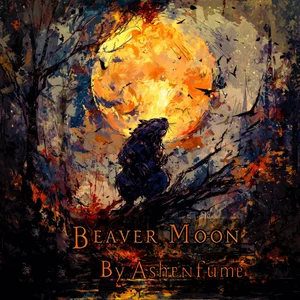
Three of the four castoreums in the base of Beaver Moon are Canadian, each from beaver already trapped. The first is Canadian castoreum, a tincture of aged castors, warm, animal and leathery. The second is a refined absolute of Canadian castoreum, purified in alcohol and diluted, which reads as warm, refined leather with a little smoke over a sweet raspberry heart and dark fruit, drying down woody and balsamic. The third is the house’s own, a tincture steeped from fresh castors while they are still soft, which opens fruity and pungent and then brings up raspberry, brandy and molasses as the alcohol tames it. Together they give the base its warmth, beside the drier Siberian tincture told in Siberian Castoreum. The material as a whole is in the Castoreum folio.
 Found in
Beaver Moon
Three Canadian castoreums in the base, warm beneath the resins of the November moon.
View the fragrance

IIIThe maker of wetlands
The North American beaver lives throughout Canada, north to the mouths of the Mackenzie and the Coppermine on the Arctic Ocean6. It is the country’s largest rodent, about 16 to 35 kilograms and up to 1.3 metres long with the tail67. Pairs mate in January and February, and after about a hundred days two to four kits are born in May or June, about 450 grams each. The young stay with their parents until they are about two, and then leave to find water of their own, sometimes travelling as far as 250 kilometres along the rivers67.
The family builds as it goes. A lodge is usually about 5 metres across and 2 high, with dens on a platform about 10 centimetres above the water and at least two tunnels leading out underwater. As the freeze comes, the beavers plaster the outside with mud, leaving a vent at the top, and the mud freezes into a shell6. Outside the air may fall to minus 40 °C or lower, and inside the lodge the family’s own heat holds it at about 8 to 12 °C7. Dams begin with sticks and stones laid where the current runs fastest, and some stand 5.5 metres high6.

The pantry under the ice
In summer the beavers cut trees near the water, up to about 125 metres away where few predators roam. They prefer trembling aspen, poplar, willow and birch, and about half a hectare of aspen feeds one beaver for a year. Before the freeze they sink cut wood near the lodge, held down under a top layer of small leafy branches that sticks up above the surface. The branches catch snow, and the snow insulates the cache and keeps the water around it from freezing6.
Nine times the water
Beavers were wiped out of Elk Island National Park, Alberta, by the mid-1800s and released there again in September 1941. By 1952 they had spread through the whole park, and active lodges peaked at 348 in 1996. When Glynnis Hood and Suzanne Bayley studied the park’s wetlands across 54 years, the number of active lodges explained more than 80 percent of the change in open water. In 1950, the second driest year of the study and a year without beavers, the wetlands held 61 percent less open water than in 2002, the driest, although 1950 had 47 percent more rain18. Wetlands with active colonies held nine times the open water of wetlands without1819.
The Wood Buffalo dam is the largest of these works. Thie, who had studied the same ground by satellite in 1973 and 1974 for permafrost research, posted his image of it on the Google Earth community forum on 5 October 20071. Building probably began in the mid-1970s, and two smaller dams on either side could one day join it into a structure of nearly a kilometre3. Park rangers flew over in 2009 and found it heavy with plants, a sign of age3.
IVThe scent of the lodge
For much of the year the beaver country lies under ice. In Wood Buffalo National Park beavers live beneath the ice and snow for about 150 days, and the zoologist N. S. Novakowski found in the 1960s that their caches could not cover all their needs. They got through by moving less, huddling, the warmth of the lodge, thicker fur and fat stored in autumn8. At one long-established pond in Miquelon Lake Provincial Park, Alberta, Glynnis Hood and Dee Patriquin noted every spring from 2008 to 2025 when the beavers first came up onto the ice. They spent an average of 144 days beneath it and surfaced around 1 April, and for each degree of warming they came out about six days sooner9.

When the ice breaks, the scent work begins. North American beavers built more scent mounds where neighbours lived close, along their trails and on their lodges and dams, and rebuilt any mound that researchers took away20. For two years R. G. Welsh and Dietland Müller-Schwarze scented empty sites in New York State with castoreum and anal gland secretion, and beavers settled those sites less often than untouched ones21. When Müller-Schwarze and P. W. Houlihan set single constituents of castoreum out for wild beavers, 4-ethylphenol, catechol, acetophenone and 3-hydroxyacetophenone drew quick, consistent responses22.
Aspen, pine and fir
The scent comes largely from the bark. Rosell describes castoreum as a mix of secondary metabolites most likely drawn from the diet23, and the North American beaver lives on aspen, poplar, willow and birch6. Askinson wrote in 1892 that Canadian castor smelled more nearly of pine resin than the Siberian17, and a century later D. P. Anonis traced a pine-resin note close to galbanum in the Canadian material to a diet of aspen, pine and fir bark14. The best-known chemical studies of castoreum were made on the Canadian animal. In 1993 and 1995 Tang, Webster and Müller-Schwarze reanalysed male Canadian castoreum, confirmed five of fifteen phenols reported before them, and found ten new phenols and thirteen new neutral compounds, most of them oxygen-bearing monoterpenes2425. In 1976 B. Maurer and G. Ohloff found fourteen nitrogen compounds in Canadian castoreum, seven of them relatives of the water-lily alkaloid castoramine26.
The beaver country moves north
The country is growing. On 14 July 2024 Kevin Arey, an Inuvialuit monitor, saw a beaver swimming in the Beaufort Sea at Shingle Point27. Along 130 kilometres of the Inuvik to Tuktoyaktuk Highway, shrub rings show beavers present since at least 2008, and by 2020 beavers were reported in nearly every lake and creek of the lower Mackenzie Delta27. Near Umiujaq on the east shore of Hudson Bay, a valley that held a narrow stream about a decade ago held five beaver dams in July 2026, the largest about as tall as a city bus28.
VBefore the trading post
On 25 August 2018 the Yukon Ice Patch Research Group recovered a throwing dart from the Alligator Lake ice patch in southern Yukon, in the traditional territories of the Carcross/Tagish and Kwanlin Dün First Nations. The dart is about two metres long, made in segments of birchwood bound with sinew and fletched with feathers, and it is the first entirely complete atlatl dart found anywhere in arctic and subarctic North America293031. The research project that found it joins six First Nations and the Government of Yukon30.
Valery Monahan, a conservator with Yukon’s museums, noticed an orange residue where the sinew bound the parts together. Kate Helwig and Jennifer Poulin of the Canadian Conservation Institute analysed it by infrared spectroscopy and pyrolysis gas chromatography and found substituted phenols, coumarins, xanthenes and the derivatives of cholesterol, a pattern that matched castoreum taken from recently trapped beavers. Radiocarbon dating of the wooden shaft gave about 6,000 years. It is the first chemical identification of castoreum in an archaeological find, and the earliest evidence of its use in making a weapon32. Whether it served as glue, preservative or colour is still unknown30.
The beaver in the nations’ stories
The beaver runs through the stories of the nations. Among the Mi’kmaq the best-known tale of Kluskap tells how he tried to drive off Giant Beaver by throwing five great sods of mud into the bay, where they became the Five Islands of Nova Scotia, a story the Mi’kmawey Debert Cultural Centre tells on film through the storyteller Gerald Gloade33. In Cape Breton, Salt Mountain, Wi’sik, is said to be shaped like a beaver’s dam, and its name refers to a beaver’s den34. Among the Niitsitapi, the Blackfoot, Beaver gave the Beaver Bundle to the people at a lake in what is now Waterton Lakes National Park, and its keepers kept the count of days, moons and stars35. The Dane-zaa of the Peace River country call themselves the real people. Early explorers called them the Beaver people, after one local group36.
The poultice
The written record of castoreum among the Cree is brief. In 1884 E. M. Holmes, curator of the museum of the Pharmaceutical Society in London, published notes on drugs used by the Cree of the Hudson’s Bay Territory, from specimens given by Walton Haydon, who had lived there for some time. Castoreum, the notes say, was used to make a poultice for sprains37. It is recorded here as a historical practice.
VIThe fur country
The Hudson’s Bay Company was built on the beaver. In October 1669 the Nonsuch reached London from Hudson Bay with more than 3,000 pounds of beaver pelts, and on 2 May 1670 Charles II chartered the company, with Prince Rupert as its first governor3839. Felt hats made from beaver underfur drove the trade, and one large skin could make 18 hats. At the trade’s height about 200,000 pelts a year went to Europe67. For two centuries goods at the company’s posts were priced in made beaver, the value of one prime skin, paid in tally sticks and later in brass tokens4041.

The castors travelled with the pelts. The historian Stephen Bown writes that the company shipped many hundreds of thousands of them to Europe, preserved by smoking over a fire42. In 1854 Hudson’s Bay castor cost about twenty shillings a pound in London, a fraction of the price of the Russian sort43. On the traplines castoreum had a name of its own. An 1867 guide calls it the principal scent, or medicine, that trappers used for the lynx, and gives a lynx set from Bernard Rogan Ross of the Hudson’s Bay Company, with a piece of hide well rubbed with the medicine tied to the trap’s pallet44. In the company’s Pacific Northwest trade, traps were often baited with castoreum45.
The trade nearly emptied the country. When the fur trade began, an estimated six million beavers lived in what is now Canada, and by the mid-1800s they were close to extinction there7. In 1928 to 1929 trappers around Rupert House on James Bay found four beaver pelts across about 25,000 square kilometres19. Protection brought them back, and by 2013 the journalist Frances Backhouse could put North America’s beavers at about 20 million19. On 24 March 1975 the beaver became an official symbol of Canada. It had appeared on the country’s first postage stamp, in 185146.

VIIA week on the string
Castors come out after the skinning, and the knife work takes a couple of minutes. Skinning, fleshing and stretching the pelt takes one to two hours47. The Northwest Territories’ guide tells harvesters to make the cut about two inches above the vent, through a thin membrane of muscle, and to peel the castors free of their sheath with a fingertip. They are light brown and scaly beneath. The oil glands stay on the carcass, and the auction buys the castors alone1248.
Then they hang. A length of string with a knot every four inches is tied between two nails, and the castors hang from the knots so that none touch. The shed stays dry and between 15 and 21 °C. On the second day each castor is opened so its centre can dry, and it is turned on days two, four and six. On the seventh day the castors come down and go into the freezer in a paper or onion bag, because castors rot in plastic. About eight dried castors make a pound12.
The older trappers worked by the same slow rule. In 1909 the trapper and writer E. H. Kreps advised drying castors slowly, in a shady place, and noted that they usually sold for seven or eight dollars a pound, though most trappers kept them for scent, since it drew so many animals49. The old trade also smoked them. Hudson’s Bay castoreum was preserved over fire42, castor sacs are still sometimes dried over burning wood, which adds a smoky odour10, and Arctander held that the smoke in castoreum comes from this curing16. Lure makers cure castors three ways today, green, semi-dry after three to five days, or dry after a year or more50.
Big, full and brownish
At the Fur Harvesters Auction in North Bay, Ontario, castor is sold dried and graded by eye and hand. Grade 1 is big, full and generally brownish, Grade 2 darker and less full, and Grade 3 virtually empty and very dry, and the auction deducts for any shrinkage after the castors arrive48. Rotten castors are declared of no value12.
VIIIThe sweet castor
In Victorian London the perfumer’s castor was Canadian. Septimus Piesse wrote in 1862 that castor was imported from Canada and the territories of the Hudson’s Bay Company, in small pear-shaped sacs, hard and brittle by the time they reached London. Dry, it had little odour. In spirit its scent developed in a remarkable degree, and two ounces in a gallon of spirit made his standard extract. More than a quarter of a pint of that extract in a gallon of any other scent, he warned, and its own odour showed above all the rest. Perfumes holding it lasted well on the handkerchief15. By the early twentieth century nearly all castoreum in trade came from Hudson’s Bay4.
With the supply came the reputation. In 1960 Arctander described the tincture as warm, animal, leathery and sweet, and found the Canadian the finer of the two origins, and a 2007 safety review calls Canadian castoreum generally considered superior1610. Its pouches are pear shaped, almost flat and wrinkled, 6 to 15 centimetres long10, and its castorin, the crystalline fat of the pouch, runs to at most 1 percent14.
The fruit
The Canadian castor also holds a fruit. In the 1993 analysis of male Canadian castoreum, raspberry ketone appears among the phenols, a principal aroma molecule of the red raspberry245152. The food trade made use of the facet too. A flavour textbook of the 1970s praised the unusual notes castoreum lent strawberry and raspberry flavours, usually at under ten parts per million53. Castoreum extracts and tinctures went into vanilla flavours for decades16, and in the United States, where the extract is listed as FEMA 2261 and generally recognised as safe, food makers used about 500 pounds of it in 1982 and about 97 pounds in 198710. Almost nothing in a grocery store carries it today54. The house’s two fruit-forward castoreums are described in chapter II, and the chemistry behind the fruit is told in the Castoreum folio.
IXThe trapline today
In the winter of 2016 to 2017 Ray Henschell, 77, and Al Kotowich, 61, rode their ATVs onto Horseshoe Lake in the Whiteshell country of eastern Manitoba, cut a hole in the ice by a lodge and drew up a trap on its chain. Henschell’s line runs 110 kilometres around Crow Duck Lake, where his father, Alex, went through the ice in the 1940s and survived about half an hour in the water. That season Henschell cleared about 700 dollars from his furs after paying for fuel5556. At the trappers’ convention in North Bay in January 2026, Faye Naveau of Mattagami First Nation remembered waking at three in the morning to watch her father skin beaver by the light of an oil lantern. Doug Chiasson of the Fur Institute of Canada estimates that about half of Canada’s trappers are Indigenous57. At Fort Albany First Nation on James Bay, the Amisk program of 2018 sent youth out on the traplines with Elders to trap, skin and smoke beaver, and the beavers were shared through the community58.
The castor has found its price again. In 2020 the top grade at North Bay, West Select, paid a record 149.60 Canadian dollars a pound59, and in March 2026 the sale paid 39.20 to 69.60 US dollars a pound across the grades13. In April 2022 the Northwest Territories began advancing 65 dollars a pound for dried castors, and the Fort Simpson trapper and elder Wilbert Antoine called it overdue, saying younger trappers threw the castors away60. The program was renewed on 29 November 2022, with the first shipment of castors scheduled for 6 January 202361. From 1 July 2026 Ontario lets licensed fur dealers sell raw castoreum to manufacturers at home and abroad62. Canada’s trappers reported 88,624 beaver pelts in the 2023 to 2024 season, under about 33,000 trapping licences63.
Canadian castoreum through the centuries
- About 6,000 years ago
Castoreum is smeared on a birchwood dart later lost in the Alligator Lake ice patch, Yukon32.
- 1670
Charles II charters the Hudson’s Bay Company38.
- 1820
Kuhl names Castor canadensis5.
- 1851
The beaver appears on Canada’s first postage stamp46.
- 1862
Piesse’s castor comes from Canada and the Hudson’s Bay territories15.
- 1884
Holmes records castoreum in a Cree poultice for sprains37.
- 1909
Kreps prices castors at seven or eight dollars a pound49.
- 1941
Beavers return to Elk Island National Park18.
- 1975
The beaver becomes an official symbol of Canada46.
- 2007
Jean Thie posts the Wood Buffalo dam on the Google Earth forum1.
- 2018
The Yukon dart melts out of the ice32.
- 2026
Ontario lets licensed dealers sell raw castoreum from 1 July62.
Found in
Beaver Moon
Three Canadian castoreums in the base of the November moon.
AppendixFor the perfumer
The animal, the dart, the curing, the grades and the trade behind Canadian castoreum, set out for reference at the bench. For tinctures, the absolute, the full chemistry and the safety record, see the appendix of the Castoreum folio.
The animal
| Measure | Figure | Source |
|---|---|---|
| Adult weight | About 16 to 35 kg, large animals over 45 kg | 67 |
| Length with tail | Up to about 1.3 m | 67 |
| Tail of a large beaver | About 30 by 18 by 4 cm | 6 |
| Kits | Two to four, born May or June, about 450 g | 67 |
| Dive | Six or seven minutes | 6 |
| Lodge | About 5 m across and 2 m high, built in about a month | 6 |
| Inside the lodge in deep cold | About 8 to 12 °C | 7 |
| Aspen to feed one beaver a year | About half a hectare | 6 |
| Days under the ice, Wood Buffalo | About 150 | 8 |
| Days under the ice, Miquelon Lake, 2008 to 2025 | 144 on average, about six days sooner out for each 1 °C of warming | 9 |
| Wood Buffalo dam | 2,790 ft (about 850 m), a 17-acre pond, at most about 3 ft high | 13 |
| Besnard Lake, Saskatchewan, 2019 | 225 lodges, half occupied | 64 |
| Chromosomes | 40 (Eurasian 48) | 65 |
The Yukon dart
| Item | Record | Source |
|---|---|---|
| Found | 25 August 2018, site JcUu-11, the Alligator Lake ice patch, southern Yukon | 29 |
| Territory | Traditional territories of the Carcross/Tagish and Kwanlin Dün First Nations | 30 |
| The dart | Segmented, about 2 m, the first entirely complete atlatl dart from arctic and subarctic North America | 29 |
| Radiocarbon | 5,300 ± 27 BP, calibrated 6,131 to 5,995 cal BP | 32 |
| Methods | Infrared spectroscopy and pyrolysis gas chromatography with mass spectrometry | 32 |
| Compounds | Substituted phenols, phenolic dimers, coumarins, xanthenes, cholesterol derivatives | 32 |
| Purpose | Unknown: adhesive, preservative or colourant | 30 |
Curing
| Day | Step | Source |
|---|---|---|
| Day 1 | Hang from a knotted string, a knot every four inches, none touching, dry shed at 15 to 21 °C | 12 |
| Day 2 | Open each castor so the centre dries, and turn it | 12 |
| Days 4 and 6 | Turn again | 12 |
| Day 7 | Take down and freeze in a paper or onion bag, never plastic | 12 |
| Before delivery | Air a day or two | 12 |
Older advice. Dry slowly, in a shady place (Kreps, 1909)49. Lure makers cure green, semi-dry after three to five days, or dry after a year or more50. The old trade smoked castors over fire4210.
Grades and prices
| Sale | West Select | Grade 1 | Grade 2 | Grade 3 | Source |
|---|---|---|---|---|---|
| March 2020, CAD | 149.60 | 136.00 | 122.40 | 108.80 | 59 |
| June 2024, CAD | 76.56 | 76.56 | 58.08 | 34.32 | 66 |
| March 2025, USD | 75.20 | 64.80 | 44.80 | 28.00 | 67 |
| March 2026, USD | 69.60 | 64.80 | 44.00 to 48.00 | 39.20 | 13 |
Grades. Grade 1 big, full, generally brownish. Grade 2 darker, less full. Grade 3 virtually empty and very dry48. About eight dried castors to the pound12. In Illinois the castors of six to ten beavers make a dried pound, fewer for large spring beavers68.
Other prices, dated. About 20 shillings a pound in London, 185443. Seven or eight dollars a pound, 190949. A 65-dollar advance a pound in the Northwest Territories from April 202260.
Trade
| Year | Figure | Source |
|---|---|---|
| 1669 | The Nonsuch lands more than 3,000 lb of beaver pelts in London | 38 |
| Fur trade peak | About 200,000 pelts a year to Europe, up to 18 hats a skin | 6 |
| 1700s | Pelt exports rarely below 100,000 a year | 19 |
| Start of the fur trade | An estimated 6 million beavers in what is now Canada | 7 |
| 1928 to 1929 | Four pelts around Rupert House, James Bay, across about 25,000 km² | 19 |
| 2013 | About 20 million beavers in North America | 19 |
| 2021 to 2022 | 66,129 beaver pelts, 35,210 trapping licences | 63 |
| 2022 to 2023 | 68,733 beaver pelts, 32,625 licences | 63 |
| 2023 to 2024 | 88,624 beaver pelts, 32,986 licences | 63 |
| 1 July 2026 | Ontario dealers may sell raw castoreum at home and abroad | 62 |
How to read the pelt counts. The national figures are pelts reported by the provinces and territories for each season, valued at the auction sales. Ontario counts every pelt harvested, sold or not63. Most trapping in Canada is done in Quebec, Ontario and Alberta69.
The Beaver Moon collectionMore from the November moon
 ✦ Folio No. 17
Castoreum
The whole material, from the beaver’s scent marks to the perfumer’s tincture.
Read the folio
 ✦ Castoreum by region
Siberian Castoreum
The beaver of the taiga rivers, the old Russian castor and the birch tar of Russian leather.
Read the folio
 ✦ Folio No. 28
Siberian Fir
Crisp needles beside the balsam fir in the heart of the November moon.
Read the folio
✦ ✦ ✦
Sources & image credits69 references
- Frazier I., Deep in the wilderness, the world's largest beaver dam endures, Yale Environment 360 (11 December 2023).↑
- Meet the first person to explore the world's largest beaver dam, Maclean's (date and byline not shown on page).↑
- AFP, World's biggest beaver dam discovered in northern Canada, Phys.org (6 May 2010).↑
- Greenish H.G., Castor. Castoreum, A Text Book of Materia Medica, via chestofbooks.com.↑
- Mammal Diversity Database, Castor canadensis Kuhl, 1820, American Society of Mammalogists.↑
- Canadian Wildlife Federation and Environment and Climate Change Canada, Beaver, Hinterland Who's Who.↑
- Boonstra R., updated by Yarhi E., Beaver, The Canadian Encyclopedia (2013, last edited 23 April 2021).↑
- Novakowski N.S., The winter bioenergetics of a beaver population in northern latitudes, Canadian Journal of Zoology 45, doi:10.1139/z67-121 (1967).↑
- Betkowski B., Research reveals why beavers are getting busy sooner in spring, Folio, University of Alberta (28 April 2026).↑
- Burdock G.A., Safety assessment of castoreum extract as a food ingredient, International Journal of Toxicology 26(1), 51-55 (2007).↑
- Sayre L.E., Castoreum, A Manual of Organic Materia Medica and Pharmacognosy (1917), via Henriette's Herbal.↑
- Government of the Northwest Territories, Environment and Climate Change, Trapper reference sheet: beaver castor.↑
- Fur Harvesters Auction, March 19 to 21, 2026 sale results (US dollars) (2026).↑
- Anonis D.P., Castoreum and castoreum substitutes, Perfumer & Flavorist 22 (1997).↑
- Piesse G.W.S., The Art of Perfumery, third edition, London, Longman (1862), pp. 29 (the gamut of odours) and 173 (Castor), via Internet Archive.↑
- Arctander S., Castoreum, in Perfume and Flavor Materials of Natural Origin, Elizabeth, New Jersey (1960), pp. 37-38 and 104-105.↑
- Askinson G.W., Perfumes and their Preparation, translated by I. Fürst, New York, Norman W. Henley (1892), pp. 58 to 59 (Castor) and 152 (Extrait de Castoreum), via Internet Archive.↑
- Hood G.A., Bayley S.E., Beaver (Castor canadensis) mitigate the effects of climate on the area of open water in boreal wetlands in western Canada, Biological Conservation, doi:10.1016/j.biocon.2007.12.003 (2008).↑
- Backhouse F., Rethinking the beaver, Canadian Geographic (2013).↑
- Müller-Schwarze D., Heckman S., The social role of scent marking in beaver (Castor canadensis), Journal of Chemical Ecology 6, 81-95 (1980).↑
- Welsh R.G., Müller-Schwarze D., Experimental habitat scenting inhibits colonization by beaver, Castor canadensis, Journal of Chemical Ecology 15(3), 887-893 (1989).↑
- Müller-Schwarze D., Houlihan P.W., Pheromonal activity of single castoreum constituents in beaver, Castor canadensis, Journal of Chemical Ecology 17(4), 715-734 (1991).↑
- Rosell F., Territorial scent marking behaviour in the Eurasian beaver (Castor fiber L.), Denisia 9, 147-161 (2003).↑
- Tang R., Webster F.X., Müller-Schwarze D., Phenolic compounds from male castoreum of the North American beaver, Castor canadensis, Journal of Chemical Ecology 19(7), 1491-1500 (1993).↑
- Tang R., Webster F.X., Müller-Schwarze D., Neutral compounds from male castoreum of North American beaver, Castor canadensis, Journal of Chemical Ecology 21(11), 1745-1762 (1995).↑
- Maurer B., Ohloff G., Zur Kenntnis der stickstoffhaltigen Inhaltsstoffe von Castoreum, Helvetica Chimica Acta 59(4), 1169-1185 (1976).↑
- The great bite north: beavers, moving to higher latitudes, gnaw away at an Arctic way of life, The Globe and Mail (byline and date not shown, published with the April 2026 Ecosphere study).↑
- The New York Times, The beavers are coming for Canada's Arctic, 1 dam at a time, republished in The Boston Globe (9 August 2026).↑
- Thomas C.D., Monahan V., Alix C., Hare P.G., Herkes J., Smith H., Helwig K., Poulin J., Donohoe M., The Alligator Lake throwing dart, Yukon, Canada, Journal of Glacial Archaeology 7, 25-45, doi:10.1558/jga.27327 (2024).↑
- Government of Yukon, Beaver castoreum found on ancient throwing dart sheds new light on traditional hunting technology, news release 21-180 (14 June 2021).↑
- Archaeologists find beaver castoreum on 6,000-year-old throwing dart, Sci.News (16 June 2021), on Helwig K. et al., Journal of Archaeological Science: Reports 37, 102949 (2021).↑
- Helwig K., Poulin J., Monahan V., Thomas C., Ancient throwing dart reveals first archaeological evidence of castoreum, Journal of Archaeological Science: Reports 37, 102949, doi:10.1016/j.jasrep.2021.102949 (2021).↑
- Mi'kmawey Debert Cultural Centre, Five Islands, Ancestors Live Here, story told on video by Gerald Gloade.↑
- Sable T., Legends and the landscape, Mi'kmaw Place Names Digital Atlas, citing Parsons E.C. (1925) and Sable T., Francis B. (2012).↑
- Conaty G.T. (ed.), Niitsitapiisinni: our way of life, chapter 2 in We Are Coming Home, Athabasca University Press (2015, editor and year to confirm against front matter).↑
- Ridington R., Beaver (Dane-zaa), The Canadian Encyclopedia (2012, last edited 10 October 2024).↑
- Holmes E.M., Medicinal plants used by the Cree Indians, Hudson's Bay Territory, American Journal of Pharmacy 56 (December 1884), reprinted from Pharmaceutical Journal and Transactions (18 October 1884) p. 302, via Henriette's Herbal.↑
- Reid M.C., Charting a course, Canada’s History (April to May 2020).↑
- Ray A.J., Hudson’s Bay Company, The Canadian Encyclopedia.↑
- Brown J.S.H., Made beaver, The Canadian Encyclopedia.↑
- Bergeron D., Iddon G., Broeckx K., Fur trade economics, Bank of Canada Museum (19 August 2021).↑
- Bown S.R., More than just pelts of value, Toronto Star (24 October 2020), from The Company: The Rise and Fall of the Hudson’s Bay Company (2020).↑
- Holmes T., A disgusting and useless substance? Hyraceum between folk medicine and pharmacopoeia, Topics in the History of Medicine 5, 178-196 (2025).↑
- Newhouse S., ed. Oneida Community, The trapper's guide, second edition (1867), Internet Archive.↑
- Schefke B.R., An environmental history of the Hudson's Bay Company's fur trade in the Pacific Northwest, University of Washington for the National Park Service (April 2004).↑
- Government of Canada, Canadian Heritage, Official symbols of Canada.↑
- Trapping castor: thinking beyond the simple value of a beaver pelt, Trapping Today (14 January 2018).↑
- Fur Harvesters Auction, Castoreum: removing and shipping castor glands.↑
- Kreps E.H., Science of trapping, revised edition, A.R. Harding, St Louis (1909), Project Gutenberg 34098.↑
- Noonan B., Castor: a universal attractor, Trapper and Predator Caller.↑
- The Pherobase, Castor canadensis: semiochemical compounds, database listing the compounds reported by Tang et al. (1993, 1995).↑
- Raspberry ketone, Wikipedia.↑
- Berenstein N., A history of flavoring food with beaver butt juice, Vice, via Bunk History (2018).↑
- Price J.T., Where does vanilla flavoring come from? Probably not beaver butts, National Geographic (2013, updated 2025).↑
- CBC News, Life on the line: are fur trappers stuck in the past or a vital piece of Canada’s living heritage? (2017).↑
- Hoye B., It’s in the blood: how life for this modern-day trapper has very little to do with fur, CBC Radio, The Doc Project (12 February 2018).↑
- Smith K.A., Fur Harvesters Trappers Convention 2026 evokes fond memories, Anishinabek News (26 January 2026).↑
- Ahmed F., Liberda E.N., Solomon A., Davey R., Sutherland B., Tsuji L.J.S., Indigenous land-based approaches to well-being: the Amisk (beaver) harvesting program in subarctic Ontario, Canada, International Journal of Environmental Research and Public Health 19(12), 7335, doi:10.3390/ijerph19127335 (2022).↑
- Fur Harvesters Auction, 2021 castoreum update (2021).↑
- CBC News, Beaver castors being bought for $65, a long overdue addition to N.W.T. fur program (5 April 2022).↑
- Government of the Northwest Territories, Funding for beaver castors returns, news release (29 November 2022).↑
- Ontario Environmental Registry, ERO 025-0781: sale of raw castoreum by licensed fur dealers (decision posted 22 June 2026).↑
- Fur Institute of Canada for the Canadian Wildlife Directors Committee, Canadian wild fur production from 2010 to 2023 (February 2026).↑
- Westbrook C.J., Waldner Z., Dzus E., Dzus C., Stoll N.-L., Beavers in the boreal: a lodge census of Besnard Lake, Blue Jay 80(2), 6-12 (2022).↑
- Poliquin R., Pantone beaver, Cabinet 56 (winter 2014 to 2015).↑
- Fur Harvesters Auction, June 15 to 17, 2024 sale results (Canadian dollars) (2024).↑
- Fur Harvesters Auction, March 19 to 21, 2025 sale results (US dollars) (2025).↑
- Kelley T., Illinois Department of Natural Resources, Byproducts of the fur market, Wildlife Illinois (1 May 2019).↑
- Proulx G., updated by Parrott Z., Fur trapping, The Canadian Encyclopedia (2012, last edited 4 March 2015).↑
Photographs and plates
Beaver dam in Algonquin Park: Franklin Vera Pacheco, CC BY-SA 3.0. North American beaver, Algonquin, and the beaver lodge at Springdale: Ryan Hodnett, CC BY-SA 4.0. Beaver dams on the Whitefish Channel: Fungus Guy, CC BY-SA 3.0. Beavers and their dam, wood engraving, Library and Archives Canada: public domain. Hudson’s Bay Company tokens: Jimtrethewey, CC0. Canoes in a Fog, Lake Superior, Frances Anne Hopkins (1869): public domain. Castoreum Canadense, Deutsches Apothekenmuseum, Heidelberg: H. Zell, CC BY-SA 3.0. Lake Azas in winter: Shu De230, CC BY-SA 4.0. Siberian fir near Beloretsk: Aleksandr Zykov, CC BY-SA 2.0. All via Wikimedia Commons. Beaver Moon key art: Ashenfume.
Join the discussionHave you run a trapline, dried castors on a string or watched beavers come up through the spring ice? Add what you know, or ask a question.