Provenance Materia Castoreum Siberian
MATERIA · THE BEAVER MOON COLLECTION
Siberian Castoreum
The castor of the Eurasian beaver, from the taiga rivers and the old Russian trade to the birch tar of Russian leather
In 1959 the zoologist L. S. Lavrov led an expedition up the Azas River, in the Todzha basin of north-eastern Tuva, among the headwaters of the Yenisei. There he found beavers that local people had long held sacred and never hunted, and in 1969 he described them as a subspecies of their own, the Tuvan beaver12. They are small, with white whisker markings and spots on the chest. They live in burrows in the riverbank, build no dams and leave the cedar, pine and larch alone3. In 1970 the zoologist V. N. Skalon warned that they survived on the Azas and nowhere else1. These are the beavers of the Eurasian species, Castor fiber, whose castor the Encyclopaedia Britannica of 1778 called Russian and ranked above every other4. This is the castoreum of Siberia.


IWhat it smells like
The old trade knew Siberian castor by its tar. A perfumer of 1892 called it a peculiar tarry, Russian-leather odour. It changes from river to bottle in four stages.
- The fresh pouch
A creamy orange-brown secretion with a strong, penetrating odour10.
- The dried pouch
Egg shaped and smooth, a reddish-brown resin, pungent, acrid and bitter810.
- The tincture
Tarry and leathery, the note of Russian leather, with a creosote edge like the oil of birch bark1310.
- The aged tincture
Aged in alcohol it turns reddish brown10. The old pharmacists found the Russian sort more agreeable and less burnt than the American14.
IIIn the house
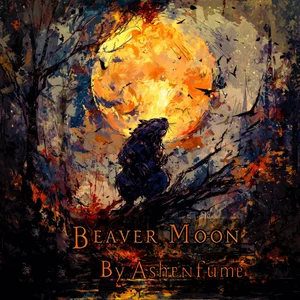
One of the four castoreums in the base of Beaver Moon is a tincture of Siberian castors, taken from beaver already trapped and steeped slowly in alcohol. It is the driest of the four, fine and nuanced, with a natural leather and the birch tar of the old Russian grade running beneath. In the base it lies beside the Canadian castoreums, the faint pepper of Siberian cedar, Haitian vetiver and Kua myrrh, under the November moon. The material as a whole is told in the Castoreum folio, and the Canadian tradition in Canadian Castoreum.
 Found in
Beaver Moon
The Siberian tincture among four castoreums in the base of the November moon.
View the fragrance

IIIThe beaver of the taiga
The Eurasian beaver once ranged far to the east across Siberia. In the seventeenth century it lived in the Angara basin, and in the eighteenth on the Lena tributaries, the Kirenga, the Vitim and the Olekma2. Overhunting then cut it to about 1,200 animals across all of Eurasia, scattered in refuges a century ago12. Siberia kept two of those refuges, and each gave its beaver a name. Six to nine subspecies are recognised across the range and four or five in Russia, and the Red Data Book of the Russian Federation lists the two Siberian ones, the West Siberian beaver and the Tuvan6.
The beavers of the Konda
The West Siberian beaver, Castor fiber pohlei, was described by Serebrennikov in 192915. Its last native families held on along tributaries of the upper and middle Konda and the middle Malaya Sosva, east of the Northern Urals in the West Siberian Plain16. The Kondo-Sosvinsky reserve was created in that country in 1929, and its successor, the Malaya Sosva reserve, was founded in 1976 to protect the local population of the beaver17. The main subpopulation now lives in the Konda basin. It has filled the river country open to it and grows by about one percent a year15.

The beavers of the Azas
The Tuvan beaver, Castor fiber tuvinicus, survived in the far east of the old range. In 1914 A. Ya. Tugarinov first proposed a beaver reserve in the Uryankhai country18. A beaver sanctuary followed on the Azas in 1962, and the state reserve on 11 January 1985, 3,372.9 square kilometres of mountain taiga with its headquarters at Toora-Khem1. In 1983 Lavrov put the Tuvan beavers at some 40 to 50 animals2.
Larger European beavers now press in on them. Staff of the Azas reserve report hybrids inside and outside its borders, and the Tuvan traits fade in the first generation: the white whisker marks, the chest spots and the small body. The hybrids build dams and gnaw conifers, and the old Tuvan families did neither3.
A winter under the ice
Beavers in this cold country usually live in side channels that stay free of ice, away from the main stream, and build dams there, sometimes in cascades19. The winter of 2014 to 2015 showed what the cold can do. On the Tes River, just across the Tuvan border in north-western Mongolia, the river froze at a low level after a dry autumn. The temperature fell below minus 30 °C on 14 days in December, 22 in January and 15 in February, with a low of minus 38.5 °C, and the snow never lay deeper than 8 centimetres to insulate the lodges. By late winter frazil ice had filled the riverbed. On the evening of 28 February 2015 Niamosor Batbayar of the local administration saw a beaver that could no longer hide in its lodge. The next day villagers came with chainsaws and cut a family of five out of the ice. The beavers were thin and went straight to feeding on willow branches. Some later died of the cold, and others survived19.
In the Baikal country the beavers eat mostly poplar and willow, and only rarely larch, birch or fir. Some families there build lodges and dams, and others live in burrows in the bank with no lodge at all2. Eurasian beavers also graze the pads of water lilies20.

IVThe scent of birch
The Siberian castor has its own shape. Canadian pouches are pear shaped, flat and wrinkled. Siberian ones are egg shaped and smooth, and a little larger78. American pharmacists in 1917 weighed Russian pouches at 75 to 240 grams, against 30 to 120 for Canadian9. In 1854 an American dispensatory called the Russian castor larger, fuller and heavier, with a stronger taste and smell, and gave a test: shaken with water and ammonia, Russian castor threw down a white precipitate and American an orange one21. Inside, Siberian castoreum holds up to 2 percent of castorin, a crystalline fat, and Canadian at most 1 percent10.
The smell gave the grade its name in the perfumer’s books. George William Askinson wrote in 1892 that Siberian castor had a peculiar tarry, Russian-leather odour, which he put down to a substance in birch bark, the food, he said, on which the Siberian animals fed almost exclusively. Canadian castor smelled more nearly of pine resin13. A century later D. P. Anonis described the same thing in Russian castoreum, a tarry, creosote-like secondary note recalling the oil of birch bark, and traced it to the birch that Russian beavers eat10. An English materia medica of the early twentieth century found the Russian odour more agreeable and less burnt than the American14.
Where the tar comes from
The birch explanation is a nineteenth-century one, and the field records complicate it. Beavers in the Baikal country eat birch only rarely, and mostly poplar and willow2. Steffen Arctander held that the smoke in castoreum comes from curing the pouches over fire, and that its birch-tar note may come from the same source8. The castoreum of the two beaver species differs by about a third on a gas chromatograph22, and diet, river, the age of the animal, the curing and the age of the material all shape what reaches the bottle. No published analysis of the castoreum of Siberian beavers alone turned up in the research for this folio.
Russian is not always Siberian
The old names need care. The British Pharmaceutical Codex of 1911 placed the beaver chiefly in the Hudson Bay Territory, but also in western Russia and Siberia23, and the eighteenth-century trade sold Dantzig castor, from the Baltic, as a sort of its own4. No source in the record says which rivers the old Russian castor came from. Modern Russia holds North American beavers too. Seven animals brought from the United States were released in Finland in the mid-1930s, and their descendants spread into Karelia, where with later releases they number more than 15,00024. Others were released in Kamchatka from 1977 and on the Obor River near Khabarovsk in 19692526. Russian hunting rules set one season for both species11, and a castoreum sold as Russian today may come from either.

VSmoke for the spirits, tincture for the body
Among the Mansi of the Northern Sosva, castoreum is a sacred material. They call it lālva, and of all their fumigants it is the most valued in rites of purification, above all the castoreum of a male beaver. A small piece laid on a glowing coal fumigated men at sanctuaries and in dangerous times of passage. A sacrifice was owed at the place where a beaver was caught, and its pelt was kept in the sacred corner of the house. Hunters rubbed their clothes and gear with castoreum to hide the smell of people, and a little of it went into water with smouldering chaga to make sacred water, which it gave a strong, sharp scent27.
The ethnographer S. A. Popova explains the logic of the rite. The beaver swims beneath the water, and the world beneath belongs to the spirits of evil and illness, so burning its castoreum, pelt or tail drives them off. Women fumigated a room with the tail and fur after childbirth, and the dried tail and rear fur ranked below the castoreum itself. Beavers are scarce now, and the tail of a muskrat sometimes stands in27. Among other peoples of Russia castoreum fumigated people, weapons, tools and buildings, and folk medicine took it as a tincture in alcohol, a use recorded here as belief28. In Tuva the beavers of the upper Yenisei were sacred, and no one hunted them1.
Older still, the Greek historian Herodotus wrote in the fifth century BC of the Budini, a forest people who caught beavers in a lake ringed with marsh and reeds and used what they called the testicles against diseases of the womb29. In the tenth century the Persian scholar Hamza Isfahani knew the beaver from only two places, the valley of the Aras and Atil, the Khazar capital on the Volga30. The rest of that long medical history is told in the Castoreum folio.
VIThe Russian castor
For a century the European price lists put Russian castor first. In 1778 the Encyclopaedia Britannica called it the best sort, in large, hard, round cobs with a brittle red interior the colour of liver, at two guineas a pound. Dantzig castor, fat and moist, came below it, and American castor, in long thin cobs, was the worst of all at eight shillings and sixpence4. The sixth edition of 1823 repeated the same ranking31. By 1854 the Russian sort was seldom seen in America21.
The prices followed the beaver. By 1850 castoreum was scarce and dear, the Russian product above all, because hunting had brought the Eurasian beaver close to extinction. In his materia medica of 1854 the London pharmacologist Jonathan Pereira gave about twenty shillings a pound for American castor, bought through the Hudson’s Bay Company, and as much as two pounds an ounce for Russian castor, which he called exceeding scarce32. By weight the Russian cost about 32 times the American.
Then it went from the market. Askinson wrote in 1892 that Siberian castor was the more valuable and had almost disappeared from trade13, and the English materia medica of the early twentieth century found it very rarely imported, with nearly all castoreum coming from Hudson’s Bay14. With the trade gone, the ranking reversed. By 1960 Arctander counted Siberian castoreum inferior, and a 2007 safety review calls the Canadian generally considered superior87.

VIILeather from the forest
The tar in the castor has a twin in the oldest leather of Russia. Yuft was cowhide or bullhide tanned and then dressed with birch tar, dyogot, mixed with seal fat, and the birch tar gave it its smell. Red yuft was dyed with sandalwood over an alum mordant and black yuft with iron salts, and the hides were rolled with grained boards into patterns33. Vladimir Dahl’s dictionary of the Russian language defines yuft as hide dressed in the Russian manner with pure birch tar, and gives the phrase “I love the smell of yuft”33. It was supple, kept out the water and kept off insects33.
Yuft went west by sea. A list of 1665 records English ships carrying it from Archangel. It was a state monopoly until 1719, Peter the Great’s decrees of 1715 and 1718 set the rules for making it, and in 1749 Russia exported 204,000 puds, more than 3,300 tonnes33. In England it became Russia leather, in English bindings before 1716 and at its height in Western bindings between about 1780 and 1830. Imitators tried to copy the smell. In 1774 one recipe called for powdered birch bark, brazilwood dye and an oil of savin and rue33.
Russian leather in the bottle
Perfumers built the smell from birch tar. Anonis counts castoreum mainly a fixative and lists Cuir de Russie among the perfumes that use it10. In the classic base of birch tar, bergamot and petitgrain it takes away much of the harsh undertone of the tar. Even in small doses its persistent animal note can intrude34. Askinson’s phrase for the Siberian castor, tarry and Russian-leather, joins the animal and the leather in a single breath13.
In the perfumery books the castor appears as a tincture1335. Askinson’s stock tincture was two and a half ounces of castor to five quarts of alcohol36, and he used castor sparingly, usually only to fix other odours13. It was never cheap. In 1854 an ounce of Russian castor could cost as much as two pounds sterling32.
VIIIThe surviving rivers
The beaver of Europe and Siberia was saved by moving it. An expedition led by the zoologist Sergei Ognev from 1919 to 1922 found only about 50 beavers in Voronezh province. On 3 December 1923 a reserve was created on the Usman River to guard them, and on 8 April 1932 its gamekeeper Mikhail Kryukov caught the first beaver for a new nursery. Between 1934 and 1977 about 3,000 Voronezh beavers left for 52 regions of the Soviet Union and beyond3738.

Siberia was restocked from the same rivers. About 800 beavers were released in Krasnoyarsk Krai between 1948 and 1968, three quarters of them from Voronezh6, and of 269 released in Irkutsk oblast from 1950 to 1963, only the families set down on the Zima and Tagna rivers of the Eastern Sayan took hold, to number about 1,200 by 20042. The other releases are set out in the appendix. By 2020 Russia held at least 700,000 beavers, about half of all the beavers in Eurasia12, and about half of Russia’s descend from Voronezh stock37.
The hunt today
Beaver may now be hunted in Russia from 1 October to the end of February11, and for many hunters the castoreum has become the reason to go out39. In the Kirov region, in European Russia, hunters take about 6,132 beavers a year and the region yields about 452 kilograms of castoreum. The price rose from about 20 roubles for a pair of pouches in 2004 to about 20 roubles a gram in 2021, and castoreum is now 37 percent of the value of a beaver there, the pelt 1440. The Barnaul hunter Evgeny Gorskikh, of Altai Krai, sets his traps where the beavers travel and near their winter food stores, which hunters call the canteens41.
Siberian castoreum through the centuries
- Fifth century BC
Herodotus describes the Budini catching beavers for their pouches29.
- 1665
English ships carry yuft, the birch-tar leather, from Archangel33.
- 1758
Linnaeus names Castor fiber5.
- 1778
The Encyclopaedia Britannica ranks Russian castor best, at two guineas a pound4.
- 1854
Pereira prices exceeding scarce Russian castor at up to two pounds an ounce32.
- 1892
Askinson writes that Siberian castor has almost disappeared from the market13.
- 1923
The Voronezh beaver reserve is founded on the Usman River38.
- 1929
The Kondo-Sosvinsky reserve is created in the Konda and Sosva country17.
- 1959
Lavrov’s expedition finds the Tuvan beaver on the Azas1.
- 1985
The Azas state reserve is created1.
- 2015
Villagers cut a beaver family out of the ice on the Tes River19.
- 2020
Russia’s beavers number at least 700,00012.
Found in
Beaver Moon
The Siberian tincture in the base of the November moon.
AppendixFor the perfumer
The beavers, the pouch, the old prices, the releases and the hunt behind Siberian castoreum, set out for reference at the bench. For tinctures, the absolute, the full chemistry and the safety record, see the appendix of the Castoreum folio.
The beavers
| Beaver | Refuge | Record | Source |
|---|---|---|---|
| West Siberian, C. f. pohlei | Upper and middle Konda, middle Malaya Sosva | Described by Serebrennikov, 1929. Red Book of the Russian Federation (2021) | 1516 |
| Tuvan, C. f. tuvinicus | Azas River, Todzha, Tuva | Found by Lavrov’s expedition, 1959. Described 1969. About 40 to 50 animals in 1983 | 12 |
| Mongolian, C. f. birulai | Bulgan River, western Mongolia | Released on the Tes in 1985, 1988 and 2002 (10, 19 and 8 animals), about 150 by 2015 | 19 |
Reserves. Kondo-Sosvinsky, 1929. Malaya Sosva, 1976, core about 225,000 hectares with a buffer of about 160,00017. Azas: beaver sanctuary 1962, state reserve 11 January 1985, 3,372.9 km²1. The sanctuary’s renaming is dated 1975 in one place and 1976 in another18.
North American beavers in Russia. Karelia and the Karelian Isthmus, from Finnish releases of the mid-1930s and Karelian releases of the late 1960s, more than 15,00024. Kamchatka, 255 released 1977 to 1985, 98 percent of them caught in Leningrad oblast, 450 to 500 by 1985, then a decline its authors call a failed acclimatisation25. Khabarovsk and Primorye, 69 released 1969 to 1987, with the Obor population surviving26. Fewer than 20,000 in the Northwest Federal District12.
The pouch
How to read the weights. The 1917 figures are pharmacy weights for dried Russian pouches. The Kirov figures are from European Russia: one study weighed 56 animals taken in 2017 to 2020 without saying whether the weights are fresh or dried, and another gives raw and dried weights for the 2021 to 2022 season. No published weights for Siberian beavers alone were found.
| Measure | Figure | Source |
|---|---|---|
| Russian pouch, pharmacy, 1917 | 75 to 240 g (Canadian 30 to 120 g) | 9 |
| Kirov, 2017 to 2020, mean | 122.27 g (15 to 270 g) | 28 |
| Kirov, males aged 1+, 2+, 3+ | 40.17, 97.10, 155.00 g | 28 |
| Kirov, females aged 1+, 2+, 3+ | 25.33, 86.25, 163.25 g | 28 |
| Castoreum as share of body mass | 0.71% | 28 |
| Kirov, 2021 to 2022, raw pouch | Average 125.7 g (15 to 270) | 40 |
| Kirov, 2021 to 2022, dried pouch for market | Average 76.9 g (30 to 140) | 40 |
| Feature | Russian or Siberian | American or Canadian | Source |
|---|---|---|---|
| Cobs, 1778 | Large, hard, round, brittle red liver-coloured inside | Long, thin | 4 |
| Size and smell, 1854 | Larger, fuller, heavier, stronger, less tenacious | Smaller | 21 |
| Water and ammonia, 1854 | White precipitate | Orange precipitate | 21 |
| Odour, 1892 | Tarry, Russian leather | Nearer pine resin | 13 |
| Odour, early 1900s | More agreeable, less burnt | More burnt | 14 |
| Pouch shape | Egg shaped, smooth, a little larger | Pear shaped, flat, wrinkled | 78 |
| Castorin | Up to 2% | At most 1% | 10 |
| Odour, 1997 | Tarry, creosote, birch-bark oil | Pine resin, galbanum | 10 |
Old grades and prices
| Year | Russian | Dantzig | American | Source |
|---|---|---|---|---|
| 1778 | Two guineas a pound, the best | Inferior, fat and moist | 8s. 6d. a pound, the worst | 4 |
| 1823 | The same ranking | Inferior | The worst | 31 |
| 1854 | Up to £2 an ounce, exceeding scarce | About 20s. a pound, through the Hudson’s Bay Company | 32 | |
| 1892 | More valuable, almost gone from the market | The usual castor | 13 |
Ratios, derived. Two guineas is 42 shillings, so in 1778 Russian castor cost about five times the American. Two pounds an ounce is 640 shillings a pound, so in 1854 it cost about 32 times the American. Pereira’s figures are as reported by Holmes in 2025.
Standards. The Kirov study refers to a Soviet export specification for castoreum, TU 210 RSFSR 42-970, which asks for a dried pair of at least 30 grams, and finds about 96 percent of animals meeting it40. Castoreum has no state standard (GOST) of its own28. A TU is a technical specification, separate from a GOST, so the two records agree.
Releases
| Place | Years | Animals | Outcome | Source |
|---|---|---|---|---|
| Voronezh reserve, sent out | 1934 to 1977 | About 3,000 | 52 regions of the USSR and abroad | 37 |
| Krasnoyarsk Krai | 1948 to 1968 | About 800, three quarters from Voronezh | In the Stolby park from 2008 | 6 |
| Tyumen and Tomsk regions | Reported 1974 | 852 | European-stock beavers reach the Yugansky reserve by 2012 to 2013 | 16 |
| Irkutsk oblast | 1950 to 1963 | 269 | Only Zima and Tagna took, about 1,200 by 2004 | 2 |
| Khabarovsk Krai, Nemta River | 1964 | 56 | Some reached the Amur, about 255 km away | 26 |
| Tuva | 1953 | 40 Belarusian beavers | Apparently disappeared | 2 |
The hunt
| Measure | Figure | Source |
|---|---|---|
| Beavers taken a year, recent five seasons | About 6,132 | 40 |
| Castoreum a year | About 452 kg | 40 |
| Buying price, 2004 | About 20 roubles a pair of pouches | 40 |
| Buying price, 2021 | About 20 roubles a gram | 40 |
| Share of a beaver’s value | Meat 50%, castoreum 37%, pelt 14% | 40 |
| Tail, average weight and price, 2021 to 2022 | 581 g, 200 to 400 roubles a kilogram | 40 |
| Season, federal rules | 1 October to 28 or 29 February | 11 |
| Russian harvest, 2017 to 2018 season | 24,342 beavers | 12 |
Yuft
| Year | Event | Source |
|---|---|---|
| 1665 | English ships carry yuft from Archangel | 33 |
| Before 1716 | Russia calf recorded in English bindings | 33 |
| 1715 and 1718 | Peter the Great’s decrees on making yuft, with seal fat | 33 |
| 1719 | The state monopoly ends | 33 |
| 1749 | 204,000 puds exported | 33 |
| 1774 | An imitation with birch bark powder, brazilwood and oil of savin and rue | 33 |
| 1790 to 1792 | About 112,000 puds a year exported | 33 |
Units. A pud is about 16.38 kilograms, so 204,000 puds is about 3,340 tonnes.
The Beaver Moon collectionMore from the November moon
 ✦ Folio No. 17
Castoreum
The whole material, from the beaver’s scent marks to the perfumer’s tincture.
Read the folio
 ✦ Castoreum by region
Canadian Castoreum
The wetland maker, the six-thousand-year-old dart and the castor of the fur country.
Read the folio
 ✦ Folio No. 25
Siberian Cedar
The stone pine of the Sayan taiga, the tree the Tuvan beaver leaves alone.
Read the folio
 ✦ Folio No. 24
Siberian Rhododendron
The white wing of the Sayan Mountains, from the same Tuvan ranges.
Read the folio
 ✦ Folio No. 28
Siberian Fir
The soft fir of the dark taiga, crisp needles in the heart of the November moon.
Read the folio
 ✦ In Black Sea
Birch Tar
The tar of yuft and Russian leather, distilled from birch bark.
Folio to come
✦ ✦ ✦
Sources & image credits41 references
- Great Russian Encyclopedia, Азас (государственный природный заповедник), Bolshaya rossiyskaya entsiklopediya, bigenc.ru (accessed 2026).↑
- Badmaev B.B., The beaver (Castor fiber) in the vicinity of Lake Baikal region, Beiträge zur Jagd- und Wildforschung 30, 409-415 (2005).↑
- Mashukov D., Тувинский бобр оказался под угрозой вырождения из-за европейского сородича, Rossiyskaya Gazeta (5 December 2022).↑
- Castor, Encyclopaedia Britannica, 2nd edition (1778).↑
- Mammal Diversity Database, Castor fiber Linnaeus, 1758, American Society of Mammalogists.↑
- Moroldoev I.V., Vinogradov V.V., Knorre A.A., Pavlov A.V., Таксономическое положение обыкновенного бобра Castor fiber национального парка «Красноярские Столбы» по результатам анализа гена цитохром b, Trudy natsionalnogo parka Krasnoyarskie Stolby XXII, 134-138 (2025).↑
- Burdock G.A., Safety assessment of castoreum extract as a food ingredient, International Journal of Toxicology 26(1), 51-55 (2007).↑
- Arctander S., Castoreum, in Perfume and Flavor Materials of Natural Origin, Elizabeth, New Jersey (1960), pp. 37-38 and 104-105.↑
- Sayre L.E., Castoreum, A Manual of Organic Materia Medica and Pharmacognosy (1917), via Henriette's Herbal.↑
- Anonis D.P., Castoreum and castoreum substitutes, Perfumer & Flavorist 22 (1997).↑
- Ministry of Natural Resources and Ecology of the Russian Federation, Order No. 477 of 24 July 2020, Rules of Hunting, Appendix 3 (in Russian).↑
- Halley D.J., Saveljev A.P., Rosell F., Population and distribution of beavers Castor fiber and Castor canadensis in Eurasia, Mammal Review (2020).↑
- Askinson G.W., Perfumes and their Preparation, translated by I. Fürst, New York, Norman W. Henley (1892), pp. 58 to 59 (Castor) and 152 (Extrait de Castoreum), via Internet Archive.↑
- Greenish H.G., Castor. Castoreum, A Text Book of Materia Medica, via chestofbooks.com.↑
- Polushkin A.A., [article on the West Siberian beaver Castor fiber pohlei in the Malaya Sosva reserve and the Konda basin, full title not shown on the abstract page opened], Vestnik of Omsk State Agrarian University 51(3), 133-141 (2023).↑
- Pereyaslovets V.M., Темпы проникновения новых видов млекопитающих на территорию заповедника «Юганский», conference paper hosted by rusmam.ru, 214-216 (year not shown, after 2015).↑
- Malaya Sosva State Nature Reserve, Malaya Sosva State Nature Reserve, publisher profile, Global Biodiversity Information Facility (accessed 2026).↑
- Kuksin A.N., Putintsev N.I., Kuksina D.K., Archimaeva T.P., Ретроспективный анализ сети особо охраняемых природных территорий в Республике Тыва, Novye issledovaniya Tuvy 2, 51-69 (2025), doi:10.25178/nit.2025.2.3.↑
- Saveljev A.P., Batbayar N., Boldbaatar Sh., Dashbiamba B., Self-eating in beavers: trophic opportunism or reaction on stress? Extreme case from Mongolia, Russian Journal of Theriology 15(1), 68-74 (2016).↑
- Law A., Bunnefeld N., Willby N.J., Beavers and lilies: selective herbivory and adaptive foraging behaviour, Freshwater Biology (2014).↑
- King J., Castoreum. Castor, The American Eclectic Dispensatory (1854), via Henriette's Herbal.↑
- Rosell F., Territorial scent marking behaviour in the Eurasian beaver (Castor fiber L.), Denisia 9, 147-161 (2003).↑
- Pharmaceutical Society of Great Britain, Castor fiber, The British Pharmaceutical Codex, London (1911), transcribed at henriettes-herb.com.↑
- Danilov P.I., Fyodorov F.V., The history and legacy of reintroduction of beavers in the European North of Russia, Russian Journal of Theriology 15(1), 43-48 (2016).↑
- Valentsev A.S., Primak T.I., Snegur P.P., Акклиматизация канадского бобра на Камчатке, Vestnik okhotovedeniya 19(2), 88-95 (2022).↑
- Oleynikov A.Yu., Размещение аборигенных и интродуцированных полуводных млекопитающих на Сихотэ-Алине, Rossiyskiy zhurnal biologicheskikh invaziy 2, 35-50 (2013).↑
- Popova S.A., Ритуальное очищение в традиции манси: символический аспект, Vestnik ugrovedeniya 15(3), 556-566 (2025).↑
- Kozlov Yu.A., Sergeev A.A., Zarubin B.E., Economov A.V., Мясная и техническая продукция от охоты на евразийского бобра (Castor fiber), Dalnevostochny agrarny vestnik 4(56), 64-75 (2020), doi:10.24411/1999-6837-2020-14051.↑
- Herodotus, trans. Macaulay G.C., Histories 4.109, Lexundria.↑
- Aʿlam H., Beaver, Encyclopaedia Iranica IV(1), 71-74 (1989).↑
- Encyclopaedia Britannica, Castoreum, Encyclopaedia Britannica 6th edition (1823), transcribed by the Early Encyclopaedia Britannica project.↑
- Holmes T., A disgusting and useless substance? Hyraceum between folk medicine and pharmacopoeia, Topics in the History of Medicine 5, 178-196 (2025).↑
- Tsygankova V., Russian yufte as russia leather in eighteenth and nineteenth-century Western bookbinding, Ligatus Research Centre, London (2012).↑
- Maurer E.S., Non-floral perfumes, Journal of the Society of Cosmetic Chemists 3(3), 195-196 (1952).↑
- Piesse G.W.S., The Art of Perfumery, third edition, London, Longman (1862), pp. 29 (the gamut of odours) and 173 (Castor), via Internet Archive.↑
- Askinson G.W., trans. Fürst I., Perfumes and their preparation, New York: N.W. Henley and Co., chapter V and chapter XI (1892), Project Gutenberg eBook 55735.↑
- Romashova N.B., History of conservation and research activities of the Eurasian beaver (Castor fiber) in the Voronezhsky Nature Reserve, Russian Journal of Theriology 15(1), 8-19 (2016).↑
- Starodubtseva E.A., The beaver reserve: how it all began (in Russian), Voronezh (2016).↑
- Kozlov Yu.A., Economic significance of the Eurasian beaver as a source of meat products and technical raw material (in Russian), candidate dissertation, Zhitkov All-Russian Research Institute of Game Management and Fur Farming (2022).↑
- Zarubin B.E., Kozlov Yu.A., Economov A.V., Kolesnikov V.V., Stepanov V.V., Strelyany S.F., Food and technical products of beaver hunting in Kirov region, Far Eastern Agrarian Bulletin 17(1), 40-51 (2023).↑
- Shevchukova P., «Люблю из бобра котлетки»: откровения охотника о романтике тайги, повадках животных и сложностях приготовления дичи, E1.ru (11 March 2026).↑
Photographs and plates
Lake Azas in winter: Shu De230, CC BY-SA 4.0. Eurasian beaver, Pokrovskoye-Streshnevo: Dion Art, CC BY-SA 4.0. Lake Azas in July and the water lily: Zamunu45, CC BY-SA 4.0. On the Konda: Bsm.sovetsk, CC BY-SA 4.0. Castor in a glass jar: Maša Sinreih and Valentina Vivod, CC BY-SA 3.0. Lake Azas in June: Knsovna, CC BY-SA 4.0. Voronezh reserve stamp: Post of the Soviet Union, public domain. Castoreum Canadense, Deutsches Apothekenmuseum, Heidelberg: H. Zell, CC BY-SA 3.0. Hudson’s Bay Company tokens: Jimtrethewey, CC0. Siberian pine cone: Vyacheslav Argenberg, CC BY 4.0. Rhododendron adamsii: Anbudilin, CC BY-SA 4.0. Siberian fir near Beloretsk: Aleksandr Zykov, CC BY-SA 2.0. Birch pitch: Jorre, CC BY-SA 3.0. All via Wikimedia Commons. Beaver Moon key art: Ashenfume.
Join the discussionHave you walked the Konda or the Azas, smelled old Russia leather or worked with a Siberian tincture? Add what you know, or ask a question.