Provenance Materia Tonka Bean
MATERIA · THE DREAM EATER COLLECTION
Tonka Bean
The seed the Galibi wore, the sarrapia of the Orinoco and the cumaru of the Amazon, and the warm floor beneath Dream Eater
At the end of 2023 the first fruits began to drop from the sarrapia trees of the Parguaza basin, in Venezuela’s Bolívar state. On the lower Caura river, in the village of Aripao, families were forming their crews for the season. Yuneidis Pérez, who leads the village’s community association, wanted every gatherer out in the groves by 15 February, and the harvest would run to the middle of May1. Aripao was founded by descendants of people who escaped slavery2, and what its families gather from the forest floor is the tonka bean, the single seed of Dipteryx odorata. That year the region’s crop was estimated at about 200 tonnes, bound for buyers at Maripa, Caicara and Puerto Ayacucho1. In 1820 chemists drew a white crystal from this seed and named it after the tree. Coumarin went on to change perfumery, and the bean that gave it stayed on the perfumer’s bench.


IWhat it smells like
Tonka smells of hay and almond, warmed until it turns to caramel. The house keeps it as an absolute from two countries, and each tells the bean differently.
- The cured bean
Fresh beans have an intense odour of newly made hay, Piesse wrote in 185717. Their coumarin is sweet and creamy, a vanilla bean with nutty tones12, and the absolute adds a caramel and prune-like undertone14.
- Venezuelan absolute
A golden paste, rich and warm from the first minute. Dry powder and milky vanilla open onto coconut flesh, sweet grass and roasted nuts, with a thread of spice running through.
- Brazilian absolute
Sandy beige and nearly solid, poured after a few minutes in warm water. Sweet vanilla crossed with almond liqueur and caramel, then marzipan and an abundance of hay, calm and round.
- Long drydown
The Venezuelan settles to hay, sweet pudding and a trace of tobacco. The Brazilian settles to a smooth, round sweetness with a touch of prune. Both hold on the skin for many hours.
IIIn the house
The house works tonka in one form, the absolute, and keeps two origins on the bench. The Venezuelan, from the land of the sarrapia, is the spiced and roasted one, almond over hay with a darker, drier warmth. The Brazilian, from the cumaru country of the lower Amazon, is the soft one, almond liqueur, caramel and marzipan. Set together, the Venezuelan gives depth and the Brazilian gives roundness.
Dream Eater
Dream Eater is the perfume of the baku, the spirit called to the pillow to eat a bad dream. Its tonka lies in the base. Wool absolute settles over the skin first, and orris rises above it in three forms. Then tonka, vanilla and labdanum come last, with a thread of beeswax through them, and the warmth of the bean becomes the floor the fleece rests on. Lavender runs the full height of the perfume and oakmoss lies under the animals, so Dream Eater holds the three materials of the first fougère, laid this time under fur and powder. In 1960 Steffen Arctander listed tonka’s best companions as lavender, clary sage, bergamot, oakmoss and styrax14, and four of the five stand in Dream Eater’s own notes. Tonka also lies in the base of Lady of the Lake, beside cut hay, vetiver and labdanum.
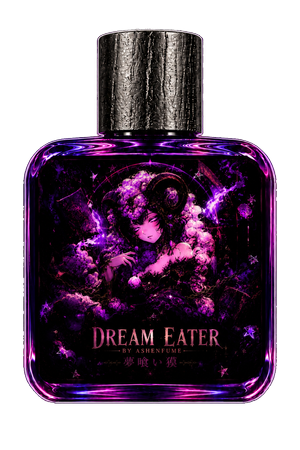 Found in
Dream Eater
Tonka, vanilla and labdanum beneath the fleece, in the hour after midnight.
View the fragrance

IIIThe coumarou

The tonka bean is the seed of a rainforest giant of northern South America. The French pharmacist and botanist Jean Baptiste Aublet described the tree from French Guiana in 1775 as Coumarouna odorata, keeping the name the Galibi and Garipon peoples used, coumarou718. In 1794 it was moved to the genus Dipteryx, and Kew accepts it today as Dipteryx odorata3. The genus belongs to the pea family and holds fourteen species of trees, among them the baru of the Brazilian savanna and the almendro of Central America419.
Venezuelans call the tree sarrapia, Brazilians cumaru56. The English word reached the language in the 1790s from Dutch tonka and Portuguese fava-tonca, and may come from a Carib language of the Guianas20. The names travel in odd directions. In the dry northeast of Brazil, cumaru and imburana-de-cheiro also name a different tree, Amburana cearensis, whose bark is used in popular medicine and whose seeds are sometimes stretched with true tonka21.
The tree
The tonka tree grows wild from Venezuela and the Guianas to the north and west of Brazil3. It is an emergent, a crown that breaks through the forest canopy, 25 to 40 metres tall. It grows slowly, begins to fruit once its trunk reaches about 39 centimetres across, and is estimated to live as long as 1,200 years19. Aublet measured his trees at 60 to 80 French feet, with trunks about three and a half feet across7. Its wood is among the hardest of the Amazon, used for beams, floors, railway sleepers and the bushings of ships’ propeller shafts, and it resists fungi, insects and marine borers22.

The fruit and the seed
The fruit is egg-shaped, with a yellowish, fleshy rind around a hard woody stone7. In a Brazilian study of 376 fruits, the average weighed 18.5 grams and was about four parts shell to one part seed. The single seed inside averaged 2.2 grams and 3.3 centimetres in length23.
Fresh from the fruit, the seed wears a dark purple, oily, fragrant skin9. Aublet broke one open and found a white kernel with a bitter and very pleasant smell7. Dried and cured, the bean turns nearly black and deeply wrinkled, three to four centimetres long, and often carries a frost of tiny white crystals24. The crystals are coumarin. In 1892 G.W. Askinson described them as delicate, brilliant needles lying on the surface and in the wrinkles of the bean25, and sometimes they form inside it too, between its two halves26.
IVA life above the canopy
The tonka tree opens its flowers before dawn. The petals are white at the base and pink at the tips, and they open between half past five and six in the morning. Near Belém, Brazilian researchers watched bumblebees, orchid bees and carpenter bees come for the pollen and for a sugar-rich nectar27. A tree cannot fertilise itself, so the bees carry the pollen that starts every bean from one tree to the next2728.

The tree fruits on its own schedule. Researchers near Manaus watched the same trees every month from 1974 to 2000 and saw ripe fruit at intervals of up to seven years. They suggest that holding the fruit green for long periods may help the tree escape the animals that eat it29. Most fruits simply drop under the crown. Rodents and bats carry some away22, and the ripe fruit is dispersed mainly by bats19.

Bats, agoutis and macaws
The fullest account of what happens next comes from a sister species, Dipteryx panamensis, on Barro Colorado Island in Panama. Sixteen kinds of mammal fed at its fruiting trees. A large fruit bat flew whole fruits to its roosts several hundred metres away, agoutis buried them more than fifty metres from the parent tree, and squirrels gnawed through the hard shells to reach the seed30.
The same sister tree, the mountain almond of Costa Rica, holds most of the nests of the great green macaw. In northern Costa Rica, 85 percent of the nests studied were in its trunk cavities, and a tree must be nearly 300 years old before its hollows are large enough31. On Barro Colorado all nine of its trees struck by lightning survived, while most other struck trees died within two years32.
A scent held in reserve
The coumarin of a growing seed is locked away. Piesse noticed in 1857 that tonka beans, like the sweet vernal grass of a hayfield, are nearly scentless while they grow and turn aromatic once they are cut from the plant17. The chemistry was worked out in sweet clover, another member of the pea family. The plant stores the raw material of coumarin bound to a sugar, in an odourless form, inside the cell’s central vacuole, while the enzyme that frees it waits outside33. When the tissue is crushed, dried or cut, the two meet, and the freed molecule closes into coumarin34. Cured deer’s tongue leaves follow the same course35. Whether the tonka seed works this way has yet to be shown in the tree itself.
Why the seed makes so much coumarin is also untested in Dipteryx. Across the plant kingdom, coumarins serve mainly as defences against microbes36. Against insects their effect varies by species. In spurge laurel, a Mediterranean shrub, coumarins deterred one caterpillar, partly deterred a second and attracted a third37. There is one more twist. The seed perfumers dry so carefully is one the tree cannot afford to dry. Tonka seeds lose their life once their moisture falls to 13 to 17 percent22, so a cured bean has given up its life as a seed.
VNecklaces, snuff and soap

Aublet’s account of 1775 begins with people wearing the scent. In Guiana, he wrote, the Galibi threaded the kernels into necklaces to perfume themselves, and Creole households laid the beans in their cupboards to keep insects away7. Both uses lasted. A century and a half later, Arctander recorded that tonka beans had been laid against moths in clothes cabinets, a practice by then almost gone14.
In Europe the beans were called Tonquin beans, and their great everyday use was in tobacco. In 1857 the London weekly Household Words, edited by Charles Dickens, quoted the perfumer Septimus Piesse on snuff perfumed with Tonquin bean and sharpened with ammonia39. The trade called them snuff beans, and they scented sachets of perfumed powder too38. Tonka flavoured cigars and was used to stretch vanilla40. In the twentieth century the American Tobacco Company bought Venezuelan sarrapia for its Lucky Strike cigarettes5, and tonka extracts flavoured American tobacco until the trade moved to the synthetic41.
Tonka went into the larder as well. Until shortly after the Second World War it was in demand for liqueurs, confectionery and chocolate42. The fat of the bean was sold in Holland as Tonquin butter43. Pharmacists used its scent to cover worse ones, and cod liver oil and iodoform were once perfumed with tonka14.

The perfumers of the nineteenth century ground the bean whole. Piesse called ground tonka an excellent and lasting sachet, and the beans still served in potpourri after their scent had been drawn off into spirit17. Askinson’s heliotrope sachet of 1892 mixed a pound of tonka with rose leaves, orris, vanilla and a little musk, and his perfumed paper was soaked in benzoin, Tolu balsam, vetiver and tincture of tonka, to scent a room whenever it was warmed25. By about 1930 a toilet soap was sold in the Spanish-speaking world as Jabon Sarrapia, under a Parisian poster of a woman with a parasol44.
Medicine and belief
The bean entered the old medical books of the Caribbean as the coumarou odorant, painted for the Descourtilz family’s Flore médicale des Antilles in 182945. In Brazilian popular medicine the seeds are taken as a diaphoretic, to bring on sweating, and preparations of the fruit and seed are described for complaints of the chest and heart, with the oil of the kernel for mouth ulcers and earache22. These are practices and beliefs, recorded as such.
In Bolívar the tree is a matter of local pride. By local accounts the state declared the sarrapia its emblematic tree in 1952, and in 2019 a culinary gathering named Salón La Sarrapia set the seed among the state’s heritage cooking46. In Rondônia, where the Gavião people sell their cumaru through a cooperative of their own, the seed goes by the name of Brazilian vanilla47.

VIThe sarrapia and the cumaru
For almost a century, from about 1870 to 1965, sarrapia led the export economy of the middle Orinoco and the Caura in Venezuela, shipped mainly to France, Germany and the United States10. It first appears in Venezuela’s export statistics in 1847, and the trade peaked in 1942 at 784 tonnes5. Ciudad Bolívar was its market. From the late nineteenth century the merchant houses there financed each harvest through intermediaries, and a saying of the trade held that a fibre of sarrapia was worth a fibre of sterling5.
The gathering grounds were organised into stations. In the 1950s there were three basins: the Caura, with its central station at Maripa, the Cuchivero, with Candelaria and Caicara, and the middle Orinoco, with Túriba, and a count of 1960 found 27 stations in all10. A decree of 1882 divided the groves into family tracts, the sarrapiales. It was annulled in 1890, and the pattern of tracts endured48. The Mapoyo, a Carib-speaking people of El Palomo, between the Suapure and Parguaza rivers, worked the stations for generations, and some of them ran stations of their own10.

Venezuela grew tonka in plantations too. In 1913 the botanist Henri Pittier reported tonka trees planted at the Solórzano cacao estate at Borburata, near Puerto Cabello, as trial shade for the cacao, and found them outyielding it. He judged the Venezuelan bean to be the English tonka of commerce8. The beans left the country through Maracaibo and Port of Spain, Arctander wrote in 1960, Trinidad serving as a transit station for the trade14.
Brazil’s cumaru comes from the lower Amazon, and Pará now produces about four fifths of the country’s crop, centred on Santarém, Oriximiná and Curuá11. The Brazilian beans of the old trade were the Pará tonka, shipped through Belém14. On the Trombetas the cumaru belongs to a longer history. The nineteenth-century mocambos of the river, communities founded by people who escaped slavery, gathered cumaru beside the Brazil nut, sarsaparilla and the oils of copaiba and andiroba50. Their descendants gather it still. Daiana Figueiredo da Silva, president of a cooperative of quilombola, Indigenous and settler families on the river, describes a working day as going into the forest and coming back with a kilo of cumaru and a kilo of copaiba51.

VIIThe season of the bean
In Venezuela and in Brazil alike, tonka is gathered from the ground, fruit by fruit, after it falls1055. On the middle Orinoco the fruit begins to drop in late January or early February, and gathering runs to April. Families walked into the groves with sacks as their only gear, picked the fallen fruit by hand and piled it under the trees. Then came the pisado. Each fruit was struck with a stone, a hammer or a machete until the shell split into two halves around its single seed, and the seeds dried in the sun until they turned dark brown and wrinkled. The cracking and drying went on into May and June10.
For the Mapoyo the season meant months in the forest. Each year a station was built at Raudalito de Caripito, on the Caripo river, and stocked in January with rice, pasta, sardines, cigarettes and cheese. Families camped near the groves and slept in caves such as Cueva Pintada, living on game, fish and cassava bread. Mules carried the seed each week to a landing on the Suapure, and merchant houses in Ciudad Bolívar packed it in barrels for export10. Interviewed at El Palomo in March 2010, María Joropa remembered the camps as a whole neighbourhood of sarrapieros, where people arrived with everything they owned, and Luciano Sandoval remembered the coming of the sarrapia company as a beautiful time, with the forests full of people10.

In the lower Amazon of Pará the harvest usually falls from September to November. Men gather the fallen fruit into piles under the trees, and women and children crack each one with a small axe or a machete. The seeds dry for two or three days. A family collects about 80 kilograms of green seed in a season, which dries down to about 40 kilograms of beans, and in 2005 some 2,700 families worked the harvest in the region55. In Rondônia, José Palahv Gavião, a director of his people’s cooperative, calls the harvest a way to keep the forest standing47.
Before the extractor: the rum bath
What happens to the bean before it leaves the forest changes how it looks and how it smells. Much of the Venezuelan crop was cured. A 1913 report describes the beans soaked in rum for about twelve hours and dried in the sun, which left them with a thin, white, finely crystalline coat8. A trade report of 1915 gives the method in more detail. The beans went into casks open at one end, filled to about a foot from the top and covered with sacking. After twenty-four hours the rum was drained off and the beans were dried in moving air, and the white crystals formed as they dried57. West Indian rum from Trinidad or Jamaica was held to be the best for the purpose58. In Brazil the beans are soaked in alcohol for twenty-four hours and dried, and they may ferment as they do9.
The bath works on the whole bean. The seeds swell in the alcohol and shrink again as they dry, and the coumarin comes to the surface as a crystalline frost14. Arctander judged the treatment partly a curing and partly a custom of the trade. Buyers expected the frost, he wrote, though it was no measure of quality, and rum was used mainly because it was the cheapest alcohol to hand14.
VIIIFrom bean to absolute
A dried tonka bean is rich in fat. Its fat runs from a quarter to nearly half its dry weight2441, and its coumarin usually 1 to 3 percent12. Six retail beans tested in 2025 measured 2 to 4.3 percent13. The bean gives no appreciable oil when steam passes through it14, so its scent is drawn out with solvents.
After the extractor: tincture, concrete and absolute
The oldest form is the tincture. Piesse steeped a pound of beans in a gallon of strong spirit for a month in summer heat, and called the result extract of tonquin17. Arctander described the tincture as a cold, one-step extraction in 70 to 85 percent alcohol that leaves part of the bean’s scent behind. The fuller method takes two steps. The crushed beans are washed with a solvent, petroleum ether giving a pale amber concrete true to nature, and the concrete is then washed with alcohol, which carries away the scent and leaves the fats and waxes behind14. What remains after the alcohol is drawn off is the absolute, a semi-solid or crystalline mass, pale amber to pale brownish yellow1459. Extraction with carbon dioxide under pressure gives two layers, a fatty upper phase and a crystalline lower phase that holds most of the coumarin16.

The bean and the molecule
Coumarin smells sweet and aromatic, of a creamy vanilla bean with nutty tones, the scent perfumers call new-mown hay. Concentrated, it burns and turns bitter. Diluted, it turns sweet and herbaceous12. In tonka absolute it is the largest part by far, 20 to 45 percent by Arctander’s figures14, and 37 and 59 percent in two absolutes analysed in Ljubljana in 201615.
The absolute does more than its coumarin. Arctander wrote that the effect of a true tonka absolute goes far beyond the coumarin it contains, and he gave that as the reason perfumers kept buying it almost a century after synthetic coumarin arrived14. Chemists have since counted 190 volatile compounds in tonka, spread among alcohols, acids, esters, terpenes and lactones52, and a 2025 study identified 138 compounds besides coumarin, umbelliferone and o-coumaric acid among them13.
A molecule’s share of a material and its strength in the nose are two different measures. In 1978 the chemist G. Ohloff defined a molecule’s odour value as its concentration divided by the lowest concentration the nose can detect, so that a trace with a very low threshold can outweigh a major component60. That is how a few percent of minor compounds can carry the caramel, the dried fruit and the tobacco that set the absolute apart from the white crystal. No published study has yet named those trace odorants in tonka by sniffing a separated extract, so the work of naming them remains to be done.

IXThe molecule
In 1820 the Munich chemist A. Vogel drew white crystals from tonka beans and from the flowers of melilot, and took them at first for benzoic acid53. That same year the French pharmacist Nicolas Guibourt argued that the crystals between the two halves of the tonka bean were something new, and in 1826 he named them coumarine, after the coumarou61. In 1835 A. Guillemette showed that the crystals of melilot were the same substance62.
In 1868 the English chemist William Henry Perkin made coumarin in the laboratory from other chemicals63. German manufacturers were supplying it to perfumers by 1876, and in 1882 Paul Parquet of the Paris house Houbigant built Fougère Royale around it12. The Osmothèque at Versailles, which keeps the perfume, dates it to 1884 and records an accord of bergamot, lavender, geranium, coumarin and oakmoss64. Its structure became a family of its own, the fougère, and a typical fougère carries about 15 percent coumarin6512. The story of new-mown hay, the bouquet that grew from the same molecule, is told in the folio on Hay.
By 1995 the world used about 1,850 tonnes of coumarin a year, some 1,700 of them in fragrance, and the coumarin of commerce was entirely synthetic12. Food took another path. On 5 March 1954 the United States declared any food containing added coumarin adulterated, including coumarin present as part of tonka beans or tonka extract, after studies of its effect on the livers of rats. The rule still stands6667.
XThe perfumer’s tonka
The old trade judged tonka by eye first. In 1892 Askinson described two sorts in European commerce. Dutch tonka beans were large and full, with a folded brown to black skin and white inside. English beans were barely two thirds their size, almost black and less glossy25. The American dispensatory of 1918 gave the two sorts to two species, and the British codex of 1911 gave them to Guiana and Brazil2624, so the names belonged to the market more than to botany.
By 1960 Arctander trusted only the bench. A perfumer could not judge tonka beans by looking at them, he wrote, even with long experience of the trade, and had to make a test extraction. Whole beans were hard to adulterate, though frosting them with a solution of synthetic coumarin was a known trick. The extracts were easier to cut. Tonka resin was not infrequently stretched with synthetic coumarin, and resinous materials such as methyl abietate or Sumatra benzoin were added to give it the look of a resin. A cut absolute could be hard to detect, and he advised comparing any offer against an extract made in the perfumer’s own laboratory14.
How the old perfumers used it
The extract of tonquin was never sold on its own, Piesse wrote. It entered, he said, a thousand of the compound essences, and led the Bouquet du Champ, prized for its likeness to a hayfield. It had to be used with caution, or people would call the perfume snuffy, from the bean’s familiar place in the snuffbox17. Askinson’s formulas of 1892 put tincture of tonka in a China rose, the Bouquet des Chasseurs, the Esterhazy bouquet and new-mown hay, and his tonka cream steeped a pound of powdered beans in eight pounds of melted lard for several days, then strained it through fine linen25. The formulas are in the appendix.
Arctander placed tonka absolute in chypres, fougères, new-mown hay bases, lavender bouquets and oriental bases, as a fixative and a sweetener that brings warmth without flowers14. Perfumers still work within limits on its coumarin. The International Fragrance Association restricts coumarin, and its 2020 standard allows up to 1.5 percent in a finished perfume68. European cosmetics law lists coumarin among the fragrance materials that must be named on the label6970. Highly purified coumarin showed very weak sensitising power in a mouse study, and its authors suggest impurities in commercial grades explain earlier reactions71.
Natural or made
Natural and synthetic coumarin are one molecule, and a laboratory can still tell them apart. A plant stamps what it makes with its own ratio of heavy to light atoms. In plant coumarin, heavy hydrogen sits at one position of the molecule at 128 to 134 parts per million, and in synthetic samples the figure measured 190 and 25972. In 2024 a French team authenticated tonka extracts by chromatography and carbon, hydrogen and oxygen isotopes73, and in 2025 Brazilian chemists published the isotopic signature of coumarin from Brazilian tonka, a reference for the test74.
XIThe worth of a seed
The tonka tree takes decades to reach fruiting size and fruits irregularly when it does1929. The species is assessed as data deficient and considered in decline19. In Brazilian forests where seed is gathered, researchers found sharply fewer young trees, and warned that heavy collection could affect the future of the stands75. A tree sold for its timber brings a smallholder about three years of seed income76. In November 2022 the international convention on wildlife trade listed the genus for its timber, with the seeds left outside the listing77.
Brazil’s official harvest stood at 148 tonnes in a count published in 2026, and a survey of buyers found 267. The price paid for a kilogram of beans had risen from about 50 to 100 reais in recent years, and as high as 170 in some places11. In 2022 Venezuela had a single buyer licensed to export sarrapia78. On the Caura, where illegal mining has spread into the upper river79, the harvest of 2024 was promoted as a living for families who keep the trees standing1.
Tonka through the centuries
- 1775
Aublet describes the coumarou of Guiana, and the Galibi necklaces of its seeds7.
- 1820
Vogel draws coumarin from tonka and melilot53.
- 1826
Guibourt names coumarin after the coumarou61.
- 1847
Sarrapia first appears in Venezuela’s export statistics5.
- 1857
Piesse’s extract of tonquin leads the Bouquet du Champ17.
- 1868
Perkin makes coumarin in the laboratory63.
- 1882
Fougère Royale is built around coumarin12.
- 1913
Pittier finds tonka outyielding cacao at Borburata8.
- 1942
Venezuela exports 784 tonnes of sarrapia, its peak5.
- 1954
The United States bars coumarin from food66.
- 1960
Arctander writes that true tonka absolute does more than its coumarin14.
- 1964
Venezuela halts the official sarrapia trade10.
- 2024
The Caura and Parguaza harvest reaches about 200 tonnes1.
Found in
Dream Eater
The house’s tonka absolutes, with lavender and oakmoss, at the floor of the baku’s perfume.
AppendixFor the perfumer
The botany, harvest figures, curing, extraction, chemistry, old formulas, standards, authenticity and trade behind tonka bean absolute, set out for reference at the bench. For coumarin in new-mown hay and the fougère, see the Hay folio.
Names and species
Authority. Aublet published Coumarouna odorata in 1775. IPNI records two transfers into Dipteryx: Forsyth f., Botanical Nomenclator (1794), and Willdenow, Species Plantarum ed. 4 (1802), which it marks as an isonym. Kew accepts the 1794 combination, and much Brazilian and Venezuelan literature still writes “(Aubl.) Willd.”18356.
The genus. Dipteryx Schreb. (1791) is conserved against Coumarouna and Taralea, and a 2020 revision accepts 14 species from 65 names804. A pending revision may sink D. tetraphylla into D. odorata19.
Which tree is sarrapia. The peer-reviewed Venezuelan studies use D. odorata1056. The Diccionario de Historia de Venezuela names the fruit Coumarouna punctata and the tree sarrapio or yape5. D. punctata also grows in Venezuela19, so both may enter the trade.
Other cumarus. Amburana cearensis of northeast Brazil is also sold as cumaru and imburana-de-cheiro, and D. odorata is used to adulterate it21. Arctander adds that the tree grows in Nigeria, where export was irregular and unimportant14.
Bark chemistry. The isoflavones dipteryxine and odoratine come from the bark, separate from the seed81.
Harvest figures
| Measure | Figure | Source |
|---|---|---|
| Fruit weight, 376 fruits, Brazil | 18.5 g mean, 7.6 to 33.0 g | 23 |
| Fruit size | 49.4 × 27.8 × 25.0 mm mean | 23 |
| Shell share of fruit | about 80% | 23 |
| Seed weight, 374 seeds, Brazil | 2.2 g mean, 0.5 to 4.6 g | 23 |
| Seed weight, Venezuela | 1.53 ± 0.09 g | 82 |
| Seeds per kilogram | about 450 by the 2.2 g mean. Counts of 137, 245 and 500 are also reported | 2396 |
| Fresh seed moisture | 34.3%. Viability lost at 13 to 17% | 2722 |
| Fruits per kilogram of sarrapia | 350 to 400 | 5 |
| Green seed to dry bean, per family, Pará, 2005 | about 80 kg to 40 kg | 55 |
| Bean yield per tree, D. odorata or D. punctata | 10 to 20 kg average | 19 |
| Place | Flowering | Fruit or harvest | Source |
|---|---|---|---|
| French Guiana, 1775 | January | April and May | 7 |
| Middle Orinoco, Venezuela | Late January to April, cracking into June | 10 | |
| Caura, Venezuela, about 1915 | February to early June | 57 | |
| Pará, Brazil | August to October | April to July | 1922 |
| Lower Amazon, Pará, gatherers | September to November | 55 | |
| Belterra, Pará, young trees | January to February, September to October | Seed fall July to November | 83 |
| Near Manaus, 1974 to 2000 | Mainly September to November | Ripe fruit at intervals of up to 7 years | 29 |
Reading the seasons. The Pará figures disagree because they measure different things: the tree’s fruiting (April to July), the gatherers’ working season (September to November) and the seed fall of young planted trees. Venezuelan accounts describe a good crop about one year in three57, and fruiting at intervals of 1 to 7 years is reported from Brazil19.
Curing
| Source and place | Liquid | Time | Drying |
|---|---|---|---|
| USDA, Venezuela, 19138 | Rum | about 12 h | Sun, thin white crystalline coat |
| Trade report, Caura, 191557 | Rum, in casks open at one end | 24 h | Moving air, crystals form on drying |
| Peradeniya, about 193458 | West Indian rum, Trinidad or Jamaica | Crystals on a dark brown bean | |
| Arctander, 196014 | Alcohol or rum | 12 to 24 h | Beans swell, then shrink, and frost |
| FAO, 199241 | Rum or alcohol | 24 h | Crystals form on the surface |
| Brazil, 20049 | Alcohol | 24 h | Dried, fermenting, coumarin above 3% |
Where the work was done. Venezuelan almonds were crystallised in alcohol in Trinidad by Dalla Costa y Cía.5. Arctander calls Port of Spain a transit station for the trade, with no production of its own14.
Forms
| Form | How it is made | Character |
|---|---|---|
| Tincture | Cold, one-step extraction in 70 to 85% alcohol. Piesse: 1 lb beans to 1 gallon spirit, a month in summer heat1417 | Leaves part of the scent behind, fats and waxes in the residue14 |
| Concrete | Percolation of coarsely ground beans with benzene, acetone, ethyl ether or petroleum ether. Hot extraction draws unwanted fats14 | Amber to brownish yellow, rarely homogeneous, with a white deposit of crystallised coumarin. Petroleum ether gives the palest, truest concrete14 |
| Absolute | Alcohol washing of the concrete, fats removed by dilution or freezing, alcohol drawn off under gentle vacuum14 | Semi-solid or crystalline, pale amber. Rich, sweet, warm, coumarinic-herbaceous, prune-like or caramel undertone. 20 to 45% coumarin14 |
| Resin or resinoid | Solid extract, usually by benzene, fat removed, waxes kept14 | Holds no significant natural resin. Often compounded14 |
| Tonka oil | The fatty oil from acetone extraction, kept for its dissolved aroma14 | An oil-soluble flavour of suave sweetness that can turn rancid14 |
| CO2 extract | Supercritical carbon dioxide16 | Fatty upper phase and crystalline lower phase, coumarin mostly in the lower16 |
| Steam distillate | None of note14 | The bean gives no appreciable oil by steam14 |
Stepwise extraction, Venezuelan seed. Hexane 27.4 percent of the seed, then dichloromethane 1.7, ethyl acetate 0.3 and ethanol and water 3.382. Brazilian laboratory work. Soxhlet extraction with ethanol recovers 1 to 2 percent coumarin and about 23 percent oil, and a solid extract holds 20 to 45 percent coumarin9. Old assay. Gossmann’s method gave 108 grains of coumarin from a pound of beans, about 1.5 percent26.
Chemistry
| Material | Coumarin | Source |
|---|---|---|
| Bean, literature range | 1 to 3%, rarely up to 10% | 1312 |
| Bean, six retail samples, HPLC, 2025 | 2.0 to 4.3% | 13 |
| Bean, dry weight | about 2.5% | 82 |
| Volatile fraction, by method | 51 to 85% | 52 |
| Absolute, Arctander, 1960 | 20 to 45% | 14 |
| Absolute, two batches, GC-MS, 2016 | 37.4% and 58.8% | 15 |
| Absolute, indicative figure in the industry standard | 46.7% | 68 |
The volatile profile. 190 compounds across three methods: headspace microextraction found 156, distillation-extraction 77 and supercritical CO2 3652. A 2025 study identified 138 compounds besides coumarin, among them umbelliferone, o-coumaric acid and diterpenoids13.
The polar side. The coumarin glucoside esculin makes up half the peak area of the polar seed fraction, a first report for the species82. An ethyl acetate extract gave eleven compounds, including the new cassane diterpene dipteryxic acid, 5-methoxyxanthocercin A, isoliquiritigenin, sulfuretin, butin, eriodictyol and (−)-lariciresinol84.
| Material | Odour |
|---|---|
| Coumarin | Sweet, aromatic, creamy vanilla bean with nutty tones, new-mown hay. Burning and bitter concentrated, sweet and herbaceous diluted12 |
| Tonka bean absolute | Very rich, sweet and warm, coumarinic-herbaceous, prune-like or caramel undertone14. Sweet, warm, coumarin, nutty, caramel at 10% in triacetin85 |
| Tonka bean resinoid | Sweet, caramel, coumarin, nutty85 |
| Dihydrocoumarin (accord material, from melilot) | Sweet, creamy, coconut, coumarin, vanilla, a slight spice86 |
Trace odorants. No GC-olfactometry study of tonka was found. The house’s comparison of Venezuelan and Brazilian absolutes rests on the makers’ notes and the bench, as no published study compares the two origins.
How coumarin forms. In sweet clover: phenylalanine to trans-cinnamic acid to o-coumaric acid, stored as o-coumaryl glucoside and coumarinyl glucoside in the vacuole. On wounding, a β-glucosidase from outside the vacuole frees coumarinic acid, which lactonises3433. The trans side chain must turn cis before the ring closes, and the enzyme COSY speeds that step87. Fresh deer’s tongue leaves hold o-hydroxycinnamic acid above 10 percent of dry weight, and cured leaves are high in coumarin35. These steps were worked out in other plants. Their operation in the tonka seed, and any link to the rum bath, await a study.
The fixed oil
Content. Reported fat runs from 25 to 46 percent of the dry kernel24941.
| Acid | Share |
|---|---|
| Oleic | 47.35% |
| Linoleic | 21.56% |
| Palmitic | 6.60% |
| Arachidic | 6.23% |
| Linolenic | 5.50% |
| Stearic | 4.50% |
| Behenic | 4.33% |
| Lignoceric | 3.93% |
Constants. Density 0.920 at 40°C, iodine value 66 to 67, saponification value 189 to 2129. Tonquin butter: specific gravity 0.888, melting at 28°C26.
Old formulas
Batch quantities from two nineteenth-century manuals, in the measures of their day. Every extract and tincture is itself a solution in strong alcohol. They are printed as history.
| Preparation | Tonka | With | Method |
|---|---|---|---|
| Extract of tonquin, Piesse, 185717 | Beans, 1 lb | Rectified spirit, 1 gallon | Digest a month at summer heat. The spent beans, dried and ground, go into potpourri |
| Tonquin pomade and oil, Piesse, 185717 | Ground beans, ½ lb | Fat or oil, 4 lb | Macerate 12 to 28 hours, strain through muslin |
| Tonka cream, Askinson, 1892, p. 25325 | Powdered beans, 1 lb | Lard, 8 lb | Several days in the melted fat, stirred, then strained through linen |
| New-Mown Hay, Askinson, 1892, p. 18925 | Beans in pieces, 75 grains | Orris root, vanillin, oils of bergamot, neroli, rose, lavender and clove, nettle and patchouli herb | Two weeks |
| Heliotrope sachet powder, Askinson, 189225 | Beans, 1 lb | Rose leaves 2 lb, orris root 4 lb, vanilla, musk ½ oz, oil of bitter almond | Powdered and mixed |
| Perfumed paper, Askinson, 1892, p. 21925 | Tincture, 7 oz | Benzoin and Tolu balsam 7 oz each, essence of vetiver 7 oz, alcohol 20 fl oz | Alum-dipped paper is soaked and dried. It scents a room when warmed |
Standards and regulation
| Date | Measure | Source |
|---|---|---|
| 5 March 1954 | United States: added coumarin, alone or in tonka, makes food adulterated. Arctander dates the ban 1953 | 6614 |
| 2000 | Coumarin placed in Group 3 by the International Agency for Research on Cancer | 88 |
| 2003 | European cosmetics law: coumarin named on the label above 0.001% leave-on and 0.01% rinse-off | 69 |
| 2004 | European tolerable daily intake 0.1 mg/kg body weight, from a no-effect level of 10 mg/kg/day in dogs | 89 |
| January 2011 | European food limits for coumarin from plant flavourings: 50 mg/kg in traditional cinnamon bakery, 20 in breakfast cereals, 15 in other fine bakery, 5 in desserts | 90 |
| 2020 | Industry standard, 49th Amendment: 1.5% coumarin in fine fragrance, tonka absolute’s indicative coumarin 46.7% | 68 |
| 16 August 2023 | Expanded European allergen list in force, coumarin kept and 6-methylcoumarin added | 70 |
Toxicology. In humans most coumarin is detoxified by 7-hydroxylation through the liver enzyme CYP2A6. A minor route through a 3,4-epoxide can harm the liver67. Rats given single doses of 125 to 500 mg/kg showed liver necrosis, and dogs given 10 mg/kg for up to 350 days showed none88. Under the European safety margin, an average adult reaches the daily limit with about a quarter of a bean91.
The table is a history. Limits change with each amendment of the industry standard and of European law, so check the latest texts before formulating.
Authenticity and adulteration
| Sample | Measure | Value | Source |
|---|---|---|---|
| Natural coumarin, plant extracts | Deuterium at the β position, ppm | 128.1 to 133.6 | 72 |
| Synthetic coumarin | Deuterium at the β position, ppm | 189.8 and 258.5 | 72 |
| Natural coumarin, plant extracts | Bulk oxygen-18, ‰ | 20.3, 22.6 and 23.6 | 72 |
| Synthetic coumarin | Bulk oxygen-18, ‰ | 5.6 and 12.6 | 72 |
| Coumarin-rich fraction, Brazilian tonka oil | δ13C, ‰ | −33.48 to −33.62 | 74 |
| Coumarin-rich fraction, Brazilian tonka oil | δ2H, ‰ (δ18O 21.7 to 22.2) | −112 to −115 | 74 |
Tests in use today
Liquid and gas chromatography with carbon, hydrogen and oxygen isotope analysis authenticate tonka extracts73. A plant’s ratio of heavy to light carbon and hydrogen differs sharply from that of the same molecule made from petroleum92.
Historic adulteration, as recorded in 1960
Artificial frosting of whole beans with synthetic coumarin. Tonka resin cut with synthetic coumarin, and given a resinous look with methyl abietate, deodorised dihydro methyl abietate, hydroabietic alcohols or Sumatra benzoin extracts. Absolutes cut with synthetic coumarin, best caught against a home-made standard extract14. Earlier, when synthetic coumarin was dear, buyers watched for acetanilide and terpin hydrate in it12.
Trade and provenance
| Year | Figure | Source |
|---|---|---|
| 1847 | Venezuelan sarrapia first appears in export statistics | 5 |
| 1912 | A short crop sends the price to $4.87 a pound, later falling below $1 | 57 |
| 1913 | Pará exports 42,298 kg | 23 |
| 1913 | Venezuelan beans sell at about $5 a pound at second hand | 8 |
| 1942 | Venezuelan exports peak at 784 tonnes | 5 |
| 1995 | World coumarin use about 1,850 t, 1,700 in fragrance, all synthetic | 12 |
| 2004 | Brazilian gatherers paid $0.90 to $2.00 a kg, exporters $4 to $5, crystallised beans about $10 | 9 |
| 2005 | Brazil about 110 tonnes. Gatherers R$3 a kg, Belém wholesale about R$11, retail about R$18 | 55 |
| 2008 to 2010 | Seed price doubles, from $2 to $4.30 a kg | 76 |
| 2018 to 2021 | About 11 million kg of cumaru timber to the United States and 7 million to the European Union | 19 |
| 2022 | One licensed sarrapia exporter in Venezuela | 78 |
| 2024 | Caura and Parguaza harvest about 200 tonnes of beans | 1 |
| 2026 | Brazil 148 tonnes officially, 267 by a buyer survey. Price R$50 to 100 a kg, up to R$170 | 11 |
Conservation. D. odorata is assessed as data deficient and considered in decline, and its relatives range from least concern to vulnerable19. In November 2022 the international convention on wildlife trade listed the genus by 74 votes to 13, after the proponents removed the annotation covering seeds77.
From the record. Aublet saw the coumarou at Caux in the Comté de Gêne and at Sinnamary7. Jean Chaffanjon saw Indigenous people selling sarrapia at Caicara in 188510. The merchant houses Dalton y Cía. and Blohm y Cía. financed harvests from the late nineteenth century5. A government commission on sarrapia was set up under Decree 472 of 12 December 1958, the official trade was halted in 1964, and the last station closed in 1997 at Los Pijiguaos10. Piesse gave the bean’s chemistry in 1857 as a fragrant volatile otto, benzoic acid, a fatty oil and coumarin17. In 1820 Vogel titled his paper on the preparation of benzoic acid from the tonka bean and from melilot flowers53.
Related foliosMore from the Materia
 ✦ Folio No. 30
Hay
The meadow that shares tonka’s coumarin, and the story of new-mown hay and the fougère.
Read the folio
 ✦ Folio No. 29
Amber
Labdanum and vanilla, the warm materials tonka lies beside in Dream Eater’s base.
Read the folio
 ✦ Folio No. 34
Beeswax
The thread of wax that runs through tonka, vanilla and labdanum in Dream Eater.
Read the folio
 ✦ Folio No. 35
Propolis
The bee glue of the poplar, tinctured in the house and carried in Dream Eater.
Read the folio
 ✦ The powder in the dark
Orris
The iris root in three forms above Dream Eater’s fleece.
Folio to come
 ✦ The sleep
Lavender
Tonka’s oldest partner, from the first fougère to the full height of Dream Eater.
Folio to come
✦ ✦ ✦
Sources & image credits92 references
- Sánchez F., Resiliencia y desarrollo sustentable: familias se preparan para la cosecha de sarrapia en Sucre y Cedeño, Observatorio de Ecología Política de Venezuela (29 January 2024).↑
- Pérez B.E., Estraño K., Afroindianidad y mestizaje en resistencia: los Aripaeños, descendientes de cimarrones en el Bajo Caura, Antropológica 57(120) (2013).↑
- Plants of the World Online, Royal Botanic Gardens Kew, Dipteryx odorata (Aubl.) Forsyth f.↑
- Silva de Carvalho C., Fraga C.N. de, Cardoso D.B.O.S., Lima H.C., Tonka, baru and cumaru: nomenclatural overview, typification and updated checklist of Dipteryx (Leguminosae), Taxon 69(3), 582-592 (2020).↑
- Fundación Empresas Polar, Sarrapia, Diccionario de Historia de Venezuela.↑
- Santos S.H.M. dos, Cumaru: Dipteryx odorata Willd., Recomendações Técnicas, Embrapa Amazônia Oriental, Belém (2002).↑
- Aublet J.B.C.F., Histoire des Plantes de la Guiane françoise, vol. 2, 740-741 and plate 296, Paris (1775), via Internet Archive and Missouri Botanical Garden.↑
- United States Department of Agriculture, Bureau of Plant Industry, Seeds and Plants Imported, July 1 to September 30, 1913, S.P.I. No. 35904, note by Pittier H.↑
- Araújo V.F. de, Echeverria R.M., Pastore Jr. F., Dipteryx odorata: relatório técnico sobre o cumaru, cumarina e seu extrato, Universidade de Brasília, LATEQ, ITTO Project PD 31/99 (2004).↑
- Torrealba G., Scaramelli F., Las estaciones sarrapieras: los Mapoyo y las economías extractivas del Orinoco Medio, Venezuela, Boletim do Museu Paraense Emílio Goeldi, Ciências Humanas 13(2), 293-314 (2018), full text via academia.edu.↑
- Nunes S., Santarém hosts meeting on the cumaru value chain, Instituto de Pesquisa Ambiental da Amazônia (26 May 2026).↑
- Clark G.S., An aroma chemical profile: coumarin, Perfumer & Flavorist 20 (November/December 1995).↑
- Toma A.C., Stegmüller S., Richling E., Coumarin contents of tonka (Dipteryx odorata) products, European Food Research and Technology 251, 513-517 (2025).↑
- Arctander S., Perfume and Flavor Materials of Natural Origin, Elizabeth, New Jersey (1960), pp. 447 to 449, Tonka absolute, Tonka bean and Tonka concrete, via Internet Archive.↑
- Potočnik M., Analiza hlapnih spojin v absolutih rastlinskih drog s kumarini, master's thesis, Faculty of Pharmacy, University of Ljubljana (2016).↑
- Ehlers D., Pfister M., Gerard D., Quirin K.-W., Bork W.-R., Toffel-Nadolny P., Reducing the coumarin content of tonka bean extracts using supercritical CO2, International Journal of Food Science and Technology 31(1), 91-95 (1996).↑
- Piesse G.W.S., The Art of Perfumery, and Methods of Obtaining the Odors of Plants, Lindsay and Blakiston, Philadelphia (1857), entries Tonquin or Tonka, Extract of Tonquin, and Tonquin Pomade and Tonquin Oil, Project Gutenberg text via Internet Archive.↑
- International Plant Names Index, Coumarouna odorata Aubl., Histoire des Plantes de la Guiane françoise 2, 740 (1775).↑
- Colombia, European Union and Panama, Proposal 48: inclusion of the genus Dipteryx in Appendix II, nineteenth Conference of the Parties to the Convention on International Trade in Endangered Species of Wild Fauna and Flora, Panama (2022).↑
- Merriam-Webster, Tonka bean, etymology.↑
- Programa de Educação Tutorial de Farmácia, Universidade Federal da Paraíba, Planta em evidência: cumaru, Amburana cearensis (2024).↑
- Carvalho P.E.R., Cumaru-ferro, Dipteryx odorata, in Espécies Arbóreas Brasileiras, vol. 3, Embrapa, 217-224.↑
- Nascimento L.D., Cascaes M.M., Cruz E.D., Andrade E.H.A., Cumaru: Dipteryx odorata, in Plantas para o Futuro: Região Norte, Embrapa, 615-626.↑
- British Pharmaceutical Codex, Dipteryx (tonco seeds) (1911), via Henriette's Herbal.↑
- Askinson G.W., Perfumes and their Preparation, translated by I. Fürst, Norman W. Henley, New York (1892), pp. 52 to 53 (tonka beans), 170, 177, 189, 212, 219 and 253, via Internet Archive.↑
- United States Dispensatory, Coumarouna, tonka bean (1918), via Henriette's Herbal.↑
- Macedo A.C.B., Couto L.F.C. dos, Maués M.M., Aspectos da biologia reprodutiva de três espécies florestais amazônicas, Embrapa Amazônia Oriental, Belém.↑
- Maués M.M., Cavalcante M.C., Santos A.S., Correa F.S., abstract on the pollinators of Amazonian timber trees, Association for Tropical Biology and Conservation, symposium abstract S22-3, San José (2013).↑
- Pinto A.M., Morellato L.P.C., Barbosa A.P., study of the reproductive phenology of Dipteryx odorata near Manaus, 1974 to 2000, Acta Amazonica 38(4), 643-650 (2008).↑
- Bonaccorso F.J., Glanz W.E., Sandford C.M., Feeding assemblages of mammals at fruiting Dipteryx panamensis trees in Panama, Revista de Biología Tropical 28(1), 61-72 (1980).↑
- Lewis T.C. et al., Nest-site selection and reproductive success of a critically endangered parrot, the Great Green Macaw (Ara ambiguus), Ibis 166(2), 518-533 (2024).↑
- Cary Institute of Ecosystem Studies, Getting hit by lightning is good for some tropical trees (26 March 2025), on Gora E.M. et al., New Phytologist 246, 1554-1566 (2025).↑
- Oba K., Conn E.E., Canut H., Boudet A.M., Subcellular localization of 2-(β-D-glucosyloxy)-cinnamic acids and the related β-glucosidase in leaves of Melilotus alba Desr., Plant Physiology 68(6), 1359-1363 (1981).↑
- Gorz H.J., Haskins F.A., Kleinhofs A., Genetic and biochemical aspects of o-hydroxycinnamic acid synthesis in Melilotus alba, Proceedings of the 10th International Grassland Congress, 704-707 (1966), University of Nebraska-Lincoln.↑
- Haskins F.A., Gorz H.J., Leffel R.C., Form and level of coumarin in deer's tongue, Trilisa odoratissima, Economic Botany 26(1), 44-48 (1972).↑
- Stringlis I.A., de Jonge R., Pieterse C.M.J., The age of coumarins in plant-microbe interactions, Plant and Cell Physiology 60(7), 1405-1419 (2019).↑
- Alonso C. et al., study of the feeding response of three moth larvae to coumarins in Daphne laureola, Entomologia Experimentalis et Applicata 132, 76-83 (2009).↑
- Tonqua bean, Encyclopaedia Britannica, ninth edition, via Wikisource.↑
- Household Words XV, 240, ed. Dickens C. (1857), via Dickens Journals Online.↑
- Sayre L.E., Dipteryx, A Manual of Organic Materia Medica and Pharmacognosy (1917), via Henriette's Herbal.↑
- Axtell B.L., Fairman R.M., Minor Oil Crops, part II, 2.9 Tonka bean, Food and Agriculture Organization of the United Nations (1992).↑
- Davidson A., Tonka bean, The Oxford Companion to Food (2014 edition).↑
- Grieve M., Tonquin bean, A Modern Herbal (1931), via botanical.com.↑
- Ylen J. d’, Jabon Sarrapia para el tocador, advertising poster, printed by Vercasson, Paris (about 1930), Bibliothèque nationale de France, Gallica, via Wikimedia Commons.↑
- Descourtilz M.E., Descourtilz J.T., Flore médicale des Antilles, vol. 7, plate 472, Coumarou odorant, Paris (1829), Biodiversity Heritage Library.↑
- Siverio J., Salón La Sarrapia perfuma la cocina patrimonial, Correo del Caroní (29 October 2019).↑
- Pinheiro K., Semente de cumaru, baunilha brasileira, aumenta renda de povo indígena em Rondônia, Portal Amazônia (25 August 2022), from G1 Rondônia.↑
- Traylor K., Tonka bean: the tale of a contested commodity, JSTOR Daily (November 2025).↑
- The Orinoco at Caicara, illustration in Popular Science Monthly 48 (1895 to 1896), via Wikimedia Commons.↑
- Funes E.A., Comunidades mocambeiras do Trombetas, in Grupioni D.F., Andrade L.M.M. de (orgs.), Entre Águas Bravas e Mansas: Índios & Quilombolas em Oriximiná, CPI-SP and Iepé, São Paulo (2015), 26.↑
- Damasio K., No estado que mais desmata, povos tradicionais dão exemplo de conservação, National Geographic Brasil (December 2022).↑
- Bajer T., Surmová S., Eisner A., Ventura K., Bajerová P., study of the volatile profile of tonka beans by headspace microextraction, distillation-extraction and supercritical CO2, Industrial Crops and Products, 313-321 (2018).↑
- Vogel A., Darstellung von Benzoesäure aus der Tonka-Bohne und aus den Meliloten- oder Steinklee-Blumen, Annalen der Physik 64(2), 161-166 (1820), via Zenodo.↑
- Agência Pará, Abertura da safra da castanha-do-pará e do cumaru gera renda para extrativistas, O Estado Net (5 February 2024).↑
- Silva T.M. da, Jardim F.C. da S., Silva M. da S., Shanley P., O mercado de amêndoas de Dipteryx odorata (cumaru) no estado do Pará, Floresta 40(3), 603-614 (2010).↑
- Pérez B.E., Souto T., Ethnobotanical knowledge of sarrapia (Dipteryx odorata [Aubl.] Willd.) among three non-indigenous communities of the Lower Caura River Basin, Venezuela, Journal of Ethnobiology 31(1), 128-149 (2011).↑
- The Semi-Weekly Tribune, article on the Venezuelan tonka bean trade, North Platte, Nebraska (16 July 1915), 6, via Nebraska Newspapers.↑
- Parsons T.H., Departmental notes: the tonquin, tonca or tonka bean, Royal Botanic Gardens, Peradeniya (about 1934).↑
- ChemicalBook, Tonka bean absolute, CAS 8046-22-8, citing Naves Y.R., Technologie et chimie des parfums naturels (1974).↑
- Ohloff G., Importance of minor components in flavors and fragrances, Perfumer and Flavorist 3 (1978), 11-22.↑
- Avenas P., À propos de la warfarine, L’Actualité Chimique 491, Société Chimique de France (January 2024).↑
- Coumarin, Wikipedia, citing Guibourt N.J.B.G., Histoire abrégée des drogues simples 2, 160-161 (1820), and Guillemette A., Journal de Pharmacie 21, 172-178 (1835).↑
- W. H. Perkin, “On the artificial production of coumarin and formation of its homologues”, Journal of the Chemical Society 21 (1868): 53.↑
- Osmothèque, Fougère Royale, Versailles.↑
- Fougère, Wikipedia, citing Perkin W.H. (1868) and Ohloff G. et al., Scent and Chemistry (2022).↑
- United States Code of Federal Regulations, 21 CFR 189.130, Coumarin, after 19 FR 1239 (5 March 1954).↑
- Iwata N. et al., study of coumarin metabolism and liver effects, Frontiers in Pharmacology 7, 174 (2016).↑
- International Fragrance Association, IFRA Standard: coumarin, 49th Amendment (2020), hosted copy.↑
- European Commission, Fragrance allergens in cosmetic products, summary of the SCCS opinion of June 2012.↑
- SGS, EU expands the list of fragrance allergens in cosmetic products (October 2023), on Commission Regulation (EU) 2023/1545.↑
- Vocanson M. et al., Lack of evidence for allergenic properties of coumarin in a fragrance allergy mouse model, Contact Dermatitis (2007).↑
- Fuganti C., Fronza G., Serra S., Stable isotope characterization of the ortho-oxygenated phenylpropanoids: coumarin and melilotol, Journal of Agricultural and Food Chemistry 53, 9383-9388 (2005).↑
- Cuchet A., Jame P., Anchisi A., Schiets F., Carénini E., Casabianca H., Authentication of tonka beans extracts (Dipteryx odorata) using LC-UV/MS, GC-MS and multi element (13C, 2H and 18O) bulk specific isotope analysis, Industrial Crops and Products, 118038 (2024).↑
- Bonfim S.A., Casabianca H., Oliveira A.H., Isotopic characterization of cumaru essential oil (Dipteryx odorata) for quality and authenticity validation, Brazilian Journal of Radiation Sciences 13(3), e2837 (2025).↑
- Herrero-Jáuregui C., Sist P., Casado M.A., study of tree populations under seed collection and logging in the Brazilian Amazon, Forest Ecology and Management 280, 31-39 (2012).↑
- Fraser B., Mollins J., Amazon timber-food balance saves forest, smallholder livelihoods from risk, Forests News, Center for International Forestry Research (7 May 2013).↑
- Earth Negotiations Bulletin, Daily report of the nineteenth Conference of the Parties to the Convention on International Trade in Endangered Species, 17 November 2022, International Institute for Sustainable Development.↑
- Siverio J., 14 países participarán en IV Salón Sarrapia 2022, Correo del Caroní (15 November 2022).↑
- Forest Peoples Programme, Venezuela: thousands of illegal and armed miners invade Ye'kwana and Sanema lands in Upper Caura (11 February 2014).↑
- Plants of the World Online, Royal Botanic Gardens Kew, Dipteryx Schreb.↑
- Nakano T., Alonso J., Grillet R., Martín A., Isoflavonoids of the bark of Dipteryx odorata, Journal of the Chemical Society, Perkin Transactions 1, 2107-2112 (1979).↑
- Oliveros-Bastidas A. de J., Demuner A.J., Barbosa L.C. de A., Chemical characterization by GC-MS and phytotoxic potential of non-polar and polar fractions of seeds of Dipteryx odorata from Venezuelan regions, Química Nova 36(4), 502-506 (2013).↑
- Martínez G.B., Costa J. da S., Silva A.R., Fenologia reprodutiva do cumarú (Dipteryx odorata) para uso em sistemas silvipastoris, Brazilian Journal of Animal and Environmental Research 4(3), 3708-3714 (2021).↑
- Jang D.S. et al., Potential cancer chemopreventive constituents of the seeds of Dipteryx odorata (tonka bean), Journal of Natural Products 66(5), 583-587 (2003).↑
- The Good Scents Company, Tonka odour type, with the entries for tonka bean absolute and resinoid.↑
- The Good Scents Company, Dihydrocoumarin, citing Mosciano G., Perfumer & Flavorist 17(3), 57 (1992).↑
- Kim C.Y. et al., preprint on the enzyme COSY in coumarin biosynthesis, bioRxiv 2022.07.19.500703 (2022), discussing Vanholme R. et al., Nature Plants 5, 1066-1075 (2019).↑
- International Agency for Research on Cancer, Coumarin, IARC Monographs 77, 193-225 (2000).↑
- Federal Institute for Risk Assessment (BfR), Consumers who eat a lot of cinnamon currently have an overly high exposure to coumarin, Health Assessment No. 043/2006 (16 June 2006).↑
- European Union, Regulation (EC) No 1334/2008 on flavourings, Annex III.↑
- Gorvett Z., The delicious flavour with a toxic secret, BBC Future (20 June 2017).↑
- Casabianca H., Jame P., Analyse des contrefaçons dans les produits naturels et biosourcés, L’actualité chimique 415 (February 2017), long version.↑
Photographs and plates
Dugout canoes at Maripa: Luisovalles, CC BY-SA 3.0. Sarrapia seeds: Joselvazquezm, CC BY-SA 3.0. The Orinoco from Parmana: Paolostefano1412, CC BY-SA 3.0. Aublet’s coumarou (1775): CC0. Cumaru tree, Vaca Díez: vincentvosriberalta, CC BY 4.0. Flowering tonka tree, Brisbane: Tatters, CC0. Great fruit-eating bat: Desmodus, CC BY-SA 4.0. Snuff box: Science Museum, London, via Wellcome Collection, CC BY 4.0. Jabon Sarrapia poster: Jean d’Ylen, Bibliothèque nationale de France, public domain. Coumarou odorant, Descourtilz (1829): Biodiversity Heritage Library, public domain. The Orinoco at Caicara: Popular Science Monthly, public domain. The Trombetas: Carolina Teixeira de Melo Franco, CC BY-SA 3.0. The Caura near Maripa: Fev, CC BY-SA 3.0. Coumarin crystals: PhilipdCartwright, public domain. Cured tonka beans: Carlo Brescia, CC BY-SA 4.0. Card images: Champoléon valley, rockrose at La Siberia, beehives in Ethiopia, Lynde Creek, Iris pallida (Pamwik, CC BY-SA 4.0) and the lavender still at Sault (public domain), credited in their own folios. All via Wikimedia Commons. Dream Eater bottle: Ashenfume.
Join the discussionHave you gathered sarrapia on the Caura, cracked cumaru on the Trombetas or kept a tonka bean in a drawer? Add what you know, or ask a question.