Provenance Materia Beeswax
MATERIA · THE STAG COLLECTION
Beeswax
The wax of the honey bee, from the glands of the young worker to the Easter candle and the perfumer’s absolute
In Syracuse, New York, the year’s Paschal candles go into production right after Easter. In April 2017 a reporter found the work under way at the Cathedral Candle Company, where Dominica Oliveri and Hieu Nguyen pressed thin wax ornaments, some laid with 24-karat gold leaf, into bronze dies, some of them made in Germany ninety to a hundred years before, to dress the great candles that churches light at the Easter Vigil. Jacob Steigerwald founded the company in 1897, Louis J. Steigerwald III is its president, and the rule its workers follow is old. The greater part of every Paschal candle must be beeswax12. Syracuse made its name on that wax. Anton and Rosina Will began making candles in their house on McBride Street in 1855, and the local historical society dates the American church candle industry from them2. In 1908 a London manual on wax printed a plate of the bleaching yard of their firm, Will and Baumer, where ribbons of yellow wax lay whitening in the sun3. Every gram of that wax was made inside the body of a young honey bee.
Explore this folio
- IWhat it smells like
- IIIn the house
- IIIThe wax-making bee
- IVThe architecture of the comb
- VWhere the scent comes from
- VIThe perfumer’s wax
- VIIWax through the ages
- VIIIThe sacred candle
- IXWax in the household
- XHunters, hives and the melt
- XIFrom comb to absolute
- XIIHonest wax
- ✦Appendix: For the perfumer


IWhat it smells like
Raw beeswax smells of wax and honey. Alcohol draws that scent out of the solid, and the house keeps it in three absolutes, each extracted in France, each with a character of its own.
- The comb
Waxy above all, the one product of the hive a trained panel scored for that note, with honey in a good wax1011.
- The comb absolute
Washed from the comb with alcohol. Mild honey, sweet and floral, with a little of the animal, settling into new-mown hay over warm wax.
- The amber absolute
Drawn with a volatile solvent from wax gathered in autumn. Amber and vanilla first, then honey, nuts, yellow fruit and dried fruit, with a chocolate shade in the drydown.
- The glacé absolute
Frozen and filtered after extraction until only the scent remains. A dark liquid, sweet and warm, honeyed and balsamic, with hay, tobacco and a gentle floral lean.
IIIn the house
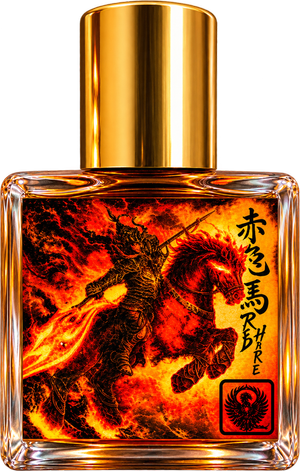
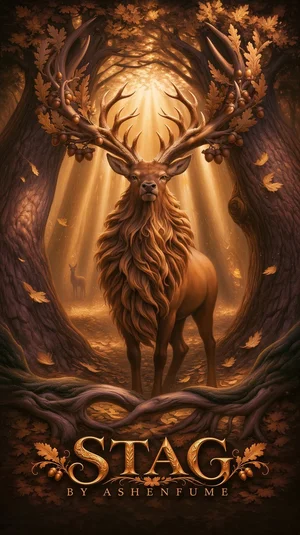
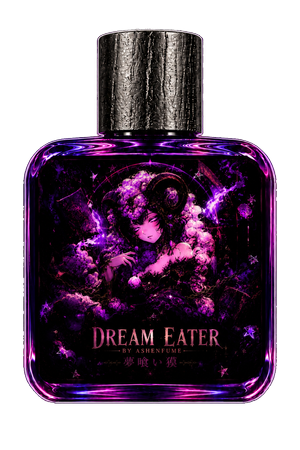
Beeswax runs through three of the house’s perfumes, and each carries it differently. Dream Eater and Red Hare carry two absolutes laid together, the honeyed comb absolute and the amber one, for a wax that is floral at its top and dried fruit at its depth. Stag carries the third, the glacé absolute, the clearest of them.
Dream Eater
In Dream Eater, the perfume of the baku that eats bad dreams, the wax lies in the base. Wool absolute settles over the skin first, lanolin-warm, and orris rises above it in three forms. Tonka, vanilla and labdanum come last, and through them runs a thread of beeswax, the honey and hay of the comb absolute meeting the fleece, the amber absolute meeting the vanilla.
Red Hare
In Red Hare, the warhorse of the Three Kingdoms, the wax works inside the house’s Horse Musk Accord, nineteen materials built to carry a working horse. Cedrol and patchouli give the dry coat, ylang and a honeyed note the body heat, and hyraceum and beeswax the living animal. Here the wax shows its animal side, a skin-warm softness beneath the Meghalayan oud and labdanum.
Stag
Stag, the house forest chypre of pine, fir, orange blossom, hay and the Deer Musk Pod Accord, carries the glacé absolute. Freezing and filtering leave the odour of the wax and none of its cloud, so it dissolves clear in the alcohol.
From the same hive. Beeswax is made by the bee, the structure that holds the colony. Its sister material, propolis, is gathered from the trees, the resin that guards the nest, and the house keeps it as a tincture of its own making.

IIIThe wax-making bee

Carl Linnaeus named the western honey bee Apis mellifera in 1758, the honey-bearing bee. He later thought Apis mellifica, the honey-making bee, the better name, and the rules of zoology kept the first4. Its wax is a secretion, made in the bee’s own body.
A worker carries four pairs of wax glands on the underside of her abdomen, on the fourth to seventh segments. Each lies beneath a smooth plate called a wax mirror514. She can make wax only if she was fed pollen in her first five or six days as an adult. Her glands begin working when she is a little under a week old, reach their peak at about two weeks, and are at their most productive between twelve and eighteen days. By about three weeks they have shrunk away, and the bee moves on to other work1413.
The wax leaves the gland as a liquid and hardens on the mirror into a thin, clear flake, built of many fine layers. The bee lifts the flake forward with a hind leg to her mandibles, chews it and builds with it513. Each scale is about three millimetres across and a tenth of a millimetre thick, and about 1,100 of them make a gram6. Chemists trace part of the wax to the oenocytes, cells in the bee’s body rich in the same hydrocarbons and fatty acids as fresh wax15.
Wax is made from honey. Workers about to build gorge on it and hang together in living chains, called festoons, close to the building site, and a colony can make wax only when it has honey enough stored13. Estimates of the cost run from about 6.7 to 8.8 kilograms of honey for each kilogram of wax56. Darkness helps. Workers kept in the dark secrete more wax and build more comb than workers in the light16.
Other bees, other waxes
Every honey bee makes wax, and the waxes differ. The western honey bee’s wax is the wax of the trade and of the house’s absolutes. The Asian honey bee, Apis cerana, and the giant honey bees of the cliffs and forests, Apis dorsata and its Himalayan relative Apis laboriosa, make waxes of their own. FAO describes the Asian wax, sold in the old trade as ghedda wax, as softer and more plastic, with a similar melting point12. Tested side by side in the Philippines, the waxes of Apis cerana and Apis dorsata had acid values of about 5 to 6, against about 16 for the western bee’s17.
IVThe architecture of the comb
In a hollow tree, wax is the colony’s whole architecture. The ecologists Thomas Seeley and Roger Morse examined 39 wild nests in tree cavities in New York and took 21 of them apart. Most cavities held 30 to 60 litres, with a small entrance low on the trunk. Honey was stored at the top of the comb, brood below it, and pollen in between18. The cells are hexagons with a three-sided pyramid at the base, set on both sides of a central wall and tilted slightly upward, and the combs hang about a centimetre apart16. FAO describes a comb of about twenty grams of wax that can carry a kilogram of honey12.
The comb also carries messages. A dancing bee drums vibrations of about 270 hertz into it, and dancers favour empty cells near the comb’s free edge, where the walls can swing. Jürgen Tautz and his colleagues watched the walls of single cells move in opposite directions a few cells from the dancer, and found most of her recruits standing two to three cells away. They propose that the comb helps a dancer gather her audience19.
Comb ages with the colony. Each larva spins a silk cocoon that stays in its cell when the adult leaves, and over generations the brood comb turns dark and brittle, a composite of wax and silk. In one study the cells of old comb had narrowed from 4.9 to 4.6 millimetres across, and a comb on its frame had grown from 368 to 592 grams20. Fresh comb is white. Wax rendered from old brood comb comes out yellow to brown, coloured by pollen oils, propolis and the cast silk12.

The wax eaters
Wax feeds other animals. The caterpillars of the greater wax moth, Galleria mellonella, grow up on beeswax. In Cantabria, in northern Spain, the biologist Federica Bertocchini noticed holes in the plastic bags that held them, and her team found the larvae could break down polyethylene. Wax, she observed, is a natural polymer, close in structure to polyethylene22.
In Africa a bird lives on it. The greater honeyguide, Indicator indicator, leads people to wild bees’ nests and eats the comb left behind. In the Niassa Reserve of Mozambique, Yao honey hunters call it with a trill and a grunt, brrr-hm, and in Claire Spottiswoode’s trials the call raised the chance of being shown a nest from 16 to 54 percent23. Hadza foragers in Tanzania whistle for the bird, then hide, bury or burn the comb, to keep it hungry for the next hunt21.
VWhere the scent comes from
Almost all of beeswax is odourless. It is a solid of long esters, chiefly palmitic acid joined to alcohols thirty carbons long, with hydrocarbons and free fatty acids. The joint expert committee of FAO and the World Health Organization puts the monoesters at 35 to 45 percent, the complex esters at 15 to 27, the free acids at 12 to 14 and the odd-numbered hydrocarbons at 12 to 167. These molecules are too large to reach the nose. FAO counts 284 compounds in beeswax, more than 111 of them volatile, and 48 that contribute to its aroma12.
The volatile share is small. In organic capping wax from three Italian apiaries, the volatiles came to 35 to 40 parts per million, and aldehydes made up 30 to 60 percent of them, chiefly octanal, nonanal and decanal24. Nonanal smells waxy and aldehydic, with rose and orange peel25. A trained panel in Poland scored beeswax as the one waxy product of the hive and tied that note to the same aldehydes and their alcohols. The same wax held small amounts of benzaldehyde, benzyl alcohol and phenylethyl alcohol10, whose scent is rose with a honeyed nuance26. In 1977 the British chemists C.E.M. Ferber and H.E. Nursten confirmed 28 volatiles in a Norfolk wax chosen for its good honey aroma11.
Why can a trace carry the smell? A molecule’s share of a sample and its strength in the nose are different measures. When the chemists Bettina Ruisinger and Peter Schieberle took apart the aroma of rape honey in 2012, a mix of just the twelve odorants present above their odour thresholds reproduced the honey’s smell. β-Damascenone, a scent of cooked apple, led them all, with phenylacetic acid, which smells of honey, close behind27. A study of meads in 2024 described phenylacetic acid as honey-like and beeswax-like, and found the honey odour of a mead tied most closely to it28. The thresholds explain the power. In water, β-damascenone can be smelled at about one part in a trillion and phenylacetaldehyde at a few parts per billion, while phenylethyl alcohol needs about one part in a million29. No one has yet measured the odorants of beeswax this way.
VIThe perfumer’s wax
Perfumers worked with wax long before they extracted its scent. It gave their creams and pomades their body. George William Septimus Piesse called cold cream the Ceratum Galeni of the pharmacists, and noted that it kept the face of pure wax though half of it was water held in the cream. His rose cold cream took a pound each of almond oil and rose water, an ounce each of white wax and spermaceti, and half a drachm of otto of roses30. George William Askinson, writing in 1892, stiffened his pomades with wax, paraffin and spermaceti, wanted every well-made cold cream to have the consistence of freshly set wax, and made a stick pomade harder or softer by the wax alone31. Wax held the scent of the flower oils it was melted into. Piesse’s first-quality Philocome melted ten ounces of white wax into the oils of rose, acacia, jasmine, orange flower and tuberose, at the lowest heat a water bath would give30. Wax also lit the old churches with scent. Perfumes, Piesse wrote, were once mixed into the oil and wax of the lamps, and tapers were made to shed fragrance as they burned30.
The absolute, by Arctander
The perfumery chemist Steffen Arctander wrote the entry that perfumers still quote. In 1960 he called beeswax absolute a comparatively rare material, better known by its French name, absolue cire d’abeille, an alcohol-soluble extract of crude yellow beeswax, made by washing the wax directly with alcohol. It came as a solid, waxy mass of pale yellow. He gave its odour as very mild, sweet and oily, with a hay-like or coumarinic body and a soft, waxy undertone, remotely like good linseed oil with a trace of honey32.
Origin mattered. The odour, he wrote, depends strongly on where the wax comes from, and the few Grasse producers preferred a local wax, probably from bees that visited the clover fields around Grasse or elsewhere in France. Perfumers used it as a modifier where similar notes occur, and to round off the rough or chemical corners of synthetic materials. It blended with jasmine, mimosa, cassie, violet, new-mown hay and tobacco, and it was the heart of the old cire d’abeille bases, meadow-sweet and heavy with honeyed florals32.
It was dear and uneven. Its price was often higher than that of mimosa absolute, the quality depended on the producer, and many buyers made their own absolute to their own specification. Adulteration, he judged, was rare32.
VIIWax through the ages
Beeswax leaves a chemical signature in the fat soaked into old pottery. In 2015 Mélanie Roffet-Salque, Richard Evershed and their colleagues traced it in Neolithic pots across Europe, the Near East and North Africa, continuously from at least the seventh millennium BC, and suggested it may mark the first steps toward keeping bees33.

In the Cuevas de la Araña at Bicorp, near Valencia, a painted figure climbs ropes to a bees’ nest with a bag in hand while bees swarm around. The painting has never been carbon dated, and the entomologist Gene Kritsky places it in the Neolithic35.
Wax on the Nile
The earliest known picture of hives is a stone relief from the sun temple of Niuserre at Abu Ghurab, carved about 2400 BC. A kneeling man works smoke at a stack of hives while honey is packed into jars. In the tomb of the vizier Rekhmire at Thebes, about 1450 BC, a painting shows three cylindrical hives. From Ptolemaic to Byzantine times, Egyptian beekeepers paid their taxes in honey and wax36.

Casting and painting
Wax carried art. Many of the copper objects of the Nahal Mishmar hoard, hidden in a cave near the Dead Sea and dated to about 4000 to 3300 BC, were cast by the lost-wax method, the earliest known use of the technique37. The painters of the Fayum mummy portraits, between the first and third centuries AD, mixed their pigments into molten beeswax and worked them with heated tools. More than a thousand of their portraits survive38.

Pliny the Elder ranked the waxes of his world in the first century. Punic wax was the best, then a very yellow wax smelling of honey, then the wax of Crete, which held the most propolis. To whiten wax, he wrote, it was left in the open air, then boiled three times in seawater with nitre and laid out on a mat of rushes39.
VIIIThe sacred candle
The Exsultet, sung over the Paschal candle at the Easter Vigil, praises the candle as the work of bees, brought forth by the mother bee, apis mater40. In southern Italy the hymn was sung from long illuminated scrolls. As the deacon unrolled them from the pulpit, the people saw pictures painted upside down to the text, so that they faced the congregation, and some rolls give a whole section to the bees41. The earlier English translation of the hymn left the bees out, and the revised translation restored them42.

Catholic tradition held that the wax stood for the flesh of Christ, born of a virgin mother, because bees were believed to be virgins. A decree of the Congregation of Rites dated 14 December 1904 required the Paschal candle and the two candles of the Mass to be beeswax in the greater part, which commentators read as at least three quarters43. FAO, writing in 1996, gave the minimum for Catholic ceremonial candles as 51 percent12.
Demand for wax ran to the scale of kingdoms. In 1247 Henry III gave 1,000 pounds of beeswax to Westminster Abbey for a single great taper at Candlemas. The first recorded apprenticeship among London’s wax chandlers came in 1291, and Richard III gave their company its royal charter on 16 February 148444. Medieval Europe counted wax among the spices, and in Paris the wax chandlers stood with the grocers and druggists45. Wax was among the chief exports of medieval Novgorod to the merchants of the Hanseatic League, handled by the city’s guild of wax merchants, Ivan’s Hundred46.

The Eastern churches burn wax in quantity. In 1908 the beekeeper Thomas Cowan judged that the Greek Orthodox Church made the largest use of wax of any, since wax and oil were its only permitted lights, and that the churches of Russia made a heavy demand on wax for tapers3. Russian church candles are traditionally pure beeswax, and a share of the Church’s budget came from selling them48. In Ethiopia the Orthodox Church burns tuaf, liturgical candles of beeswax, and in Addis Ababa thirty-one companies held licences in 2019 to make candles and tuaf4947. Most of Ethiopia’s wax goes into candles, and church candles there were once made of beeswax alone50.
IXWax in the household
Outside the church, wax was a working material in every house and trade. The pharmacists named a whole class of salves after it, the cerates, from the Latin cera, and in 1846 Jonathan Pereira listed simple cerate, wax plaster and yellow wax ointment, and a liniment for chapped skin51. The American dispensatory of 1898 judged that wax had little or no effect on the body, and served chiefly to give ointments and plasters their body and hold52.
White wax was made in the sun. Pereira described the bleaching works. Yellow wax was melted, run through a perforated trough onto a cylinder turning half in water, and drawn off in thin ribbons. The ribbons were carried in baskets to the bleaching grounds, spread in the open air for one or two weeks, turned every day and watered now and then, then melted and ribboned and bleached again51. Cowan put the whole work at ten to sixty days, by season, weather and the colour of the wax, and found that sun-bleached wax had neither taste nor smell3. The scent the perfumer prizes is the price of whiteness. Bleaching takes away the pleasant aroma of the wax, and overheating destroys it53.
Cowan’s manual of 1908 is a catalogue of the household. Cakes of sewing wax gave thread its stiffness and glide. Shoemaker’s heel-ball was beeswax with tallow, gum arabic and lampblack. Floor polish was boiled from potash, water and yellow wax until it turned milky, and furniture paste was beeswax, turpentine and linseed oil in equal parts. Gardeners sealed their grafts with resin and beeswax, and modellers worked white wax with lard3.
Wax sealed the written word. Cowan credited the Romans with the first wax seals on deeds, and recorded that the praetor Pinarius laid a levy of 100,000 pounds of wax on the conquered Corsicans in 181 BC, doubled two years later3. Medieval green seal wax could be made by melting natural beeswax in a copper vessel and letting it oxidise54, and when the Imprint project at the University of Lincoln remade seal wax from medieval recipes in 2017, the red and the green alike were beeswax and resin55. In Java the batik makers draw their patterns in a wax resist, malam, of pine resin, damar, paraffin and beeswax, and beeswax, the dearest part, goes into the finest batik56. In India, wax went to polish furniture and floors, to dress and waterproof leather and to make cosmetics57.

XHunters, hives and the melt
Wax is still taken from wild bees. On the Kamcho cliff, in the gorge of the Nyadi River below the village of Naiche in central Nepal, Ganga Bahadur Gurung leads a team of fifteen honey hunters. Before the hunt he prays to the gods of water, earth, fire, wind and snake, and asks the bees for forgiveness. Bicche Man Gurung and Prabin Gurung climb to the top of the cliff and let a ladder of twisted bamboo rope fall down the rock, a hundred metres of rope that takes about 1,600 metres of bamboo strips and two days of work. Smoke drives the bees off their combs, and a hunter with a red sack over his head cuts them free. Two decades ago, the villagers recall, the wax was worth more than the honey58.
Their bee is the Himalayan cliff bee, Apis laboriosa, a giant relative of the western honey bee that hangs single great combs from rock faces. Its numbers are falling. In Kaski district, researchers from the International Centre for Integrated Mountain Development found fewer occupied cliffs and fewer nests on each59, and in Taap, in Lamjung, villagers counted about 35 nests in 2023 and barely 15 in 202460. The wax of the perfumer’s trade comes from the hives of the western honey bee.

The forest hives of Ethiopia
In the forests of southwestern Ethiopia, keeping bees still means climbing. In Kaffa, Sheka and Bench-Maji more than 99 percent of beekeepers use traditional hives. They split and hollow trunks of Cordia africana or Croton macrostachyus, bind them with the sheaths of highland bamboo and hang them in the trees on ropes up to 40 metres long. By custom the hanging is men’s work61.
The main harvest there runs from April to June. In Kaffa and Sheka the hive is lowered and split open. From some ten hives abandoned by their bees, farmers render three to four kilograms of wax, and they burn wax inside a new hive to scent it before it goes up the tree61. In northwestern Zambia the wax trade came first. Portuguese traders arrived from Angola in the 1890s looking for beeswax, and the region’s commercial beekeeping began with them, while the honey stayed home as a beer called mbote. Lunda and Luvale beekeepers there still keep about 73 bark hives each, and their wax goes abroad as certified organic62.
Before the melt and after
Traditional hives give the most wax. Their combs are cut out and pressed with the honey, so the bees build new comb every season, and wax comes to 10 to 15 percent of the honey crop. In frame hives, where the combs are spun and returned, it is 1 to 2 percent, mostly from the caps sliced off the honey cells12. What happens before the melt decides the colour. New comb is clear, and wax turns yellow, then brown, as pollen oils and propolis are worked into it, the brood comb darkest of all12. Dark comb wax also carries about three times the share of even-numbered alkanes, traced to the cast skins of larvae63.
The melt itself is simple and exacting. Combs soak for several hours, and old brood comb for up to two days. They are melted in hot water, steam or a glass-topped solar melter, and the wax is filtered and cast into cakes. It is kept below 85 °C, and iron, copper and galvanised pots discolour it12. For white wax, the cakes are bleached with hydrogen peroxide or in the sun7.

XIFrom comb to absolute
The perfumer’s work begins where the candle-maker’s ends, with a cake of yellow wax. Steffen Arctander defined beeswax absolute in 1960 as the alcohol-soluble extract of crude yellow beeswax, made by washing the wax directly with alcohol65. The alcohol takes up the fragrant fraction and leaves most of the wax behind. Arctander explained why the alcohol is chilled. Part of the wax, cerotic acid, dissolves in hot alcohol and hardly at all in cold, so it falls out as the alcohol cools, while the long myricyl esters stay undissolved32.
The yield is small. The chemists Horst Surburg and Johannes Panten put it at often less than one percent of the wax8. At that rate a gram of absolute takes more than a hundred grams of wax, which is more than 110,000 wax scales and roughly 0.7 to 0.9 kilograms of honey spent in the bees’ bodies.
Each step changes the smell. Before extraction, the wax itself decides. Arctander found the odour strongly dependent on the origin of the wax32, and FAO warns that bleaching and overheating destroy its aroma, and that wax from a solar melter can come out whiter and less aromatic53. A perfumer’s wax is yellow wax, rendered gently. After extraction, the solvent and the cold decide. The glacé absolute of chapter I carries the cold further, frozen and filtered until nearly three quarters of it falls away as wax, and what is left dissolves clear in a perfume.
XIIHonest wax
Wax has been stretched for as long as it has been sold. In 1343 four London wax chandlers were sworn to search out wax cut with animal fat, and the ordinances of 1358 punished impure wax or false weight with prison, fines or the pillory44. Today’s adulterants are paraffin and stearin. Of 56 comb foundations sold on the international market, 89 percent held paraffin66. The bees pay for it. On foundation with 10 percent stearin, brood survival fell to a third of normal67. Infrared spectroscopy now finds added paraffin below three percent68, and France’s food safety agency reported in December 2025 that most samples carried paraffin only as a trace of recycling, under one percent69.
The world produced 62,116 tonnes of beeswax in 2020, India about 38 percent of it6. It is a by-product of honey and of bees’ labour, and its absolute is a thin fraction of that. The figures by country and the tests are in the appendix.
Beeswax through the centuries
- Seventh millennium BC
Beeswax soaks into Neolithic cooking pots from Anatolia to North Africa33.
- About 6,500 years ago
Beeswax fills a cracked tooth near Lonche, in Istria34.
- About 4000 to 3300 BC
Lost-wax copper is cast for the Nahal Mishmar hoard37.
- About 2400 BC
The sun temple of Niuserre shows the earliest known hives36.
- First century AD
Pliny ranks Punic wax first, and the Fayum painters begin their encaustic portraits3938.
- 1247
Henry III gives Westminster Abbey 1,000 pounds of wax for a Candlemas taper44.
- 1358
London’s ordinances punish impure wax with the pillory44.
- 1758
Linnaeus names the western honey bee4.
- 1890s
Portuguese traders seek beeswax in northwestern Zambia62.
- 1904
Rome requires Mass candles of beeswax in the greater part43.
- 1960
Arctander defines beeswax absolute for perfumers65.
- 2012
A synchrotron finds the wax in the Lonche tooth34.
 Found in
Dream Eater, Red Hare and Stag
Three beeswax absolutes, extracted in France.
AppendixFor the perfumer
The constants, chemistry, old formulas, tests and trade behind beeswax and its absolute, set out for reference at the bench. For the resin of the hive, see the appendix of the Propolis folio.
Constants
Two sets of limits. The joint FAO and World Health Organization committee (2005) and FAO’s beekeeping bulletin (1996) give slightly different ranges. Both are shown. Check the current pharmacopoeia before buying to a specification.
| Parameter | FAO and WHO committee, 2005 | FAO, 1996 |
|---|---|---|
| Melting point | 62 to 65 °C | 61 to 66 °C |
| Acid value | 17 to 24 | 16.8 to 24 |
| Ester value | 72 to 79 | 66 to 82 |
| Saponification value | 87 to 104 | 85 to 100 |
| Ester to acid ratio | n/a | 3.3 to 4.2 |
| Relative density | about 0.95 | 0.958 to 0.970 |
| Source | 7 | 12 |
The melt. Soak combs several hours, old brood comb up to two days. Add 0.1 percent vinegar in hard water. Keep the wax below 85 °C, in stainless or enamel. Freshly cleaned wax can hold up to 20 percent water12. Food-grade yellow wax is remelted, treated with activated carbon, aluminium or magnesium silicates or diatomaceous earth, and pressure-filtered7.
Four bees
| Species | Melting point | Acid value | Saponification value |
|---|---|---|---|
| Apis mellifera | 62.81 °C | 16.22 | 94.20 |
| Apis cerana | 64.35 °C | 5.90 | 99.2 |
| Apis dorsata | 59.28 °C | 5.21 | 94.9 |
| Apis breviligula | 59.44 °C | 4.68 | n/a |
Composition by species. High-temperature gas chromatography of comb wax from six honey bees, Apis mellifera, A. cerana, A. dorsata, A. laboriosa, A. florea and A. andreniformis, separated more than 80 compounds and gave each species a fingerprint7071. FAO calls the Asian waxes ghedda, simpler in composition, with fewer compounds in different proportions53. The low acid value is the practical marker of Asian wax17.
India. India’s honey comes from the wild rock bee, Apis dorsata, and the Indian bee, then called Apis indica. A single rock bee comb can give up to 35 kg of honey and 1 kg of wax57. Cowan wrote in 1908 that the wax of A. dorsata was of excellent quality and eagerly sought despite the danger of taking it3.
Composition
| Fraction | Percent |
|---|---|
| Monoesters | 35 |
| Diesters | 14 |
| Hydrocarbons | 14 |
| Free acids | 12 |
| Hydroxy polyesters | 8 |
| Hydroxy monoesters | 4 |
| Triesters | 3 |
| Acid polyesters | 2 |
| Acid esters | 1 |
| Free alcohols | 1 |
| Unidentified | 6 |
The committee’s ranges. Free fatty acids 12 to 14 percent, about 85 percent saturated, C24 to C32. Free alcohols about 1 percent. Monoesters and hydroxymonoesters 35 to 45 percent, C40 to C48. Complex esters 15 to 27 percent. Odd-chain hydrocarbons 12 to 16 percent, C27 to C337. The approximate formula is C15H31COOC30H61, triacontanyl (myricyl) palmitate6.
Mechanics. The free fatty acids give beeswax its stiffness and yield strength. A working model used 18 percent hydrocarbon, 68 percent wax ester and 14 percent fatty acid72.
Volatiles
| Sample | Method | Main findings |
|---|---|---|
| Polish wax, Kujawy, 201910 | Headspace GC-MS, 20 volatiles | Alkanes 54.1%, aldehydes 37.1%, alcohols 5.0%. 2,4-Dimethylheptane 18.9%, octanal 13.4%, nonanal 11.0%. Benzaldehyde, benzyl alcohol, phenylethyl alcohol, 1-octanol and 1-nonanol each under 3.2% |
| Italian organic capping wax, Ragusa, Massa, Breganze24 | 82 volatiles, 35 to 40 ppm in total | Aldehydes 30 to 60%, chiefly octanal, nonanal and decanal. Alcohols 11 to 22%, hydrocarbons about 15%, ethyl esters about 8%. Thymol the main terpene |
Sensory link. The Polish panel scored beeswax uniquely waxy (6.00 on its scale) and found no acid note. Waxy odour correlated with α-pinene, octanal, nonanal, 1-heptanol, 1-octanol and 1-nonanol10.
| Molecule | Odour | Threshold |
|---|---|---|
| β-Damascenone | Honey, sweet, cooked apple | 0.0013 µg/L2927 |
| Phenylacetaldehyde | Sweet, floral, honey-like | 4 µg/L29 |
| Phenylacetic acid | Honey-like, beeswax-like | tens of µg/L2873 |
| Phenylethyl alcohol | Floral, rose | 1,000 µg/L29 |
Honey, measured in honey. These figures come from studies of honey, mead and tea. No study yet gives the odour activity of beeswax itself. Ferber and Nursten (1977) identified 28 compounds in a beeswax with a good honey aroma, and 20 more tentatively, and their list is not in the open literature74.
The absolute
Definition. Arctander (1960): the alcohol-soluble extract of crude yellow beeswax, made by direct alcohol washing of the wax65. CAS 8012-89-375.
Yield. Often less than 1 percent of the wax, per Surburg and Panten (6th edition), known only as quoted on a perfumers’ forum8.
Labour in a gram. Below 1 percent yield, one gram of absolute takes more than 100 g of wax. At about 1,100 scales a gram and 6.7 to 8.8 g of honey per gram of wax, that is more than 110,000 scales and roughly 0.7 to 0.9 kg of honey65.
Origin. Every producer of beeswax absolute consulted for this folio extracts in France. None names where its raw wax is gathered.
Arctander’s chemistry. He divided the wax in three. Cerolein dissolves in cold alcohol and passes into the absolute. Cerotic acid dissolves in hot alcohol and hardly at all in cold, so it falls out as the alcohol cools, though it is often present in the absolute. Myricyl alcohol and myricyl palmitate dissolve in neither and should be absent32. That is why the alcohol is chilled.
Arctander’s producers, 1960. Beeswax for the trade came from Angola, the West Indies, California, Hawaii, New Zealand, Australia, Chile, Spain, North Africa and South Africa among others, and the Grasse producers preferred French wax. The absolute was made on a very limited scale, often at a price above mimosa absolute32.
Aroma and heat. Rendered beeswax should keep its yellow colour and sweet aroma. Bleaching and overheating destroy the aroma, and wax from a solar melter can be whiter and less aromatic53.
Old formulas
How to read the formulas. These are the batch quantities of Piesse (1857) and Askinson (1892), in the measures of their day. Spermaceti was taken from the sperm whale and is no longer used. The wax is white wax unless marked yellow.
| Preparation | Recipe |
|---|---|
| Piesse, 185730 | |
| Rose cold cream | Almond oil 1 lb, rose water 1 lb, white wax 1 oz, spermaceti 1 oz, otto of roses ½ drachm |
| Rose lip salve | Almond oil ½ lb, spermaceti and wax 2 oz each, alkanet root 2 oz, otto of roses ¼ drachm |
| Philocome, first quality | White wax 10 oz, oils of rose 1 lb, acacia ½ lb, jasmine ½ lb, orange flower 1 lb, tuberose 1 lb |
| Stick pomatum | Purified suet 1 lb, white wax 1 lb, jasmine and tuberose pomatum ½ lb each, otto of rose 1 drachm |
| Askinson, 189231 | |
| Lip salve, pomade blanche | Almond oil 2 lb, wax 4½ oz, spermaceti 4½ oz, bitter almond ½ oz, lemongrass and rose 75 grains each |
| Glycerin cold cream | Almond oil 2 lb, wax and spermaceti 4½ oz each, glycerin ½ lb, rose 150 grains, civet 30 grains |
| Pomade Philocome | Oils of cassie, jasmine and violet 1 lb each, orange flower, rose and tuberose 3½ oz each, paraffin 10½ oz, wax 14 oz |
| Beard wax | Turpentine 2 lb, almond oil 2 lb, wax 6 lb, violet pomade 2 lb, Peru balsam 1 lb, clove 1 oz, santal and cinnamon ¾ oz each |
Tests and adulteration
In use today
| Survey | Finding | Source |
|---|---|---|
| 56 comb foundations, international market | 89% held paraffin, about 28% more than 46%, half 5 to 20% | 66 |
| Belgium, national survey | Adulterated: 9.2% of beekeepers’ samples, 33.3% of commercial. Paraffin 12 to 78.8%, stearin 1.2 to 20.8% | 68 |
| France, December 2025 | Paraffin in 70% of samples at under 1%, read as recycling residue. Stearic acid in fewer than 4%. Pyrethroids in over 40% of foundation | 69 |
Harm to the brood. On foundation with 10 percent stearin, brood survival fell to 33 percent of control, 13 percent at 30 and 8 percent at 50. Paraffin had no significant effect on survival. Queens were reared in 11 percent of stearin cups against 89 percent of pure-wax cups67.
Detection. Melting point and the acid, ester and saponification values give only a tentative reading. Reliable detection needs GC-MS, high-temperature GC-FID or infrared (FTIR-ATR)76, and infrared finds added paraffin below 3 percent68. The European Food Safety Authority recommends at least two physico-chemical tests plus one of these methods77. Specifications also test for ceresin, fats, Japan wax, rosin, soap, carnauba and polyols7. Natural beeswax holds almost no even-numbered alkanes, the basis of paraffin detection67.
Historic tests, 1846 to 1908
1846. Pereira: yellow wax was sometimes cut with suet, and resin was known by its solubility in cold alcohol51.
1854. King: resin made the fracture smooth and shining, tallow made it greasy, starch turned blue with iodine, and chloroform dissolved stearin completely but only a quarter of wax78.
1898. The United States Pharmacopoeia, as quoted by King’s dispensatory: one gram of yellow wax boiled half an hour in 35 mL of 15 percent caustic soda should separate on cooling and leave the liquid clear, with no precipitate on adding hydrochloric acid, which rules out fats, fatty acids, Japan wax and resin. Wax sinks in alcohol of specific gravity 0.961, and floating wax was suspected of paraffin52.
1908. Cowan: paraffin was the commonest adulterant, at up to 20 percent, ceresin was sold as beeswax, and with an aromatic essence even the smell of beeswax could be fairly imitated3.
The absolute. No source consulted describes how beeswax absolute itself is stretched.
Trade
| Country | Tonnes |
|---|---|
| India | 25,895 |
| Ethiopia | 5,721 |
| Argentina | 4,921 |
| Turkey | 4,813 |
| Republic of Korea | 3,315 |
| Kenya | 2,504 |
| Angola | 2,313 |
| Spain | 1,904 |
| Tanzania | 1,844 |
| Brazil | 1,767 |
Reading the totals. FAOSTAT gives 62,116 tonnes for 20206, and a 2021 survey gives about 69,000 tonnes a year on average for 2016 to 201868. GIZ put Ethiopia at about 3,800 tonnes a year in 2020, against FAO’s 5,721 for 2018649. National statistics for forest wax are weak.
Where it goes. FAO reckoned in 1996 that wax imported by industrial countries went about a third to cosmetics, a third to pharmaceuticals and a fifth to candles12.
Ethiopia’s forests. In Masha (Sheka) and Gesha (Kaffa), households own about 81 traditional hives on average, about 40 percent occupied, each giving about 15 kg of honey a year61.
The cliff bee. In Kaski, 148 cliff sites were surveyed and 54 visited, with fewer occupied cliffs and fewer nests on each59. In Taap, Lamjung, the honey fell from about 600 kg a decade earlier to about 100 kg in 202460.
The Stag collectionMore from the hive and the forest
 ✦ From the same hive
Propolis
The resin the bees gather from poplar buds to guard the nest, tinctured in the house.
Read the folio
 ✦ Folio No. 30
Hay
The new-mown hay that every beeswax absolute carries in its drydown.
Read the folio
 ✦ Folio No. 29
Amber
Labdanum, tonka and vanilla, the warm base the wax runs through in Dream Eater.
Read the folio
 ✦ Folio No. 7
Deer Musk
The Deer Musk Pod Accord at the base of Stag, the perfume of the glacé absolute.
Read the folio
 ✦ Folio No. 3
Red Champaca
The flower at the top of Red Hare, above the wax of the Horse Musk Accord.
Read the folio
 ✦ Folio No. 17
Castoreum
Another animal material of Dream Eater, where a trace of it lies beside the wax.
Read the folio
✦ ✦ ✦
Sources & image credits78 references
- Long K., Syracuse company crafts candles used around the world, The Catholic Sun (10 April 2017).↑
- Onondaga Historical Association, Cathedral Candles: over a century of candle making in Syracuse (12 December 2014).↑
- Cowan T.W., Wax Craft: All About Beeswax, Its History, Production, Adulteration, and Commercial Value (London: Sampson Low, Marston and Co., 1908).↑
- Tofilski A., Taxonomy, in Honey bee (online atlas, 2019).↑
- Tofilski A., Wax glands, in Honey bee (online atlas, 2019).↑
- Beeswax, Wikipedia, citing Brown R.H., Beeswax, 2nd ed. (1981), Coggshall W.L., Morse R.A., Beeswax: Production, Harvesting, Processing and Products (1984), and FAOSTAT (2022).↑
- Kuznesof P.M., Beeswax: chemical and technical assessment, 65th Joint FAO/WHO Expert Committee on Food Additives, FAO (2005).↑
- Basenotes forum, Making beeswax absolute, quoting Surburg H., Panten J., Common Fragrance and Flavor Materials, 6th ed.↑
- Food and Agriculture Organization of the United Nations, Honey and beeswax: statistics, FAO Non-Wood Forest Products (FAOSTAT data for 2018).↑
- Starowicz M., Hanus P., Lamparski G., Sawicki T., Characterizing the volatile and sensory profiles, and sugar content of beeswax, beebread, bee pollen, and honey, Molecules 26(11), 3410 (2021).↑
- Ferber C.E.M., Nursten H.E., The aroma of beeswax, Journal of the Science of Food and Agriculture 28(6), 511-518 (1977).↑
- Krell R., Value-added products from beekeeping, chapter 4: wax, FAO Agricultural Services Bulletin 124, FAO, Rome (1996).↑
- Collison C., A closer look: beeswax, wax glands, Bee Culture (2015).↑
- Cassier P., Lensky Y., Ultrastructure of the wax gland complex and secretion of beeswax in the worker honey bee Apis mellifera L., Apidologie 26(1) (1995).↑
- Hepburn H.R., Bernard R.T.F., Davidson B.C. et al., Synthesis and secretion of beeswax in honeybees, Apidologie 22(1), 21-36 (1991).↑
- Mid-Atlantic Apiculture Research and Extension Consortium, The bee nest (basic bee biology for beekeepers), MAAREC Publication 1.4 (2004).↑
- San Gabriel E.V., Matanguihan D.A.P., Perico P.D.R. et al., Physico-chemical properties of beeswax from four different honey bee (Apis) species, The Philippine Entomologist 33(1), 1-10 (2019).↑
- Seeley T.D., Morse R.A., The nest of the honey bee (Apis mellifera L.), Insectes Sociaux 23, 495-512 (1976).↑
- Tautz J., Casas J., Sandeman D., Phase reversal of vibratory signals in honeycomb may assist dancing honeybees to attract their audience, Journal of Experimental Biology 204, 3737-3746 (2001).↑
- Berry J.A., Delaplane K.S., Effects of comb age on honey bee colony growth and brood survivorship, Journal of Apicultural Research 40(1) (2001).↑
- Wood B.M., Pontzer H., Raichlen D.A., Marlowe F.W., Mutualism and manipulation in Hadza-honeyguide interactions, Evolution and Human Behavior (2014), reported by Yale News.↑
- Bombelli P., Howe C.J., Bertocchini F., Polyethylene bio-degradation by caterpillars of the wax moth Galleria mellonella, Current Biology 27, R292 (2017), reported by ScienceDaily.↑
- Spottiswoode C.N., Begg K.S., Begg C.M., Reciprocal signaling in honeyguide-human mutualism, Science 353, 387-389 (2016), via University of Cambridge.↑
- Felicioli A., Cilia G., Mancini S. et al., In vitro antibacterial activity and volatile characterisation of organic Apis mellifera ligustica beeswax ethanol extracts, Food Bioscience 29, 102-109 (2019).↑
- The Good Scents Company, Nonanal (aldehyde C-9).↑
- The Good Scents Company, Phenethyl alcohol.↑
- Ruisinger B. and Schieberle P., Characterization of the key aroma compounds in rape honey by means of the molecular sensory science concept, Journal of Agricultural and Food Chemistry 60, no. 17 (2012), pp. 4186 to 4194.↑
- Cicha-Wojciechowicz D., Drabińska N. and Majcher M.A., Influence of honey varieties, fermentation techniques, and production process on sensory properties and odor-active compounds in meads, Molecules 29, no. 24 (2024), 5913.↑
- Ni H., Jiang Q.X., Zhang T., Huang G.L., Li L.J. and Chen F., Characterization of the aroma of an instant white tea dried by freeze drying, Molecules 25, no. 16 (2020), 3628.↑
- Piesse G.W.S., The Art of Perfumery, and Methods of Obtaining the Odors of Plants (Philadelphia: Lindsay and Blakiston, 1857), Project Gutenberg ebook 16378.↑
- Askinson G.W., Perfumes and Their Preparation, trans. I. Furst from the 3rd German ed. (New York: N.W. Henley and London: E. and F.N. Spon, 1892), chs. XXI to XXIX.↑
- Arctander S., Perfume and Flavor Materials of Natural Origin (Elizabeth, NJ: published by the author, 1960), pp. 7 and 68 to 69.↑
- Roffet-Salque M., Regert M., Evershed R.P. et al., Widespread exploitation of the honeybee by early Neolithic farmers, Nature 527, 226-230 (2015).↑
- Bernardini F., Tuniz C., Coppa A. et al., Beeswax as dental filling on a Neolithic human tooth, PLoS ONE 7, e44904 (2012), via Elettra Sincrotrone Trieste.↑
- Kritsky G., Revisiting prehistoric honey hunting at Bicorp, Spain, American Bee Journal 160(11) (2020).↑
- Crane E., Graham A.J., Bee hives of the ancient world (Part I), Bee World 66, 25-41 (1985).↑
- The Metropolitan Museum of Art, The Nahal Mishmar treasure, Heilbrunn Timeline of Art History.↑
- At face value, Archaeology (Archaeological Institute of America).↑
- Pliny the Elder, The Natural History, Book XXI, chapter 49: the method of preparing wax, Punic wax, trans. J. Bostock and H.T. Riley, The Natural History of Pliny (1855).↑
- Easter and the bees, Liturgical Arts Journal (13 April 2020).↑
- Rare medieval liturgica: the Exsultet roll, Liturgical Arts Journal (2018).↑
- Of bees, the Exsultet, the Paschal candle, New Liturgical Movement (28 March 2012).↑
- Thurston H., Candles, The Catholic Encyclopedia vol. 3 (New York: Robert Appleton, 1908).↑
- Worshipful Company of Wax Chandlers, A chronology of the Wax Chandlers' history.↑
- Worshipful Company of Wax Chandlers, Origins.↑
- Foreign trade of medieval Novgorod, Wikipedia, citing Kazakova N.A. (1975) and Rybina E.A., Veliky Novgorod: Encyclopedic Dictionary (2007).↑
- Ethiopian Orthodox Tewahedo Church, The Sacramental, ethiopianorthodox.org, accessed 23 November 2026.↑
- Cornell University Library, Eastern Orthodox Church and Beekeeping, research guide, accessed 23 November 2026.↑
- Hailu K., Budding cottage industry candle making, Addis Fortune vol. 20 no. 991 (26 April 2019).↑
- Eshete Y. and Eshetie T., A review on crude beeswax mismanagement and lose, opportunities for collection, processing and marketing in Ethiopia, Journal of Nutritional Health and Food Engineering 8, no. 6 (2018), pp. 384 to 389.↑
- Pereira J., The Elements of Materia Medica and Therapeutics, vol. II, 2nd American ed., with notes by J. Carson (Philadelphia: Lea and Blanchard, 1846), pp. 797 to 799.↑
- Felter H.W. and Lloyd J.U., King's American Dispensatory (1898), entry Cera, transcribed at Henriette's Herbal Homepage.↑
- Krell R., Value-Added Products from Beekeeping, ch. 4 Wax, FAO Agricultural Services Bulletin 124 (Rome: FAO, 1996).↑
- The National Archives (UK), Wax, cord and ink: the materiality of records, blog, accessed 23 November 2026.↑
- Morgan H.L.S., Our medieval wax and the magical aging chamber, First Impressions, Imprint Project blog, University of Lincoln (2 May 2017).↑
- Malik A., Rahmillah F.I., Atmaja B.D. and Ihsan B.F., The effect of microwax composition on the staining quality of Klowong Batik Wax, MATEC Web of Conferences 154 (2018), 01118.↑
- FAO, Non-Wood Forest Products in 15 Countries of Tropical Asia: An Overview, section Honey and beeswax (Rome: FAO, n.d.), data after Gupta 1994.↑
- Baral N., On the cliffs of the Himalayas in Nepal, a honey-hunting community grapples with change, The Third Pole, republished by Scroll.in (30 July 2022).↑
- Joshi S.R., Ahmad F., Gurung M.B., Declining Apis laboriosa populations in Kaski District, Western Nepal, in Bees for New Asia: Proceedings of the 7th Asian Apicultural Association Conference, 93-99 (2004).↑
- Chitrakar N., Sharma Y., Nepal's honey gatherers say fewer hives threaten tradition, Reuters, via The Star (5 June 2024).↑
- Shenkute A.G., Getachew Y., Assefa D., Adgaba N., Ganga G., Abebe W., Honey production systems (Apis mellifera L.) in Kaffa, Sheka and Bench-Maji zones of Ethiopia, Journal of Agricultural Extension and Rural Development 4(19), 528-541 (2012).↑
- Husselman M., Beekeeping in Zambia, Forest Livelihood Briefs 7 (CIFOR, 2008).↑
- Namdar D., Neumann R., Sladezki Y., Haddad N., Weiner S., Alkane composition variations between darker and lighter colored comb beeswax, Apidologie 38(5), 453-461 (2007).↑
- GIZ, Sector brief Ethiopia: honey and beeswax, Deutsche Gesellschaft für Internationale Zusammenarbeit (September 2020).↑
- The Good Scents Company, Beeswax absolute, quoting Arctander S., Perfume and Flavor Materials of Natural Origin (1960).↑
- Svečnjak L., Baranović G., Vinceković M. et al., An approach for routine analytical detection of beeswax adulteration using FTIR-ATR spectroscopy, Journal of Apicultural Science 59(2), 37-49 (2015).↑
- Chęć M., Olszewski K., Dziechciarz P. et al., Effect of stearin and paraffin adulteration of beeswax on brood survival, Apidologie 52(2), 432-446 (2021).↑
- El Agrebi N., Svečnjak L., Horvatinec J. et al., Adulteration of beeswax: a first nationwide survey from Belgium, PLoS ONE 16(9), e0252806 (2021).↑
- ANSES, Improve bee health by reducing contamination of the wax used in beekeeping, French Agency for Food, Environmental and Occupational Health and Safety (8 December 2025).↑
- Aichholz R. and Lorbeer E., Investigation of combwax of honeybees with high-temperature gas chromatography and high-temperature gas chromatography and chemical ionization mass spectrometry. I. High-temperature gas chromatography, Journal of Chromatography A 855 (1999), pp. 601 to 615.↑
- Aichholz R. and Lorbeer E., Investigation of combwax of honeybees with high-temperature gas chromatography and high-temperature gas chromatography and chemical ionization mass spectrometry. II. High-temperature gas chromatography and chemical ionization mass spectrometry, Journal of Chromatography A (2000), pp. 75 to 88.↑
- Buchwald R., Breed M.D., Bjostad L., Hibbard B.E., Greenberg A.R., The role of fatty acids in the mechanical properties of beeswax, Apidologie 40(5), 585-594 (2009).↑
- Acree T. and Arn H., Phenylacetic acid, Flavornet, Cornell University, accessed 23 November 2026.↑
- Ferber C.E.M. and Nursten H.E., The aroma of beeswax, Journal of the Science of Food and Agriculture 28, no. 6 (1977), pp. 511 to 518.↑
- Perflavory Information System, Beeswax absolute (CAS 8012-89-3).↑
- Svečnjak L., Nunes F.M., Matas R.G. et al., Validation of analytical methods for the detection of beeswax adulteration with a focus on paraffin, Food Control 120, 107503 (2021).↑
- European Food Safety Authority, Risk assessment of beeswax adulterated with paraffin and/or stearin/stearic acid when used in apiculture and as food (honeycomb), EFSA Supporting Publications EN-1859 (2020).↑
- King J., The American Eclectic Dispensatory (1854), entry Cera, transcribed at Henriette's Herbal Homepage.↑
Photographs and plates
Log hives at Konso: Bernard Gagnon, CC BY-SA 3.0. Wild comb: Carly & Art, CC BY-SA 2.0. Beeswax candles near Lake Wigry: Przykuta, CC BY-SA 4.0. Wax scales, Encyclopædia Britannica 1911: public domain. Greater honeyguide: Dominic Sherony, CC BY-SA 2.0. The Lonche jaw: Bernardini et al., PLoS ONE 2012, CC BY 2.5. Rekhmire facsimile by Nina M. Davies, The Metropolitan Museum of Art: CC0. Funerary portrait of a young girl, The Cleveland Museum of Art: public domain. Barberini Exultet Roll: public domain. Ethiopian tuaf: Melat30, CC BY-SA 4.0. Bruegel, The Beekeepers, Kupferstichkabinett Berlin: public domain. Gurung honey hunter: Kandelrashmi, CC BY-SA 4.0. Candle making in Malawi: Janet Lowore, CC BY-SA 3.0. Card photographs as credited in their own folios. All via Wikimedia Commons.
Join the discussionHave you rendered wax from your own hives, lit a tuaf in an Ethiopian church or smelled a beeswax absolute at the bench? Add what you know, or ask a question.