Provenance Materia Propolis
MATERIA · THE NATURAL HISTORY COLLECTION
Propolis
The resin of the trees, gathered by the honey bee to guard its nest, from the poplar bud to the perfumer’s tincture
In mid-April 2012, at the University of Minnesota’s agricultural research station in Rosemount, the graduate student Renata Borba and her adviser, the bee scientist Marla Spivak, hived 24 new colonies of honey bees in new wooden boxes. Inside twelve of them they stapled propolis traps to all four inner walls. The bees did what wild bees do in a hollow tree. They sealed the slots with resin, and those colonies came to live inside a lining of it. The other twelve sealed only their cracks. Over the winter that followed, the colonies in their resin envelopes survived better, and in May they were raising more brood12. The resin those bees carried home came from the buds of the poplars around them, balsam poplar and eastern cottonwood3, trees that grow in Ontario too45. Beekeepers call that resin propolis, from the Greek for before the city.
Explore this folio


IWhat it smells like
Propolis smells of the tree it came from. In the north that tree is the poplar, and the scent runs from the sticky bud to the house’s own tincture in four stages.
- The poplar bud
Sticky and balsamic in spring, an agreeable, incense-like odour by the account of the old American dispensatory410.
- Raw propolis
A pleasant, resinous odour when fresh, from a volatile oil that is usually up to one percent of the lump98.
- The tincture opening
Sweet, warm and boozy, a dark amber resin with molasses, the alcohol lifting the balsam.
- The long drydown
Black cherry and a soft, musky warmth as the alcohol leaves, the resin settling close to the skin.
IIIn the house
The house keeps propolis only as a tincture, and makes that tincture itself. The raw propolis comes from Ontario, where the balsam poplar grows everywhere but the far northern fringe and the bees sometimes harvest its resin4, and the house sets it in alcohol, waits, chills it to drop out the wax, and filters it. What remains is the resin’s scent without its stickiness, ready to blend.
Dream Eater
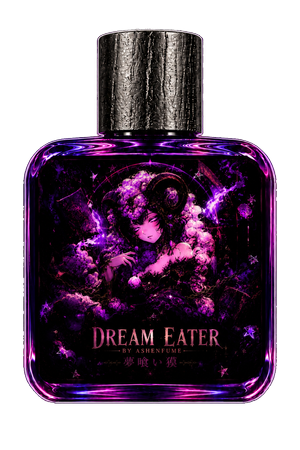
Dream Eater, the perfume of the baku that eats bad dreams, is built on wool absolute and orris, with tonka, vanilla, labdanum and a thread of beeswax at its base. Dream Eater carries the house propolis tincture too, a resin beside the wax that the same bees made.
Red Hare
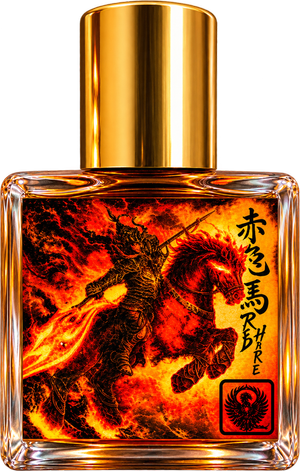
Red Hare, the warhorse of the Three Kingdoms, settles into Meghalayan oud, labdanum, cocoa and carob beneath the Horse Musk Accord. Red Hare carries the house propolis tincture as well, beside the beeswax of its Horse Musk Accord.
From the same hive. Propolis is gathered from the trees, the resin that guards the nest. Its sister material, beeswax, is made by the bee, the structure that holds the colony, and both run through these two perfumes.

IIIThe resin of the buds

Propolis begins as the tree’s own medicine. Plants coat their young buds with resin that guards them against microbes and grazing insects, and it holds antimicrobial compounds such as monoterpenes and flavonoids2. The honey bee takes that defence for itself. The word is Greek, from pro, in front of, and polis, the city, and the entomologists Michael Simone-Finstrom and Marla Spivak define propolis as the beekeeper’s name for resin once the bees have brought it into the hive6.
Poplars guard their buds with it. Before the leaves open, each bud of the balsam poplar sits sealed inside a resinous, sticky, airtight hood, as the perfumery chemist Steffen Arctander described it12. A 2024 study of the bud resin of balsam poplar and its western relative, the black cottonwood, found that the resin protects the developing bud from frost through the winter, and that when the bud opens it coats the young leaves and guards them against insects in their first days. It is rich in flavonoids that repel water13. Ontario’s government describes the balsam poplar’s buds as sticky and smelling of balsam, and notes that bees sometimes harvest the resin4.
Ontario has four poplars. Balsam poplar and trembling aspen grow across almost all of it, to the far northern fringe by Hudson Bay, the largetooth aspen through the south to Temiskaming Shores and Sault Ste. Marie, and the eastern cottonwood, uncommon, near the Great Lakes and Lake of the Woods414155. Across the border in Minnesota, chemists matched the resin on foraging bees in July to its trees. Fifteen of 26 bees carried balsam poplar resin and ten carried cottonwood3.

A world of resins
In temperate lands the main source is poplar, with pine, birch, elm, alder, beech and horse chestnut besides. In the tropics bees work the flowers of Clusia, the shrub Baccharis dracunculifolia, the coastal legume Dalbergia and the fruit of Macaranga. In Uganda they work the alder so hard that they can strip it of leaves6. Each plant gives its propolis a chemistry and a smell of its own.
IVThe resin gatherers
Only a few bees in a colony collect resin. A forager probes the tips of a plant with her antennae, bites a fragment from a bud or young leaf, and passes it from her forelegs to her middle legs and into the pollen basket of her hind leg on the same side. She repeats this until both baskets are full. A load takes about seven minutes, or up to an hour in poor weather. She cannot carry resin and pollen on the same trip6.
At home she has to wait. She cannot unload herself, and cementing bees bite the resin off her legs, usually within fifteen minutes and sometimes over hours or through the night, then press it into place and smooth it with their mandibles. When Nakamura and Seeley followed 77 resin foragers in 2006, a quarter of them danced the tremble dance that asks for unloading, and a quarter danced the waggle dance near the places where cementing was needed6.
The work keeps hours. Resin foraging runs mostly between ten in the morning and half past three on sunny days, when the resin is soft, and cementing mostly in the late afternoon. In temperate lands resin foragers appear from May to November, most of all from late summer into autumn as the honey flow ends6.
Not every honey bee gathers it. The Asian honey bee, Apis cerana, is not thought to use resin at all. The giant honey bee, Apis dorsata, sometimes uses it to strengthen the attachment of its comb, and the dwarf honey bee, Apis florea, lays a ring of resin on the branches that lead to its comb, to keep ants away6. The western honey bee is the great collector, and breeding for gentler, cleaner colonies has lowered how much it gathers. In 1965 the bee writer Hoyt called propolis the bane of a beekeeper’s existence6.

VA fortress of resin
A wild colony lines its tree cavity with propolis, a continuous envelope 0.3 to 0.5 millimetres thick, and lays the first resin where the comb will hang6. It fills cracks and narrows the entrance with the same material16. In a beekeeper’s box of planed wood, the bees seal the cracks and leave the smooth walls bare2.
In 2012 Renata Borba, Marla Spivak and their colleagues at the University of Minnesota stapled propolis traps to the four inner walls of twelve hives, so that the bees filled them into a natural envelope, and kept twelve hives as they were. Over two years the colonies inside an envelope spent less on their own immune defences, with lower activity in immune genes through summer and autumn. They raised more brood in spring and survived the first winter better. Resin gathered in October held back the bacterium of American foulbrood more strongly than resin from April2. Simone-Finstrom and Spivak describe propolis as an external immune defence, one that lowers what each bee must spend on her own6.
Colonies seem to gather more when they are sick. Challenged with chalkbrood, a fungal disease of the larvae, colonies collected more resin, which Simone-Finstrom and Spivak put forward as a possible case of self-medication17. In field colonies given extra propolis, deformed wing virus rose less and the colonies stayed stronger, though the varroa mites themselves were unaffected18.
The embalmers
When an intruder dies inside the hive and is too heavy to carry out, the bees seal it in propolis, which may stop it decaying and smelling. A mouse skull encased in resin was found in a colony at the University of Minnesota6. In Mississippi, the extension entomologist Blake Layton described a mouse the bees had stripped of its hair and sealed whole. Mice tend to enter in winter, when the cluster guards the corners of the hive least19.
VIWhere the scent comes from
The scent of propolis lives in a small part of it. About half is resins and balsams, a third wax, a twentieth pollen, and about a tenth essential and aromatic oils720. The scent lives in a volatile oil that is usually up to one percent of the propolis, occasionally two or three, and gives it its own pleasant aroma8.
In temperate propolis two molecules lead the air above it. Benzoic acid and benzyl alcohol made up about a quarter and a tenth of the headspace of pooled Polish propolis, and about a quarter and a fifth in Lithuanian2122. Beside them sit benzaldehyde, phenylethyl alcohol with its rose and honeyed nuance, methyl salicylate and a little vanillin2123. Benzyl benzoate, faintly sweet and balsamic, turns up in propolis from France to Mongolia824. Poplar bud oil carries none of it, which points to the bees or the hive as its source8. French propolis oil was 30 percent β-eudesmol, a woody and green alcohol, with guaiol at 10 percent825.
Each resin, its own smell
Propolis smells of the trees the bees found. In Greece, where pines grow near the hives, α-pinene made up anywhere from 8 to 46 percent of the volatile oil. In Croatia benzyl alcohol and limonene led. The green propolis of Brazil carried spathulenol and farnesol, and one sample from Minas Gerais was led by (E)-nerolidol and β-caryophyllene, the woody, peppery sesquiterpenes of the shrub’s resin8. The red propolis of the Alagoas mangroves is officially described as sweet and anise-like26. The northern poplar types share a balsamic, benzoic heart. Black poplar bud oil runs 73 to 86 percent sesquiterpenoids, and some buds hold about half their oil as esters of benzoic acid, mainly prenyl benzoate27. Hemiterpene alcohols such as prenol, the signature of the poplar, carry into the propolis8.
Abundance and odour are different measures. Across 23 propolis samples from China, the compounds that carried the most odour were acetic acid, 2-phenylethyl acetate and naphthalene, and the authors noted that the most abundant compounds were often minor contributors to the smell28. The resin of the bud is already fragrant. Extracted with a solvent, Arctander wrote, it is very sweet and balsamic, of coumarin and cinnamon, with an undertone recalling labdanum12.
VIIThe perfumer’s resin
Perfumery came to propolis by way of its tree. Arctander’s survey of natural materials of 1960 has no entry for propolis, and its entry for poplar bud describes the resin the bees gather12. The balsam poplar is native to Canada and the northern United States, he wrote, and was brought to Europe about two centuries before him. A hydrocarbon solvent drew an oleoresin from its buds, a viscous, dark brown or amber liquid. Alcohol extracts carried a note like hop absolute or valerian over the balsam. The distilled oil was not on the market, and perfumers bought the buds or their alcoholic tinctures12.
He found it used very rarely, for its sweet balsamic character and its good fixative effect. It blended with new-mown hay materials, sandalwood and patchouli, sat in florals beside hydroxycitronellal, terpineol and linalool, and in pine compositions beside cypress, dwarf pine, juniper berry, labdanum and lavandin12. The old American trade knew the same balsam as tacamahac. The King’s American Dispensatory of 1898 records it gathered in Canada in shells and sent to Europe, and names alcohol as the proper solvent for the buds10.
Buyers of raw propolis judged it by hand and nose. FAO’s guidance of 1996 asks for chunks or small pieces, since small scrapings often carry dirt, and for as little wax and visible debris as possible. Most fresh propolis has a pleasant resinous odour. Old propolis turns very hard, brittle and dark. Fresh trap-collected propolis was the best and cleanest, and the brown of an alcohol extract told nothing of the quality of the propolis inside it29. The tincture is still the working form. Russia’s registered pharmacy tincture is 100 grams of propolis made up to a litre with 80 percent alcohol, one part in ten30.
VIIIThe medicine of the hive
Every age that wrote about the hive wrote about its resin, and most of what it wrote was medicine, set down here as the belief and practice of its time. Aristotle described the dark coating at the hive door, the mitys, as a residue of wax, and wrote that bees bring in the tears of trees such as willows and elms31. Varro, in the first century BC, said physicians used propolis in plasters, and that on the Via Sacra in Rome it fetched more than honey32. Celsus listed it among the substances that bring an abscess to a head, beside nard, myrrh, costmary, balsam and galbanum, a list of aromatics a perfumer would know32.
Pliny the Elder set out the layers of the hive. The first crust, commosis, is bitter. Propolis follows, made from the gum of the vine or the poplar33. In a later book he gave it a chapter of five remedies, first among them drawing stings and all foreign bodies from the flesh34. Dioscorides, in a reading quoted from the old English translation, asked for yellow bee glue of a sweet scent resembling styrax, good for drawing out thorns and splinters32. Galen wrote that propolis cleanses weakly, draws fairly strongly and warms in the second degree, beginning the third35.
The ointment of poplar buds
Europe’s physicians also went straight to the tree. John Gerard’s herbal praises the ointment made of poplar buds against inflammations, bruises and falls, the Unguentum Populeon very well known to the apothecaries of his day36. In 1665 Nicholas Culpeper printed the London College’s recipe. A pound and a half of fresh poplar buds was beaten into three pounds of hog’s grease with violets and navelwort, and in May came poppy, mandrake, henbane, nightshade and bramble tops. After ten days the whole was boiled with rose water, strained and pressed. Rubbed on the temples, Culpeper wrote, it eased heat in the head and provoked sleep37. The ointment outlived him by centuries. The American dispensatory of 1918 records it still made by the French Codex38.
In North America the buds had a name of their own, Balm of Gilead. American physicians used them in tincture, and found that added to ointments they kept the fat from turning rancid3810. The Métis of the prairies, in their own record of traditional medicine, call the black poplar buds lii lyaar, and make a salve of them fried in fat and strained, for rashes and burns39.
In the workshop
FAO judged in 1996 that propolis had probably been used more in wood preservatives and varnishes than in medicine, and that rubbed onto hive wood, or melted with old comb wax and painted on, it protected the wood as well as commercial treatments or better29. One story outruns the evidence. Propolis is often said to have been in the varnish of Antonio Stradivari’s violins, and FAO repeated it29. When chemists analysed five Stradivari instruments in Paris in 2010, they found a drying oil like the painters’ oils of his time, and a top layer of oil and pine resin with red pigments, and concluded that he may have used nothing unusual or secret4041. Another story has propolis in Egyptian embalming. The residues of a Saqqara embalming workshop, analysed in 2023, held beeswax, cedar and juniper oils, pistacia resin and bitumen among much else, and no propolis4243.
The modern revival
Chemistry began in 1803, when Vauquelin described propolis as a resinous, ductile, odorant substance of a reddish brown colour32. The twentieth century turned it into a subject of its own. In the Soviet Union, Kivalkina studied its action on bacteria in the 1940s. In Poland Scheller popularised the ethanol extract, and in Denmark the biologist Karl Lund Aagaard, called Dr Propolis, studied it from 1967 to 1973 and patented a purification method in 197632. The world beekeeping federation, Apimondia, published a book on propolis in Bucharest in 1975 and another in 197844. At its congress in Rio de Janeiro in 1989, Japanese buyers met the green propolis of Minas Gerais, and the exports to Japan followed4546. Cézar Ramos Júnior, who began keeping bees at Bambuí in the early 1980s, remembers when propolis was a nuisance, scraped out once a year and thrown away45.

IXThe resin lands
Propolis takes the name and the smell of its trees. The chemist Vassya Bankova sorted it by plant source in 2005. The temperate type of Europe, North America and much of Asia comes from the buds of poplars and is rich in flavanones, flavones and the esters of caffeic acid. Brazil’s green propolis comes from Baccharis. Cuba’s red propolis comes from Clusia, and Taiwan’s from a resin rich in its own flavanones11.
Ontario and Canada
The house’s raw propolis is Canadian, and Canadian propolis has its own chemistry. In 2016 Yahya Al Naggar and his colleagues analysed propolis from apiaries east of Lake Huron in Ontario, near Saskatoon in Saskatchewan and in the Similkameen valley of British Columbia. Pinocembrin was the leading flavonoid in all three and highest in Ontario, where benzyl caffeate, sakuranetin and pinobanksin-3-acetate were also most abundant. The Ontario propolis was the richest of the three in phenolics. The authors traced it to North American poplars of the cottonwood group47. A decade earlier, a study of two other Canadian samples had found the resin of the black cottonwood in one and of trembling aspen in the other48. In northern Europe the aspen gives a propolis of its own, marked by glycerides of p-coumaric, ferulic and caffeic acids49.
Ontario kept 118,109 registered colonies in 2025, tended by 5,195 registered beekeepers50.

The green and the red of Brazil
Brazil protects two of its propolis by place of origin. The green propolis of Minas Gerais has been a protected origin since 2016, across 102 municipalities between 900 and 1,500 metres, and it takes its colour from the resin of Baccharis dracunculifolia, the alecrim-do-campo26. The state produced about 100 tonnes a year in 2020, some 90 percent of Brazil’s output, and sold it for about 250 reais a kilogram, mostly to Japan, China, Europe and the United States52.
The red propolis of the Alagoas mangroves has been protected since 2012. There the bees gather resin from the buds and flowers of Dalbergia ecastaphyllum, known locally as rabo de bugio, and the official description gives it a sweet, anise-like scent, a balsamic taste and a reddish colour26. Its chemistry comes from that legume and from the tree Symphonia globulifera53.
XFrom hive to tincture
Before the alcohol. Beekeepers scrape propolis from frames and boxes, and they take a cleaner harvest from traps. FAO describes plastic sheets with slots two to four millimetres wide, laid over the frames. The cover is left a little open, and the light and air move the bees to seal every slot. Collected after the main nectar flow, the full trap is chilled until the resin turns brittle, then flexed and brushed clean. Trap propolis is cleaner than scraped, and fetches a better price9. Propolis is sticky between 25 and 45 °C and brittle below 15, and it keeps best airtight, dark and cool9.
A colony gives about 10 to 300 grams a year9. In a trial with Africanized bees in Paraná, Brazil, hives fitted with a collector of movable slats gave about 780 grams a year, and hives that were scraped about 29054. The race of bee matters too. In Turkish trials the Anatolian bee gathered the most propolis and the Caucasian bee the least55.

In the alcohol. Propolis gives up its scent to alcohol. The usual tincture is one part propolis to nine of alcohol by weight, a 10 percent extract, and FAO advises a starting strength of 30 percent at most. The pieces are shaken once or twice a day in a warm, dark place for one to two weeks, with little gained after three. Heat is avoided9. The bee lab of the University of Minnesota gives the same recipe in 70 percent alcohol, two weeks, shaken two or three times a day56, and 70 percent ethanol gave the most active extracts in several studies7.
After the alcohol. The tincture is chilled below 4 °C for hours to a day, which drops the wax out of solution, and is filtered twice9. Laboratories refrigerate it for a day and freeze it for half an hour before filtering51. What leaves the filter is the resin’s scent without its wax, a clear amber liquid that blends into a perfume.
XIA material of many origins
Propolis varies with every tree line, and so does its quality. Brazil sets minimums for raw propolis: at least 0.5 percent flavonoids and 5 percent phenolics, and at most 25 percent wax51, and an international standard for raw propolis followed in November 202357. Propolis is cut with extract of poplar buds. Catechol turned up in every poplar extract tested and in none of 22 hive propolis samples, and chemists have proposed it as a marker58. In Minas Gerais, counterfeiting is the green propolis trade’s main complaint52.
It also asks care on the skin. Propolis of the poplar type is a known contact allergen, through the caffeic acid esters it takes from the buds5911, and in clinics in Germany, Austria and Switzerland positive patch tests to it rose from 2.35 percent of patients in 2007 to 2010 to 3.94 percent in 2015 to 201860. The details are in the appendix.
Propolis through the centuries
- Fourth century BC
Aristotle describes the dark mitys at the hive door31.
- First century BC
Varro reports propolis selling above honey on the Via Sacra32.
- First century AD
- Second century
Galen sets out its drawing and warming powers35.
- 1665
Culpeper prints the London recipe for the ointment of poplar buds37.
- 1803
Vauquelin makes the first chemical description of propolis32.
- 1814
Huber watches bees take resin from poplar buds6.
- 1898
King’s American Dispensatory records Canadian tacamahac shipped to Europe10.
- 1960
Arctander describes poplar bud oleoresin for perfumers12.
- 1975
Apimondia publishes its first book on propolis, in Bucharest44.
- 1989
Japanese buyers meet Minas Gerais green propolis at Rio de Janeiro45.
- 2012
- 2016
Ontario propolis is analysed for the first time47.
 Found in
Dream Eater and Red Hare
The house’s own tincture of raw Ontario propolis.
AppendixFor the perfumer
The composition, volatiles, tincture methods, standards, skin data and trade behind propolis, set out for reference at the bench. For the wax of the same hive, see the appendix of the Beeswax folio.
- Composition
- Types by plant
- Volatiles
- Tincture methods
- Skin sensitivity
- Standards
- Authenticity
- Harvest and trade
Composition
Three breakdowns. The often-quoted figures trace to Burdock (1998). Tikhonov (1978), quoted by FAO, and the German Chemical Society give others. Propolis varies with its plants, so read each as one description.
| Source | Breakdown |
|---|---|
| Burdock 1998207 | Resins and balsams 50%, waxes 30%, essential and aromatic oils 10%, pollen 5%, other 5% |
| Tikhonov 1978, via FAO9 | Resinous and balsam substances 46.18%, waxes 27.11%, polyphenols 14.66%, impurities 9.76% |
| German Chemical Society61 | About 80% waxes and resins, up to 5% each of oils, phenolics, pollen and minerals |
Count. More than 180 compounds isolated by 1996, over 300 identified by 201997.
| Compound | % TIC |
|---|---|
| Benzyl p-coumarate | 6.7 |
| Pinobanksin | 5.7 |
| p-Coumaric acid | 5.0 |
| Pinocembrin | 4.8 |
| Galangin | 4.0 |
| Cinnamyl p-coumarate | 4.0 |
| Ferulic acid | 3.4 |
| 3-Acetylpinobanksin | 3.3 |
| Benzoic acid | 3.1 |
| Chrysin | 3.0 |
| Benzyl caffeate | 1.5 |
| Vanillin | 1.0 |
| Caffeic acid phenethyl ester | 0.8 |
Proposed quality floor. From 114 samples of poplar propolis: resin 45 percent, total phenolics 21 percent, flavones and flavonols 4 percent, flavanones and dihydroflavonols 4 percent63.
Types by plant
| Type | Plant | Marker chemistry |
|---|---|---|
| Poplar (Europe, North America, temperate Asia) | Populus buds | Flavanones, flavones, phenolic acids and their esters, caffeic acid phenethyl ester |
| Canadian (Ontario, Saskatchewan, British Columbia) | North American poplars of the cottonwood group, P. trichocarpa, P. tremuloides | Pinocembrin, benzyl caffeate, sakuranetin, pinobanksin-3-acetate (Ontario)47. p-Hydroxyacetophenone, benzyl hydroxybenzoate, dihydrochalcones (cottonwood). p-Coumaric and cinnamic acids (aspen)48 |
| Aspen (northern and eastern Europe) | Populus tremula buds | Phenylpropenoid glycerides of p-coumaric, ferulic and caffeic acids49 |
| Brazilian green | Baccharis dracunculifolia | Prenylated p-coumaric acids (artepillin C), diterpenes, lignans |
| Brazilian red | Dalbergia ecastaphyllum, Symphonia globulifera | Isoflavonoids (formononetin, vestitol, neovestitol, medicarpin), benzophenones (guttiferone E, oblongifolin B) |
| Cuban red | Clusia rosea | Benzophenones, mainly nemorosone |
| Taiwanese | n/a | Prenylated flavanones (propolins) |
Artepillin C. In twelve Brazilian propolis liquids sold in Japan it ranged from 0.3 to 50.2 mg/mL64.
Volatiles
Oil and headspace. The first table gives steam-distilled oils, the second the air above the propolis. Headspace percentages are relative peak areas, and different laboratories measure differently.
| Origin | Oil yield | Main volatiles |
|---|---|---|
| France | 0.5% | β-Eudesmol 30.0%, guaiol 10.0%, benzyl benzoate 8.0% |
| Bulgaria | 0.3% | β-Eudesmol 8.8%, δ-cadinene 5.3% |
| Mongolia | 0.6% | Benzyl benzoate 8.6% |
| Croatia | 0.2% | Benzyl alcohol 3.1 to 18.2%, limonene 6.4 to 10.5%, benzyl benzoate 3.6 to 4.4% |
| Greece | 0.03 to 0.1% | α-Pinene 7.9 to 45.8% |
| Brazil, green | 0.4% | Spathulenol 3.0 to 13.9%, farnesol 1.6 to 14.9%, benzyl benzoate 0.3 to 18.3% |
| Brazil, Minas Gerais | n/a | (E)-Nerolidol 17.1%, β-caryophyllene 13.4% |
| Compound | Poland | Turkey |
|---|---|---|
| Benzoic acid | 25.11 | 10.55 |
| Benzyl alcohol | 9.39 | 4.17 |
| Benzaldehyde | 5.93 | 2.41 |
| Decanal | 4.47 | absent |
| Methyl salicylate | 3.22 | 1.38 |
| Phenylethyl alcohol | 3.20 | 3.30 |
| Prenyl benzoate | 1.67 | absent |
| Vanillin | 1.54 | n/a |
| β-Eudesmol | 1.16 | 2.45 |
| Menthol | absent | 5.95 |
| Acetic acid | n/a | 5.39 |
A second temperate sample. Lithuanian propolis headspace: benzoic acid 24.56 percent, benzyl alcohol 22.37 percent22. Polish propolis oil ran 0.07 to 2.8 percent, led by benzoic acid, benzyl benzoate and the eudesmols, and black poplar bud oil up to 4.33 percent, 73 to 86 percent sesquiterpenoids27.
Plant or bee. Hemiterpene alcohols and esters such as prenol are typical poplar metabolites. Poplar bud oil lacks benzyl benzoate, which points to the bees or the hive8.
Odour notes. Benzyl benzoate, faint sweet balsam, oily and herbal24. β-Eudesmol, woody and green25. Phenylethyl alcohol, rose with a honeyed nuance23.
Poplar bud and the old formulas
Poplar bud, Arctander 1960. Oleoresin by hydrocarbon solvent, viscous, dark brown or dark amber. Odour very sweet, balsamic, coumarinic and cinnamic, with a labdanum undertone. Alcohol extracts show a note like hop absolute or valerian. The essential oil was not commercially available. A pale yellow oil can be made by molecular co-distillation with ethylene glycol. Used very rarely, as a fixative, with hay materials, sandalwood, patchouli, hydroxycitronellal, terpineol, linalool and pine compositions12.
| Ingredient | Amount |
|---|---|
| First, beaten together | |
| Fresh poplar buds | 1½ lb |
| Violet flowers, navelwort | 3 oz each |
| Fresh hog’s grease | 3 lb |
| Added in May | |
| Bramble tops, black poppy leaves, mandrake, henbane, nightshade, lettuce, the two houseleeks, greater burdock | 3 oz each |
| Finished | |
| Rose water, boiled off after ten days, then strained and pressed | 1 lb |
Tinctures of record. Russian pharmacy tincture: 100 g propolis to 1,000 mL with 80 percent ethanol30. Balm of Gilead buds: alcohol or spirits the proper solvent, collected in spring10.
Tincture methods
| Step | FAO 19969 | University of Minnesota56 |
|---|---|---|
| Solvent | Ethanol, 70% most studied | 70% ethanol |
| Ratio | 1 part to 9 for 10%, 1 to 19 for 5%, start at 30% at most | 10, 20 or 30%, e.g. 100 g propolis to 900 g of 70% alcohol |
| Maceration | Shake once or twice daily, warm and dark, at least 3 days, best at 1 to 2 weeks | Two weeks, shaken 2 to 3 times a day |
| Wax removal | Chill below 4 °C for hours to a day, filter twice | Strain |
| Heat | Avoid | Avoid |
Laboratory dewaxing. Refrigerate the extract 24 hours, freeze 30 minutes, then filter51. One litre of 70 percent ethanol weighs about 860 g9.
Other forms. Oil extracts, 10 g in 200 mL of oil warmed to no more than 50 °C. Dry extracts with under 5 percent solvent. Water-soluble extracts made with 10 to 25 percent ethanol9. In cosmetics, 1 to 3 percent of a 50 percent propolis solution is usual, 0.5 to 1.5 percent propolis9.
Skin sensitivity
History. Hausen and colleagues reviewed almost 200 cases in 1987, from the first poplar bud dermatitis in 1887, and concluded that poplar bud constituents cause propolis allergy65.
The allergens. The main one is 1,1-dimethylallyl caffeic acid ester, found in every propolis and poplar bud sample analysed, and eight of nine patients patch-tested with it reacted strongly59. Others: 3-methyl-2-butenyl caffeate, phenylethyl caffeate, benzyl caffeate, geranyl caffeate, benzyl salicylate, benzyl cinnamate, methyl cinnamate, ferulic acid and tectochrysin66. Only poplar propolis has been linked to contact allergy so far11.
| Population | Rate | Source |
|---|---|---|
| European range | 1.2 to 6.6% | 66 |
| Germany, Austria, Switzerland, 2007 to 2010 | 2.35% | 60 |
| Same network, 2015 to 2018 | 3.94% | 60 |
| Western Sweden, 722 patients, four origins | 2.4 to 3.6% | 67 |
Cross-reactions. Frequent with Peru balsam, which shares 13 constituents with propolis, and with colophony and fragrance mix I. Beekeepers developed allergy after 9.5 years on average6667. The German Chemical Society advises weighing propolis’s allergenic potential in a cosmetic’s safety assessment61.
Standards
| Parameter | Limit |
|---|---|
| Flavonoids | at least 0.5% |
| Phenolics | at least 5% |
| Ethanol-soluble matter | at least 35% |
| Wax | at most 25% |
| Moisture | at most 8% |
| Ash | at most 5% |
| Mechanical mass | at most 40% |
| Oxidation index | at most 22 s |
Brazilian extracts. Dry extract above 11 percent m/v, phenolics above 0.50 percent m/m, flavonoids above 0.25 percent m/m, oxidation index under 22 s68. Flavonoid content is classed low up to 1.0 percent, medium to 2.0 and high above51.
Elsewhere. Former Soviet limits for raw propolis: waxes below 30 percent, polyphenols above 20, impurities below 20, iodine number above 359. ISO 24381:2023 sets specifications for raw propolis, published November 202357.
Fragrance standards, November 2026. No standard of the International Fragrance Association for propolis itself was confirmed. Several of its volatiles are restricted one by one, among them benzyl alcohol, benzyl benzoate, benzyl cinnamate, benzyl salicylate and cinnamyl alcohol69. European cosmetics law lists benzyl benzoate, benzyl cinnamate, benzyl alcohol, cinnamyl alcohol and vanillin among the fragrance allergens labelled above set levels70. These texts change with each amendment, so check the current versions before formulating.
Authenticity
Poplar bud extract. Catechol, 0.052 to 0.132 mg/g, appeared in all 7 poplar extracts and none of 22 hive propolis samples58. FAO’s quality checks are low wax, low contamination and a 0.1 N permanganate test, and alcohol extracts are hard to judge by colour9.
Harvest and trade
| Setting | Yield | Source |
|---|---|---|
| General range | 10 to 300 g | 9 |
| Africanized bees, Paraná, 1998 to 1999 | ||
| No intervention | about 249 g | 54 |
| Scraping | about 288 g | 54 |
| Glass plates | about 334 g | 54 |
| Movable-slat collector | about 782 g, single hives 228.5 to 1,231.8 g | 54 |
Brazil. About 49 tonnes in 1999, three quarters exported54, and about 140 tonnes a year of all types by 2020, of which Minas Gerais gave about 100 tonnes of green propolis at about 250 reais a kilogram52.
Old prices. Raw propolis fetched as much as 160 to 300 US dollars a kilogram before about 1976, and as little as 4 to 12 dollars from some buyers in 1992, when about 30 dollars was still possible71.
Ontario. 5,195 registered beekeepers and 118,109 registered colonies in 2025, with a preliminary honey yield of 30.14 kg a colony50. Ontario propolis ran about 411 to 430 mg of gallic acid equivalent per gram of extract in total phenolics, the highest of three Canadian origins47.
Resin season. No Ontario study was found. In Minnesota, foragers carried balsam poplar and cottonwood resin in July, and foraging stops by mid-September3. In the Rosemount trial the bees did not forage from October to April1.
From the MateriaMore resins and the same hive
 ✦ From the same hive
Beeswax
The wax the bees make in their own bodies, kept in the house as three absolutes.
Read the folio
 ✦ Folio No. 29
Amber
Labdanum, benzoin and the balsams, the resins that share the cinnamates of propolis.
Read the folio
 ✦ Folio No. 25
Siberian Cedar
Another raw resin the house sets in alcohol for months, here from the stone pine of the taiga.
Read the folio
 ✦ Folio No. 3
Red Champaca
The flower that opens Red Hare, high above the resins of its base.
Read the folio
 ✦ Folio No. 17
Castoreum
An animal material of Dream Eater, and another the beaver makes from the trees it eats.
Read the folio
✦ ✦ ✦
Sources & image credits71 references
- Borba R.S., Spivak M., Benefits of propolis to honey bee health and immunity, SARE project report GNC12-153, University of Minnesota.↑
- Borba R.S., Klyczek K.K., Mogen K.L., Spivak M., Seasonal benefits of a natural propolis envelope to honey bee immunity and colony health, Journal of Experimental Biology 218, 3689-3699 (2015).↑
- Wilson M.B., Spivak M., Hegeman A.D., Rendahl A., Cohen J.D., Metabolomics reveals the origins of antimicrobial plant resins collected by honey bees, PLoS ONE 8(10), e77512 (2013).↑
- Government of Ontario, What balsam poplar looks like, ontario.ca.↑
- Government of Ontario, What eastern cottonwood looks like, ontario.ca.↑
- Simone-Finstrom M., Spivak M., Propolis and bee health: the natural history and significance of resin use by honey bees, Apidologie 41(3), 295-311 (2010).↑
- Anjum S.I., Ullah A., Khan K.A. et al., Composition and functional properties of propolis (bee glue): a review, Saudi Journal of Biological Sciences 26(7), 1695-1703 (2019).↑
- Bankova V., Popova M., Trusheva B., Propolis volatile compounds: chemical diversity and biological activity, a review, Chemistry Central Journal 8, 28 (2014).↑
- Krell R., Value-added products from beekeeping, chapter 5: propolis, FAO Agricultural Services Bulletin 124, FAO, Rome (1996).↑
- H.W. Felter and J.U. Lloyd, King's American Dispensatory, Populus (1898), transcribed on Henriette's Herbal Homepage.↑
- Bankova V., Recent trends and important developments in propolis research, Evidence-Based Complementary and Alternative Medicine 2(1), 29-32 (2005).↑
- Steffen Arctander, Perfume and Flavor Materials of Natural Origin, Poplar Bud Oil, pp. 392-393 (Elizabeth, NJ: the author, 1960).↑
- Piirtola E.-M., Chemistry and biochemistry of Populus leaf bud resin, PhD dissertation, Department of Biology, University of Victoria (2024).↑
- Government of Ontario, What trembling aspen looks like, ontario.ca.↑
- Government of Ontario, What largetooth aspen looks like, ontario.ca.↑
- Mid-Atlantic Apiculture Research and Extension Consortium, The bee nest (basic bee biology for beekeepers), MAAREC Publication 1.4 (2004).↑
- Simone-Finstrom M., Spivak M., Increased resin collection after parasite challenge: a case of self-medication in honey bees?, PLoS ONE 7(3), e34601 (2012).↑
- Drescher N., Klein A.-M., Neumann P., Yañez O., Leonhardt S.D., Inside honeybee hives: impact of natural propolis on the ectoparasitic mite Varroa destructor and viruses, Insects 8(1), 15 (2017).↑
- Layton B., Mouse mummy, Bug's Eye View 3(7), Mississippi State University Extension (2017).↑
- Burdock G.A., Review of the biological properties and toxicity of bee propolis, Food and Chemical Toxicology 36, 347-363 (1998).↑
- Kurek-Górecka A., Kara Y., Pokajewicz K. et al., Phenolic content, volatile compounds and antioxidant activity in pooled propolis samples from Turkey and Poland, European Food Research and Technology 251(8), 2199-2210 (2025).↑
- Jasaitytė J., Determination of propolis volatile compounds by GC-MS method, Vytautas Magnus University (2014).↑
- The Good Scents Company, Phenethyl alcohol.↑
- The Good Scents Company, Benzyl benzoate.↑
- The Good Scents Company, beta-Eudesmol.↑
- Ministério da Agricultura e Pecuária, Brazil, Miele e propoli brasiliani: indicazioni geografiche, gov.br.↑
- Okińczyc P., Szumny A., Szperlik J. et al., Profile of polyphenolic and essential oil composition of Polish propolis, black poplar and aspens buds, Molecules 23(6), 1262 (2018).↑
- Yang C., Luo L., Zhang H. et al., Common aroma-active components of propolis from 23 regions of China, Journal of the Science of Food and Agriculture 90(7), 1268-1282 (2010).↑
- R. Krell, Value-Added Products from Beekeeping, FAO Agricultural Services Bulletin 124, Chapter 5, Propolis, sections 5.1 to 5.11 (Rome: FAO, 1996).↑
- RLS Register of Medicines of Russia, Propolisa nastoika (Tinctura Propolisi), product monograph.↑
- Aristotle, History of Animals, Book IX, in The Complete Aristotle.↑
- Kuropatnicki A.K., Szliszka E., Krol W., Historical aspects of propolis research in modern times, Evidence-Based Complementary and Alternative Medicine 2013, article 964149 (2013).↑
- Pliny the Elder, The Natural History, Book XI, trans. J. Bostock and H.T. Riley, The Natural History of Pliny vol. 3 (London: H.G. Bohn, 1855).↑
- Pliny the Elder, The Natural History, trans. J. Bostock and H.T. Riley, vol. IV, Book XXII chapter 50, Propolis: five remedies, p. 435 (London: Henry G. Bohn, 1856).↑
- Galen, De simplicium medicamentorum temperamentis ac facultatibus VIII.16.36, Peri propoleos, Greek text after Kühn, Galenus Verbatim edition.↑
- John Gerard, The Herball or Generall Historie of Plantes, Of the Poplar, digitised by the University of Utah Marriott Library.↑
- Nicholas Culpeper, Pharmacopoeia Londinensis, or the London Dispensatory, Unguentum Populneum, Ointment of Poplar buds (London: Peter Cole, 1665), US National Library of Medicine digital collection.↑
- J.P. Remington, H.C. Wood et al., The Dispensatory of the United States of America, 20th ed., Populus (1918), transcribed on Henriette's Herbal Homepage.↑
- Lawrence J. Barkwell, La Michinn: Traditional Métis Medicines and Healing, Balm of Gilead, black poplar buds, lii lyaar (Winnipeg: Louis Riel Institute, 2018).↑
- Echard J.-P., Bertrand L., von Bohlen A. et al., The nature of the extraordinary finish of Stradivari's instruments, Angewandte Chemie International Edition 49(1), 197-201 (2010).↑
- CORDIS, European Commission, Study reveals secret of Stradivari's varnishes, 7 December 2009.↑
- Rageot M., Hussein R.B., Beck S. et al., Biomolecular analyses enable new insights into ancient Egyptian embalming, Nature (2023).↑
- Bruce Bower, Chemical residue reveals ancient Egyptians' mummy-making mixtures, Science News, 1 February 2023.↑
- R. Krell, Value-Added Products from Beekeeping, FAO Agricultural Services Bulletin 124, References (Rome: FAO, 1996).↑
- Diário do Comércio (Belo Horizonte), Própolis verde de MG ganha espaço no exterior, 8 November 2019.↑
- Apimondia, History of Apimondia and its congresses, Apimondia website.↑
- Al Naggar Y., Sun J., Robertson A., Giesy J.P., Wiseman S., Chemical characterization and antioxidant properties of Canadian propolis, Journal of Apicultural Research 55(4), 305-314 (2016).↑
- Christov R., Trusheva B., Popova M., Bankova V., Bertrand M., Chemical composition of propolis from Canada, its antiradical activity and plant origin, Natural Product Research 20(6), 531-536 (2006).↑
- Isidorov V.A., Buczek K., Zambrowski G., Miastkowski K., Swiecicka I. et al., In vitro study of the antimicrobial activity of European propolis against Paenibacillus larvae, Apidologie 48, 411-422 (2017).↑
- Ontario Ministry of Agriculture, Food and Agribusiness, 2025 Provincial Apiarist Report, ontario.ca.↑
- Barreto A.L.H., Lopes M.T.R., Pereira F.M., Souza B.A., Controle de qualidade da própolis, Documentos 268, Embrapa Meio-Norte, Teresina (2020).↑
- Valverde M., Apicultores mineiros se articulam para proteger a produção de própolis verde, Diário do Comércio, Belo Horizonte (12 March 2020).↑
- Ccana-Ccapatinta G.V., Aldana Mejía J.A., Tanimoto M.H. et al., Dalbergia ecastaphyllum (L.) Taub. and Symphonia globulifera L.f.: the botanical sources of isoflavonoids and benzophenones in Brazilian red propolis, Molecules 25(9), 2060 (2020).↑
- Pontara L.P.M., Couto R.H.N., Bett V. et al., Propolis productivity in Africanized Apis mellifera colonies by collection technique and season, Universidade Estadual de Maringá (field trial 1998 to 1999).↑
- Kekeçoğlu M., Keskin M., Birinci C., Birinci E., Kolaylı S., Effects of honey bee race and season on propolis composition, Journal of Agricultural Sciences 27(3), 292-297 (2021).↑
- University of Minnesota Bee Lab, Making propolis extract, University of Minnesota.↑
- International Organization for Standardization, Bee propolis: specifications, ISO 24381:2023, edition 1 (November 2023).↑
- Huang S., Zhang C.P., Li G.Q. et al., Identification of catechol as a new marker for detecting propolis adulteration, Molecules 19, 10208-10217 (2014).↑
- Hausen B.M. et al., Propolis allergy (II): the sensitizing properties of 1,1-dimethylallyl caffeic acid ester, Contact Dermatitis 17(3), 171-177 (1987).↑
- Uter W., Gefeller O., Mahler V., Geier J., Trends and current spectrum of contact allergy in Central Europe: results of the IVDK 2007 to 2018, British Journal of Dermatology (2020).↑
- Gesellschaft Deutscher Chemiker, Working Group Cosmetics, Propolis data sheet, GDCh Food Chemistry Society.↑
- Popova M., Giannopoulou E., Skalicka-Woźniak K. et al., Characterization and biological evaluation of propolis from Poland, Molecules 22(7), 1159 (2017).↑
- Popova M.P., Bankova V.S., Bogdanov S. et al., Chemical characteristics of poplar type propolis of different geographic origin, Apidologie 38(3), 306 (2007).↑
- Nobushi Y., Oikawa N., Suzuki E., Gorai H., Yasukawa K., Analysis of artepillin C in commercial Brazilian propolis by HPLC, Shoyakugaku Zasshi 71(1), 37-40 (2017).↑
- Hausen B.M., Wollenweber E., Senff H., Post B., Propolis allergy (I): origin, properties, usage and literature review, Contact Dermatitis 17(3), 163-170 (1987).↑
- Dyall-Smith D., Contact allergy to propolis, DermNet (2010, updated 2023).↑
- Nyman G., Oldberg Wagner S., Prystupa-Chalkidis K., Ryberg K., Hagvall L., Contact allergy in western Sweden to propolis of four different origins, Acta Dermato-Venereologica 100(16), 1-5 (2020).↑
- Souza E.A., Inoue H.T., Gomes S.M.A., Funari S.R.C., Orsi R.O., Propriedade físico-química da própolis em função da sazonalidade e método de produção, Archivos de Zootecnia 59(228), 571-576 (2010).↑
- International Fragrance Association, Standards Library (accessed November 2026).↑
- Registrar Corp, EU 26 vs 82 fragrance allergens, summary of Commission Regulation (EU) 2023/1545 of 26 July 2023.↑
- Krell R., Value-added products from beekeeping, chapter 5: propolis (market outlook and caution), FAO Agricultural Services Bulletin 124, FAO, Rome (1996).↑
Photographs and plates
Lynde Creek mouth and balsam poplar buds at Lynde Shores: The Cosmonaut, CC BY-SA 2.5 CA. Raw propolis: Epukas, public domain. Lynde Shores Conservation Area: Evan Delshaw, CC BY 2.0. Black poplar, Köhler’s Medizinal-Pflanzen 1897: public domain. Cape honey bee gathering latex: Alandmanson, CC BY 4.0. Apiary at Cooksville: Archives of Ontario, I0004352, Open Government Licence Ontario. Alecrim-do-campo: flaksbaum, public domain. Propolis in beehives: Abalg, public domain. Card photographs as credited in their own folios. All via Wikimedia Commons.
Join the discussionHave you scraped propolis from your own frames, smelled a balsam poplar bud in spring or made a tincture of your own? Add what you know, or ask a question.