Provenance Vetiver Java
MATERIA · THE NATURAL HISTORY COLLECTION
Java Vetiver
The roasted root of Garut, lifted by hand from volcanic hills and drawn out under steam and fire
Early in the morning in Samarang, in the hills of Garut in West Java, a day labourer named Sumarna and his wife Ihat walk from their hamlet to the fields at the foot of Gunung Kamojang. There he drives a two-pronged fork into loose volcanic soil and levers out the roots of a tall grass, a dense brown fleece that can run a metre and a half deep. Between them they lift about 300 kilograms of wet root in a day1. The grass is vetiver, called usar in Sundanese, and its dried roots give Java vetiver oil, dark, earthy and roasted. Garut makes about nine tenths of Indonesia’s vetiver oil2. This is the story of the root, its fields and its stills, and of the two Java oils the house sets in Red Hare and Courtesan II.


IWhat it smells like
Java vetiver smells of roasted earth and bitter chocolate, with a thread of smoke through both. The dry root and the two Java oils the house keeps move through four studies.
- The dry root
Musty and aromatic to the old Dutch writers, strong and a little like myrrh to Sawer, kin to sandalwood to Askinson. A fan of it gives off its scent when kept damp131415.
- The Java oil, opening
Warm clay and sun-baked red earth, with a faint breath of the farmyard. Bitter dark chocolate and a cool, candied mint rise beneath it.
- Its long drydown
Green stems and a menthol coolness, then dry leather, cedar and polished woods, and a musky warmth that stays close to the skin.
- The coffee-chocolate oil
Roasted coffee beans and dark chocolate over warm root, softly smoked, then pencil shavings, liquorice, dry mulch and fresh tobacco leaf. Months in the bottle carry it toward liquorice liqueur and spiced dry wood.
IIIn the house
The house keeps two vetivers from Java, both essential oils distilled from the root. The first is the classic oil of the island, warm with baked red earth and bitter chocolate, cooled by a thread of mint, and dry and leathery as it settles. The second is an artisan oil made in small batches, whose heart is roasted coffee and chocolate laid over the root, with pencil-shaving cedar, liquorice and fresh tobacco leaf in its trail, and it deepens with age. In the house ledger, Haitian vetiver is cool, smoky and faintly citrus, and Java vetiver is darker, earthier and more roasted. The house sets the Java root in two fragrances.
Red Hare
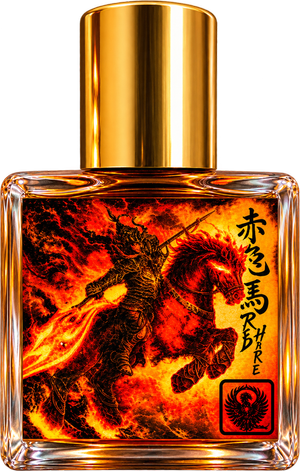
In Red Hare, the warhorse of the Three Kingdoms, Java vetiver lays down the churned earth beneath the hooves. It sits in the base with Meghalayan oud, labdanum, cocoa, carob and the Horse Musk Accord. There its baked earth meets the barnyard warmth and hot leather of the oud, and its bitter chocolate meets the roast of cocoa and carob. Above it, red champaca and honeysuckle open over a heart of tuberose, ylang ylang, cinnamon leaf, hay and the Costus Root Accord.
Courtesan II
In Courtesan II, the perfume of the fox courtesan, the roasted side of Java vetiver meets the darkest materials of the composition. Oriental tobacco and black tea run through the heart, and costus root, Thai Borai oud, cocoa patchouli and aged Peruvian rosewood lie in the base. The vetiver’s coffee and chocolate find the bittersweet cocoa of the patchouli, and its tobacco leaf finds the honeyed tobacco. Yuzu, sudachi and red champaca open the perfume over tuberose and saffron.

IIIUsar, the fragrant root
Vetiver is a grass. Chrysopogon zizanioides grows in dense clumps of stiff, narrow leaves, and for most of the last century botanists called it Vetiveria zizanioides, the name the trade still prints on its drums34. Kew places its native range from northeastern India to Indochina3. In Malesia the Dutch botanist J.F. Veldkamp recorded it from Sumatra, Java, Madura, Borneo, the Philippines, the Lesser Sunda Islands and New Guinea, from the coast up to 1,500 metres, and noted that it is said to have come from India17.
Two forms grow under the one name. A wild form, thought to come from northern India, flowers and sets seed. The form grown for its oil across the tropics seldom flowers, is usually sterile, and spreads only where people plant it, by dividing the clump1718. Veldkamp found no feature of the plant’s body that tells the two apart17. Ernest Guenther, the American chemist who studied the Java trade in 1939, called the vetiver of Java a nonflowering variety19. Which clone the island grows is still an open question. A DNA survey of vetiver from 29 countries outside South Asia found a single clone, known as Sunshine, in 53 of its 60 samples, and Indonesia was not among the places sampled20.

The grass has a name in nearly every language of the archipelago. It is akar wangi, fragrant root, in Indonesian and Malay, usar in Sundanese and larasetu in Javanese5. In 1922 the Dutch botanist Karel Heyne gathered a longer list, written here in modern spelling: narawastu in Sundanese, larawestu in Javanese, karabistu in Madurese, anggarawastu in Balinese, ambarwastu in Sasak, narawasatu in Makassarese and Buginese, and rarawestu in Old Javanese13.
In Garut, the heart of the island’s vetiver, people say usar21, and some read the word as usaha rakyat, the people’s business22.
Heyne judged the plant probably foreign to the archipelago, grown there since time immemorial. In 1892 the botanic garden at Buitenzorg, today’s Bogor, brought in an abundantly flowering form from British India13. Java’s own breeders have since selected from the Garut fields. In 2012 Indonesia’s Ministry of Agriculture released two varieties chosen there, Verina 1 and Verina 2, bred at the national institute for spice and medicinal crops and recommended for the highlands23.
IVA curtain in the soil

Most of a vetiver plant lives underground. Its roots grow straight down, like a curtain hanging in the soil, and they have been measured below three metres. Slips planted in Malaysia rooted 60 centimetres deep in three weeks, and the crown of the plant sits a few centimetres below the surface18. Garut farmers told a reporter for Mongabay in 2023 that in loose ground the roots reach about five metres, and stay short in clay24.
The wild plant belongs to low, damp places, the swamps, bogs and riverbanks of India1817. On Java it has gone wild in only a few lowland places, always near water13. Its scent lives in the root alone. The parts above ground hold no essential oil, Heyne noted, and in West Java the grass was planted along watercourses to keep the banks from scouring13.
The oil is made in partnership. It forms in specialised cells of the root, and in 2008 a team in Italy found bacteria living inside those cells. The plant makes a few precursors, and the bacteria transform them, changing the structure of the oil2526. The oil in turn defends the root. In 2001 entomologists at Louisiana State University found that nootkatone, a molecule isolated from vetiver oil, repels and kills the Formosan subterranean termite at ten micrograms to the gram of the material it is mixed into27.

On a hillside the same roots hold the ground. In 1913 the colonial journal Indische Mercuur recommended the grass, which it called djoekoet wangi, Sundanese for fragrant grass, for steep slopes and the edges of gutters. It grows easily, the journal wrote, forms a dense hedge, and its roots keep the ground from crumbling in the dry season13. In Java it is still planted to protect sloping drains5, and engineers across the tropics now plant vetiver hedges to hold slopes and riverbanks28.
The vetiver of Garut grows in volcanic country. Its fields lie in the valleys below Gunung Kamojang and Gunung Guntur16, in the upper basin of the Cimanuk river, around Leles, Samarang, Cilawu and Bayongbong29. Guntur last erupted in October 1847, and Papandayan, to the south, from November to December 20023031. In 1950 Guenther wrote that the best Java roots grew in loose sandy soil or young volcanic ash on the slopes of the volcanoes, and that good export root often carried small black cinders19. Garut farmers put the best growth at about 1,000 metres, on light sandy soil, at 17 to 27 degrees with 2,000 to 3,000 millimetres of rain a year24.
That loose ground makes the paradox of Garut. Farmers want light soil so the roots come out whole, and at harvest they lift the entire plant. The National Research Council of the United States wrote in 1993 that the digging leaves trenches of loose dirt hardly better made for erosion if designed for it, some in rows running straight down the slope, while vetiver hedges left in place cause no erosion at all32. Veldkamp saw the same trenches eroding across Sumatra and Java17.
In July 1990 the farmer and still owner Haji Misbah, fifty years old, was growing usar in secret on more than ten hectares of his land in Samarang while a ban was in force. There was no erosion on his ground, he told Tempo, and only usar grew well there. Hilman Faridz, who headed the economic section of the regency, said that planting usar invited major erosion, and a soil scientist at Padjadjaran University, Oktap Ramelan, estimated that a hectare of it could lose 40 tonnes of soil in 100 days33. The regency settled on limits. A decree of the regent of Garut of 6 August 1996 set aside 2,400 hectares in four districts, Samarang, Bayongbong, Cilawu and Leles2221.
VScented cloth and little fans
Long before it reached a still, vetiver lived in the clothes chest. Heyne recorded that the people of Java were very fond of the root’s musty, aromatic scent and commonly used it to perfume their clothes. For that they made little fans, which give off a faint, heavy scent as long as they are kept damp13. Across Southeast Asia dried roots are laid among clothes to scent them and keep insects away, and woven into mats and fans, called pamaypay in the Philippines5.
The roots travelled in the island’s trade in dried medicines. The two writers Heyne drew on for it, Vorderman and Van der Burg, listed them among the wares of the native druggists. Van der Burg recorded the roots in arak obat, a medicinal spirit, and in an infusion believed to bring on a sweat13. Garut’s tourism office today lists the old uses of the root for toothache, rheumatism and bad breath, all folk remedies of the region34.
Some knowledge was ritual. The catalogue of the Brussels exhibition of 1910 recorded the belief that the roots should be dug on a Friday before noon, so that they would keep their scent a long time. On Madura, near Slopeng, people grew the grass along the edges of their maize fields13.

Garut still weaves the root. On 11 January 2025 an Antara photographer found the weavers of Rumah Tenun Rahayu in Bayongbong at their hand looms, turning washed and dried root into cloth at four to five metres a day, priced from Rp 10,000 to Rp 1 million and sold as far as the Americas35. The same workshop weaves prayer mats, table cloths, tissue boxes, bags and dolls36.
On the north coast, in Pekalongan, a former sarong weaver named Imron began weaving prayer mats from Garut roots in 2001. By 2008 his network of some sixty craftsmen and 215 hand looms used about six tonnes of root a week, and before Eid that year a container of 12,000 mats left for Saudi Arabia, Kuwait and Abu Dhabi. The mat makers and the distillers competed for the same roots3738.
Europe met vetiver as an Indian root. In 1862 the London perfumer Septimus Piesse described the tatties of India, awnings and blinds of the root that an attendant sprinkles with water to cool and scent a room, and noted that bundles of it were sold in London to perfume linen and keep away moth39. Eugène Rimmel wrote in 1865 that the watered mats give out a pleasant scent in the sun40, and George Askinson recommended shavings of the root for filling sachets15. The root those London buyers handled came, before long, from Java.
VIFrom bales of root to drums of oil
Java first sold vetiver to Europe as root. Before the First World War the island shipped large quantities of dried root to Germany, France and England, where it was distilled or sewn into sachets19. A Leipzig essential oil firm reported in October 1913 that the oil was hard to distil and almost always made in Europe13. In 1920 the commercial vetiver of Java grew on just two estates, near Surabaya and Madiun, some 38 hectares in all13.
The war changed the trade. In 1917 a shortage of shipping left root piling up in the island’s ports, and a chemist in Batavia decided to distil it on the spot and export the far less bulky oil. Much of the backlog went through a distillery near Bandung19.
Garut remembers its own beginning. Ede Kadarusman of Sukakarya, in Samarang, is the great-grandson of Haji Tasdiq, who began distilling vetiver there in 1918 with a Dutch landowner the family remembers as Mr Haag, and sold oil to Dutch visitors who stopped in Garut. The still and the hotel for Europeans that stood beside it were destroyed in the fighting of 1947, and Tasdiq began again three years later41. Other accounts place the first Garut plantings anywhere from 1850 to 1937, and the accounts differ. Heyne knew of no planting in Garut as late as 192012113.
By the late 1930s Java’s vetiver came from two regions, near Garut in the west and Wonosobo in Central Java, grown by smallholders on small patches. The distillers were mostly Chinese and Malayan, in Guenther’s words, with a few Europeans, and two of the distilleries were large and fitted with specially designed stills. Every shipment of oil had to pass the government laboratories at Buitenzorg before it sailed19. In 1935 Java overtook Réunion in the quantity of vetiver oil it exported19.
Then came the occupation and the revolution. Java’s exports fell from 34 tonnes of oil in 1939 to 2 in 1947 and 1 in 1948, and Guenther heard that the principal distillery had been destroyed under the Japanese19. After independence it took some twenty years to replant the fields and build simple stills1. The first stills owned by Garut people date from 1960, and the trade reached its peak between 1980 and 199221. Ede Kadarusman put Garut’s output at about 60 tonnes of oil a year in the 1970s and 75 to 100 tonnes a year from 1985 to 200442.

VIIThe dig
In Garut the root is lifted once a year2. Field studies in Samarang give twelve months from planting43. A trial at Sukakarya in 2009 and 2010 found the dry weight of root at its peak at fourteen months, and its authors recommend digging between twelve and fourteen7. Guenther had urged growers to wait twenty-four months, and noted that growers in need of cash dug as early as eight. The age shows in the oil. Young root breaks easily and gives a light oil with a green, earthy odour, he wrote, and older root a darker, heavier oil with a fuller one19.
The work is done by hand. The digger loosens the soil around the clump and pulls the whole plant out43, and in the loose ground of Samarang a two-pronged fork does the loosening1. In Tempo’s account of 1990, Haji Misbah’s men dug about seventy centimetres down to lift the root whole33. By 2018 harvest hands had to be brought in from outside the district2.
The field is renewed in the same motion. The crown is split, and pieces carrying three to five shoots go back into the ground in the rainy season, some two tonnes of planting stock to the hectare43.
Before the still
The root is cleaned and dried first. In the cooperative practice of Garut the crown is cut off and the root washed and air-dried, usually for two days, then chopped21. Drying multiplies the yield of oil several times over44. Buyers judged the root by its colour. Root rich in oil is slightly reddish brown, and pale, almost white root holds very little19.
Storage changes the oil as well. Before the war, Guenther wrote, the leading Java distilleries stored their root for about six months and then distilled it for almost 36 hours, and their oil came out dark, viscous and heavy, with an odour he called full, rich and very lasting19. A recent Indian trial found the most oil in roots distilled a week after harvest, with yield falling sharply in storage45. The old habit and the new trial pull two ways, one toward body and one toward yield.
VIIIPressure and fire
In 1950 Guenther set down the Java method. The dried root was wetted and cut small in an ensilage cutter, loaded into the still and worked with live steam at four to five atmospheres, for twelve to thirty-six hours a charge depending on the pressure. The oil gathered in separator tanks and was cleared with steam-jacketed filters or centrifuges19. The chopped root may soak for ten to twenty hours first, and a little salt helps the distiller recover the heaviest part of the oil5.
A Garut still today takes one to two tonnes of root to a charge. In 2011 a Sukakarya distillery charged two tonnes to a kettle and drew six to eight kilograms of oil from each8. In July 2017 a Liputan6 reporter found a worker named Amas at Ajang’s still in Kampung Cidadari, back at work after nearly a week idle for want of roots. The roots fetch Rp 10,000 a kilo, Amas said, but they take a year to grow42.

Pressure is the hinge of the Java character. Garut distillers commonly run their steam at four to five bar for about twelve hours, where a gentler pressure takes sixteen to eighteen44. Earlier practice ran at no more than three bar for twenty to twenty-four hours. When fuel prices jumped after the financial crisis of 1998, distillers raised the pressure to five bar and more, above 150 degrees, and cut each run to twelve to fourteen hours. The saving showed in the oil as a burnt smell and a dark colour47.
Researchers at Bogor traced the mechanism. High temperature can scorch the oil and drive the polymerisation that darkens it, and high pressure sharpens its characteristic aroma. At two and a half to three bar the oil came out finer in smell and clearer in colour, and a run raised step by step from two bar to three gave no burnt note at all44. One charge can make two oils. Around 2014 a Samarang distillery ran its dried root at two atmospheres for twenty hours to make a premium oil, clear yellow, and at five atmospheres for twelve hours to make a regular oil, reddish brown48. The two-bar oil fetches the higher price41.
Fuel sets the fire. When the government withdrew the kerosene subsidy in 2004, Garut’s distillers turned to used engine oil42, about 300 litres of it for each two-tonne kettle by 20118, and to firewood49.
After the still
The new oil is left to rest. Freshly distilled vetiver is green, Guenther wrote, and ageing generally improves it19. With time its harsh, green, earthy note turns fuller, heavier and sweeter5. In an oil from Bayongbong, ageing softened the smoke while the oil grew denser and more viscous9. Some is distilled a second time, and the trade sells Indonesian vetiver plain, rectified and molecular-distilled4950.
IXThe perfumer’s root
The old perfumers used vetiver as a fixative of the heavy kind. Piesse’s shop essence steeped about four pounds of dried root, cut small, in a gallon of rectified spirit for a fortnight, and a stronger one dissolved two ounces of the oil in a gallon of spirit. He named it in old bouquets such as Mousseline des Indes, the Maréchale and the Bouquet du Roi39. Askinson compared its odour to sandalwood and used it alone or to fix lighter scents, and his Ceylon Sachet Powder mixed 35 ounces of vetiver root with 28 of patchouli and 23 of mace15. John Charles Sawer, in his Odorographia of 1892, found a strong, peculiar odour in the root, somewhat like myrrh, and an oil that blended well with orris and cassie14.
The twentieth century set out its place. Guenther called vetiver indispensable in odours of the heavier, oriental type, a partner for sandalwood, patchouli and rose, to be dosed with care and discretion19. Steffen Arctander, in 1960, described the oil as sweet and very heavy, woody and earthy, like roots and wet soil, and listed its uses in fougère and chypre, oriental bases, moss and wood notes, opopanax and rose bases. It blends, he wrote, with ionones, patchouli, sandalwood, oakmoss, lavender, clary sage, mimosa, cassie and opopanax51. The perfumer Dan Anonis found it especially effective with musky odours52.
The trade reads the oil in stages. A good vetiver opens on a sweet, earthy, woody note, settles into a heavy earthy body and takes several days to dry out on a blotter, and the first fractions of a vacuum distillation smell strikingly of asparagus5. Chemists describe the whole as suave and sweet, woody and earthy, with green facets of grapefruit and rhubarb53. Piesse placed vitivert between the spicy odours and the floral ones, and set it with patchouli and santal on his scale of scents39. Rimmel filed it beside cedarwood in his classification of odours40.

For much of the century the trade priced Java as its everyday vetiver. Guenther wrote in 1950 that the Java type went chiefly into soap19. In 1982 the Tropical Products Institute in London reported that perfumers used Java oil in the same products as Haitian, often at the cheaper end and sometimes blended with it, and that its quality varied, with burnt odour, low vetiverol and high acidity among the complaints54.
The same report found Indonesian oil increasingly highly regarded as the starting oil for vetiveryl acetate, the acetylated form of vetiver54, and in 2019 the European Commission’s safety committee recorded acetylated vetiver oil made from Java oil55. Pressure and time decide how much roast a Java oil carries, and the distillers of Garut can make both kinds4448.
Java oil is judged by eye and by assay as well as by nose. The Indonesian standard allows a colour from pale yellow to reddish brown and asks for at least half the oil as vetiverol9. A gentle run in Samarang gives an oil of clear yellow, and a hard run an oil of reddish brown48. Indonesian chemists name smoke and a dark colour as the marks by which buyers know their oil9.
XWhat the molecules say
Vetiver oil is a crowd of sesquiterpenes, the fifteen-carbon molecules of woods and roots. Its chief alcohols are khusimol, isovalencenol and vetiselinenol, and its chief ketones the two vetivones, α and β11. The trade measures the alcohols together as total vetiverol, and the Indonesian standard asks for at least half the oil9. Vetiverol itself has only a very faint smell, tenacious, soft and sweet-woody, Arctander wrote51.
Java oil carries a recognisable pattern. In the studies Brian Lawrence reviewed in 2008, Java oils held more zizanoic acid, also called khusenic acid, and more β-vetivone than Haitian oils, and much less isovalencenol. One commercial Java oil analysed in 2004 held khusimol at 9.7 percent, β-vetivone at 8.0 and zizanoic acid at 3.3, where a Haitian oil held 0.5 percent of the acid1156. A French survey of 27 oils from nine countries in 2006 found zizanoic acid only in the Java oils, at 3.4 percent, and still judged the species chemically uniform across all its origins1157.
The trace that carries the scent
The hunt for the molecule behind the smell ran for decades. Perfumery chemists long credited khusimone, which makes up to 2 percent of the oil and smells typically of vetiver, and they built a rule around it: a woody vetiver note needs a branched carbonyl group with a bulky group at a set distance across the molecule. In 2012 Philip Kraft and Nicolas Denizot made a broken-ring cousin of khusimone that fits the rule, and it smelled floral, rosy and green. The rule, they concluded, was incomplete53. Two years later a team at Nice separated vetiver oil on a two-dimensional gas chromatograph, smelled each compound as it left the column, and found odorants that mattered more than khusimone58.
The smell of vetiver hides in a trace. In 2021 chemists at the Max Planck Institute for Coal Research in Mülheim made each candidate molecule by synthesis and smelled it pure. The odour of vetiver, they found, belongs above all to (+)-2-epi-ziza-6(13)-en-3-one, a ketone the nose detects at 29 picograms in a litre of air, with a pronounced and typical vetiver character, dry, transparent, woody and ambery. Its mirror image has no smell at all1259. Khusimone has a threshold of 4.7 nanograms a litre, and the new ketone is more than 150 times as potent1259.
A molecule’s share of an oil and its strength in the nose are separate measures. The odour value of a compound is its concentration divided by its threshold60, so a trace with a tiny threshold can outweigh the bulk of the oil. In vetiver the alcohols that make up half the oil smell faintly, and a ketone present in traces gives the oil its name. The grapefruit and rhubarb note at the top of vetiver comes from the two vetivones and nootkatone12.
The smoke of Java comes from the still. No published study names a molecule for it. The documented causes are high pressure and heat, which scorch and polymerise the oil and darken it4447, and in Garut oil the smoke softens with age9.
XIGarut today
Garut makes about nine tenths of Indonesia’s vetiver oil2, and its fields are shrinking. Of the 2,400 hectares the regency set aside in 1996, about 1,700 were planted in 201141, 800 to 1,000 in 201742, and 168 in 2025, across Leles, Samarang, Pasirwangi, Bayongbong and Cilawu6. Many farmers have turned to chilli, tomato and potato, which harvest in forty days to two months42. Some 33 distilling units work in the regency, 21 of them in Samarang21, and about 10,000 people live from the root1.
The price of the oil moves with the world’s other great source. Garut oil sold for Rp 250,000 a kilogram in 2004 and Rp 4.5 million in 201742. After a disaster in Haiti in 2018 it reached about Rp 8 million, and it fell back when Haiti recovered61. In November 2024 it stood at about Rp 2 million62. Garut’s traders sell through brokers in Medan, who ship to Singapore61. In September 2026 the West Java office of the Ministry of Law handed the regency the documents of a Geographical Indication, Akar Wangi Garut, a protected name for its root663.
The labour stays the same. At one Samarang distillery in 2011, a kilogram of oil took some 250 to 330 kilograms of root8, each clump lifted by hand from volcanic soil, washed, dried for two days and steamed through most of a working day.
Java vetiver through the centuries
- 1862
Piesse describes the tatties of India and the bundles sold in London for linen39.
- 1888
Filet lists akar-wangie in his botanical dictionary of the Indies64.
- 1892
A flowering form reaches the Buitenzorg garden from British India13.
- 1913
The Indische Mercuur recommends the grass against erosion13.
- 1917
Distilling begins in Java, near Bandung19.
- 1918
Haji Tasdiq begins distilling at Sukakarya, by his family’s account41.
- 1935
Java overtakes Réunion in vetiver oil exports19.
- 1947
The Sukakarya still is destroyed in the fighting41.
- 1960
The first stills owned by Garut people21.
- 1974
West Java bars vetiver from protected and steep land21.
- 1996
Garut sets aside 2,400 hectares in four districts22.
- 1998
Fuel prices push Garut stills to five bar47.
- 2004
The kerosene subsidy ends, and the stills turn to used engine oil42.
- 2012
Verina 1 and Verina 2 are released23.
- 2021
Chemists at Mülheim identify the smelling principle of vetiver12.
- 2025
168 hectares under vetiver in Garut6.
- 2026
Garut receives the documents of a Geographical Indication, Akar Wangi Garut6.
 Found in
Red Hare
Java vetiver at the base of the house fragrance of the Three Kingdoms.
 Found in
Courtesan II
Java vetiver in the perfume of the fox courtesan.
AppendixFor the perfumer
The names, field figures, distillation, chemistry, standards, old formulas and trade behind Java vetiver oil, set out for reference at the bench.
Names across the archipelago
| Language | Names |
|---|---|
| Indonesian and Malay | akar wangi, narwastu, usar. Akar babau at Manado, akar banda on Timor135 |
| Sundanese | usar, narawastu, and djoekoet wangi (fragrant grass) in 191313 |
| Javanese | larasetu, larawastu, larawestu. Old Javanese rarawestu135 |
| Madurese | karabistu, lorowistu, rowistu13 |
| Balinese | anggarawastu, padang babad sanur, padang resi, padang candana13 |
| Sasak, Makassarese and Buginese | ambarwastu (Sasak), narawasatu (Makassarese and Buginese)13 |
| Malaysia | nara wastu, akar wangi, kusu-kusu5 |
Two meanings of narwastu. The Indonesian dictionary gives narwastu as vetiver and as scents made from it65. The Indonesian Bible uses the same word for the nard of the Gospel of Mark66, and the word’s origin is unresolved67. Stories that tie vetiver to the anointing in the Gospels confuse it with spikenard.
Field
How to read the field figures. Root yields are given on different bases: air-dried root, dry root and fresh plant material. Each row keeps its basis and its year. Compare rows of the same basis only.
| Source and year | Harvest age | Root yield | Basis |
|---|---|---|---|
| Guenther, Java before 1942 | Ideal 24 months, often dug at 8 | About 1,000 kg/ha | Air-dried root19 |
| PROSEA, 1999 | 15 to 18 months, Java sometimes 12 | 1 to 2.4 t/ha, giving 12 to 17 kg oil | Air-dried root5 |
| IPB thesis, 1993 | Best 14 to 18 months, farmers 8 to 12 | 68 | |
| Balittro trial, Sukakarya, 2009 to 2010 | 12, 14 and 16 months. Peak dry weight at 14 | About 4.3 to 5.5 t/ha | Dry root. Oil content 0.8 to 1.7%7 |
| Samarang field study, about 2008 | 12 months | About 2,147 kg/ha of planting stock replanted | Crown pieces of 3 to 5 shoots43 |
| BPS Garut, 2004 to 2008 | 22,331 to 27,000 t from 2,035 to 2,400 ha | Raw material, about 11 to 12.6 t/ha (computed)8 | |
| Garut agriculture office, 2019 | 17 to 18 t/ha | Fresh plant material61 |
Varieties. Verina 1: oil 1.60 percent, vetiverol 50.38 percent, 66.38 kg of oil a hectare. Verina 2: oil 1.5 percent, vetiverol 55.48 percent, 60.46 kg a hectare. Both selected from the Garut planting centre and released in 201223. The national institute held about 150 Indonesian vetiver accessions in 19995.
Labour and pay. Around 2008 in Samarang, harvest was piecework at Rp 300 to 350 a kilogram of root, and an ordinary field day paid Rp 12,500 for men and Rp 7,500 for women43. In 2018 men earned Rp 50,000 to 60,000 a day2. A digging couple can lift about 300 kg of wet root a day1.
Drying and storage. Undried root gave 0.42 percent oil and sun-dried root 1.6 to 2.1 percent44. In a 1993 IPB trial, oil per gram of dry root was 0.51 mL from fresh root, 0.68 from sun-dried, 1.00 from tray-dried at 40 degrees and 0.94 at 70 degrees68. In fresh Samarang root, khusimol peaked after 24 hours of drying at room temperature69. Six months of storage was reported to improve the oil519, and an Indian trial advises distilling within 30 days for yield45.
Still
| Source | Pressure | Hours | Charge | Yield |
|---|---|---|---|---|
| Java, 1940s | 4 to 5 atm live steam | 12 to 36 | 1.5 to 2% of dried root, rarely 3%19 | |
| Garut, earlier practice | Up to 3 bar | 20 to 24 | 47 | |
| Garut, after 1998 | 5 bar and more, above 150 °C | 12 to 14 | 1 to 2%47 | |
| Garut, common practice | 4 to 5 bar | About 12 | 44 | |
| Samarang premium and regular, about 2014 | 2 atm and 5 atm | 20 and 12 | 8,019 kg dried root | 32.7 kg premium, 12.7 kg regular48 |
| Sukakarya distillery, 2011 | 10 to 13 | 2 t root, 300 L used engine oil | 6 to 8 kg a kettle. 2,446 kg of oil from 642,000 kg of root in the year8 | |
| USAR cooperative | Boiler of 2,500 kg steam an hour | Kettles of 2,000 kg. Traditional charge 1.5 t | 6 to 7 kg from 1.5 t21 | |
| Garut, 2019 | Up to 3 bar | 12, then 8 | 4 to 6 kg a tonne61 | |
| Balittro trial, 1999 | 1.2 kg/cm² | 10 | 6.3 kg root | 2.3%70 |
| IPB trial, 2009 | 1, 2 and 3 bar, and stepped 2 to 3 bar | 9 stepped | Stainless steel kettle | 78 to 90% recovery. No burnt note in the stepped run44 |
Fuel. Kerosene at about 22 litres an hour a still44. Rising kerosene prices raised the cost of oil by 40 to 50 percent43. After the subsidy ended in 2004, used engine oil42, and by 2021 firewood and used oil49. Early stills were made from ordinary drums, and some producers now use stainless steel kettles71.
Forms. Crude oil, rectified oil and molecular-distilled oil50. Passing a Bayongbong crude through a glass-plate system raised total vetiverol from 35.68 to 42.12 percent9. Supercritical carbon dioxide cleaning raised it to 51.82 percent72. Acetylated vetiver oil is made with acetic anhydride and phosphoric acid at 100 to 120 °C, then neutralised, washed and rectified. Its acetates average about 65 percent, khusimyl acetate about 1455.
Chemistry
How to read the composition table. Each column is one study of commercial oils, with its own method and samples. The pattern across studies matters more than any single figure. Figures are percent of the oil, from the tables reproduced by Lawrence (2008).
| Constituent | Lemberg and Hale, Java | Nishimura 1982, Java / Haiti | Martinez 2004, Java / Haiti | Champagnat 2006, Java / Haiti |
|---|---|---|---|---|
| Khusimol | 13.6 | 9.2 / 10.8 | 9.7 / 13.3 | 8.7 / 11.4 |
| Isovalencenol | 4.1 / | 4.4 / 15.3 | ||
| Vetiselinenol | 10.3 | 1.0 / 2.3 | 5.0 / 6.2 | |
| α-Vetivone | 4.0 | 6.0 / 3.0 | 4.0 / 4.8 | 3.7 / 4.6 |
| β-Vetivone | 2.8 | 5.6 / 2.7 | 8.0 / 5.6 | 3.2 / 3.5 |
| Zizanoic (khusenic) acid | 2.3 / 0.2 | 3.3 / 0.5 | 3.4 / none | |
| Khusimone | 2.6 / 3.5 | 0.9 / 0.9 | ||
| Nootkatone | none / 0.4 | 0.8 / 0.8 |
Sources115657. A 1985 study found carbonyl compounds at 17.67 percent of an Indonesian oil, led by α-vetivone 4.48, β-vetivone 3.49, khusimone 1.10 and zizanal 0.9011. A Bayongbong crude analysed by GC-MS gave β-vetivone 7.33, α-vetivone 3.53 and khusimol 3.56 percent, by library match9.
| Molecule | Odour | Threshold in air |
|---|---|---|
| (+)-2-epi-ziza-6(13)-en-3-one | Pronounced, typical vetiver, dry, transparent, woody and ambery. Its mirror image is odourless | 29 pg/L12 |
| Ziza-6(13)-en-3-one | Clean, fresh, transparent, woody-ambery vetiver | 0.13 ng/L12 |
| Khusimone | Typical vetiver. Up to 2% of the oil | 4.7 ng/L5312 |
| α- and β-vetivone, nootkatone | The grapefruit and rhubarb top note | 12 |
| Vetiverol (the alcohols) | Very faint, tenacious, soft and sweet-woody | 51 |
Standards
| Parameter | Limit |
|---|---|
| Colour | Pale yellow to reddish brown9 |
| Odour | Characteristic of vetiver9 |
| Density | 0.980 to 1.003 (at 20 °C in one study, 25 °C in another)948 |
| Refractive index | 1.520 to 1.530944 |
| Solubility in 95% ethanol | 1 in 1, clear9 |
| Acid number | 10 to 359 |
| Ester number | 5 to 26948 |
| Ester number after acetylation | 100 to 150948 |
| Total vetiverol | At least 50%948 |
ISO. ISO 4716:2013, Essential oil of vetiver, now covers oils from Réunion, China, Haiti, Indonesia, Madagascar, Brazil and the Comoros, with β-vetivenene, β-vetivone, khusimol, α-vetivone and isovalencenol as chromatographic markers10. It replaced ISO 4716:200273.
Java in 1950. The Buitenzorg laboratories gave Java oil a specific gravity of 0.985 to 1.045 at 15 °C, optical rotation of +15 to +45 degrees, refractive index 1.510 to 1.530, acid number 8 to 35, ester number 5 to 25 and ester number after acetylation 100 to 15019.
Garut oils against the standard. A Bayongbong crude held 35.68 percent total vetiverol9. Samarang organic and conventional oils held 48.71 and 42.41 percent48. Trial oils from Balittro exceeded 50 percent at every harvest age7.
Authenticity and adulteration
Documented practice, dated
1940s. Some Java distillers used their citronella stills, and some lots arrived with a faint smell of citronella19.
1960. Arctander lists oils from the roots of other grasses, oils cut back with the fractions left from isolating vetiverol, and Réunion oil cut with Haitian oil, caryophyllene and cedarwood derivatives51.
1982. Buyers reported burnt odour, low vetiverol, high acidity and foreign matter in some Java oil54.
1999. Cheap sesquiterpenes such as caryophyllene and its derivatives, and nagarmotha oil from Cyperus5.
2019. The Garut agriculture office spoke of mixed oil harming the market61.
Tests in use today
Total vetiverol, acid and ester numbers, density, refractive index and solubility against SNI 06-2386-20069, and the chromatographic profile against ISO 4716:201310. Samarang oils have also been tested for pesticide residues, with heptachlor, dieldrin and chlorpyrifos found in traces48.
Old formulas
| Book | Formula |
|---|---|
| Piesse, 1862 | Extract of vitivert: about 4 lb dried root, cut small, steeped in 1 gallon rectified spirit for a fortnight. Or 2 oz otto of vitivert in 1 gallon spirit39 |
| Piesse, 1862 | Iceland Winter Green: extract of vitivert 1 pint, esprit de rose 1 pint, extract of vanilla 1 pint, with lavender, neroli, cassie and ambergris at half a pint each39 |
| Askinson, 1892 | Bouquet du Japon: essence of vetiver 1 pint, extracts of rose and orange flower 1 quart each15 |
| Askinson, 1892 | Ceylon Sachet Powder: vetiver root 35 oz, patchouli 28 oz, mace 23 oz15 |
Old yields. Piesse gave about 14 oz of oil from a hundredweight of root39. Askinson gave 0.2 to 0.35 parts in 10015. Sawer gave 0.2 to 3.5 percent, noted a boiling point of 280 to 283 °C, and found the oil very viscid14.
Trade and provenance
How to read the trade figures. Each figure keeps its year and its source. Output, export and price figures come from different surveys, units and markets, so read them as a range across years, never as one series.
| Year | Item | Price |
|---|---|---|
| 1974 | Indonesian oil, London | £30.00 to £60.00 a kg54 |
| 1980 | Indonesian oil, London | £11.00 to £16.50 a kg54 |
| 1990s | Indonesian oil (Haitian 90 to 100, Bourbon 135 to 155) | US$54 to 62 a kg5 |
| 2004 | Garut oil | Rp 250,000 a kg42 |
| About 2008 | Garut dry root | Fell from Rp 1,500 to Rp 800 a kg43 |
| 2009 to 2010 | Garut oil | Rp 800,000 to Rp 1,100,000 a kg8 |
| 2011 | Garut oil from 5 bar and from 2 bar | About Rp 1.2 million and Rp 1.7 million a kg41 |
| 2016 (April) | Indonesian oil plain, rectified, molecular-distilled, organic | US$220, 240, 260 and 450 a kg50 |
| 2017 | Garut root and oil | Rp 10,000 a kg of root. Rp 4.5 million a kg of oil42 |
| 2018 (September) | Garut oil, after a disaster in Haiti | About Rp 8 million a kg61 |
| 2019 | Garut oil, ordinary to premium | Rp 1.8 to 3.4 million a kg61 |
| 2021 | Turbid oil and redistilled clear oil | Rp 3 to 4 million and Rp 7 to 8 million a litre49 |
| 2024 (November) | Garut oil | About Rp 2 million a kg, up to Rp 5 million at its peak62 |
| Year | Figure | What it measures |
|---|---|---|
| Java and Indonesia | ||
| 1939 to 1941 | 34, 29, 23 | Java exports19 |
| 1947, 1948 | 2, 1 | Java exports19 |
| 1975 to 1979 | 45, 92, 73, 95, 105 | Indonesian exports54 |
| 1980 | 44 of 115 | Indonesia’s share of US imports, from 3 of 76 in 197554 |
| 2002 to 2004 | 75.72, 45.82, 56.44 | Indonesian exports47 |
| Garut | ||
| 1970s | About 60 a year | Production42 |
| 1985 to 2004 | 75 to 100 a year | Production42 |
| 2004 to 2008 | 72, 60, 59, 62, 71 | Production, on 2,400 to 2,063 ha8 |
| 2009 | 19, from 625 ha | Production7 |
| 2017 | About 20 | Production42 |
| 2019 | 30 to 40 a year | Production, agriculture office61 |
World production. Arctander gave 90 to 130 tonnes a year in 196051. In 1982 world output ran at 245 to 265 tonnes, with Indonesia second to Haiti at about 100 tonnes of exports a year54. PROSEA gave Indonesia and Haiti 50 to 100 tonnes each, in a world of about 2505. In 2021 world consumption was put at 300 to 400 tonnes, 60 percent of it from Les Cayes in Haiti12.
Land and law. In 1974 a decree of the governor of West Java barred vetiver from reforestation catchments and steep hills21. Tempo dated the ban to 1978 and reported that it cut Garut’s stills from 30 to 1133. A governor’s decree of 1990 allowed planting again with soil and water conservation21. The regent’s decree No. 520/SK.196-HUK/96 of 6 August 1996 set 2,400 ha in Samarang, Bayongbong, Cilawu and Leles2221. Its split by district differs between sources: Samarang 1,200, Leles 750 or 550, Bayongbong 250 or 400, Cilawu 200 or 2507421. The regency now counts Pasirwangi apart from Samarang24. Planted area: 2,063 ha (2008)8, about 1,700 ha (2011)41, 800 to 1,000 ha (2017)42, 168 ha (2025)6.
People and stills. 33 distilling units in Garut: Samarang 21, Leles 9, Cilawu 2, Bayongbong 1. About 4,027 farming households in 28 farmer groups21. Indonesian oil is traded as java vetiver oil7, through Medan to Singapore61. In the 1940s growers sold through middlemen who had advanced them money, to local distillers or to exporters in Batavia and Surabaya19.
Related foliosMore from the Materia
 ✦ Folio No. 1
Meghalayan Oud
The vetiver’s neighbour in the base of Red Hare, jungle-grown in the wettest hills on Earth.
Read the folio
 ✦ Folio No. 3
Red Champaca
The flower at the top of Red Hare and in the heart of Courtesan II.
Read the folio
 ✦ Folio No. 4
Tuberose
The night flower in the hearts of Red Hare and Courtesan II.
Read the folio
 ✦ Folio No. 26
Indian Patchouli
The leaf that scented the Kashmir shawl, Arctander’s partner for vetiver.
Read the folio
 ✦ The other root
Haitian Vetiver
The cool, smoky, faintly citrus vetiver of Les Cayes.
Folio to come
✦ ✦ ✦
Sources & image credits74 references
- Kusumo R., Minyak akar wangi, aroma yang setia makmurkan Garut selama lima generasi, Good News From Indonesia (3 May 2023), drawing on reporting by Cornelius Helmy in Kompas.↑
- Rostwentivaivi V., Kurnaeli, Faktor-faktor yang memengaruhi produksi akar wangi di Kabupaten Garut, MAHATANI 1(2) (2018).↑
- Royal Botanic Gardens, Kew, Chrysopogon zizanioides (L.) Roberty, Plants of the World Online (accessed 2026).↑
- Royal Botanic Gardens, Kew, Vetiveria zizanioides (L.) Nash, Plants of the World Online (accessed 2026).↑
- de Guzman C.C., Oyen L.P.A., Vetiveria zizanioides (L.) Nash, in Oyen L.P.A., Nguyen Xuan Dung (eds), Plant Resources of South-East Asia No. 19: Essential-oil Plants, PROSEA Foundation, Bogor (1999).↑
- Purnama F., Dispertan Garut sebut sertifikat IG akar wangi dapat menguatkan nilai pasar, Antara Jawa Barat (26 September 2026).↑
- Rosman R., Trisilawati O., Setiawan, Pemupukan nitrogen, fosfor, dan kalium pada tanaman akar wangi, Jurnal Littri 19(1), 33-40 (2013).↑
- Awaliyah F., Perhitungan harga pokok penjualan minyak akar wangi pada PT. Pulus Wangi Nusantara di Kecamatan Samarang Kabupaten Garut, MAHATANI 3(2), 238-252 (2020).↑
- Yanto E., Agustian E., Sulaswatty A., Simple purification of vetiver oil by multiglass plate system for quality improvement, Jurnal Kimia Terapan Indonesia 18(2), 124-131 (2016).↑
- ISO/TC 54, ISO 4716:2013 Essential oil of vetiver (Chrysopogon zizanioides (L.) Roberty, syn. Vetiveria zizanioides (L.) Nash), International Organization for Standardization (2013, confirmed 2024).↑
- Lawrence B.M., Progress in essential oils, Perfumer and Flavorist 33(10), 56-65 (2008).↑
- Ouyang J., Bae H., Jordi S., Dao Q.M., Dossenbach S., Dehn S., Lingnau J.B., De C.K., Kraft P., List B., The smelling principle of vetiver oil, unveiled by chemical synthesis, Angewandte Chemie International Edition 60(11), 5666-5672 (2021).↑
- Heyne K., De nuttige planten van Nederlandsch-Indië, eerste stuk, herdruk, entry Andropogon zizanioides, Ruygrok and Co., Batavia, 142-144 (1922).↑
- Sawer J.Ch., Odorographia: A Natural History of Raw Materials and Drugs Used in the Perfume Industry, vol. 1, Vetiver, Successors to Mr. Van Voorst, London, 309-311 (1892).↑
- Askinson G.W., trans. Furst I., Perfumes and Their Preparation, N.W. Henley and Co., New York, 54, 118, 165-211 (1892).↑
- Kusumo R., Akar wangi, tanaman penghasil minyak dewa yang bisa cegah longsor, Good News From Indonesia (3 May 2023), drawing on reporting by Cornelius Helmy in Kompas.↑
- Veldkamp J.F., A revision of Chrysopogon Trin. including Vetiveria Bory (Poaceae) in Thailand and Malesia with notes on some other species from Africa and Australia, Austrobaileya 5(3), 503-533 (1999).↑
- National Research Council, Vetiver Grass: A Thin Green Line Against Erosion, chapter 5, The plant, National Academies Press, 71-83 (1993).↑
- Guenther E., The Essential Oils, vol. IV, Oil of Vetiver, D. Van Nostrand, New York, 156-180 (1950).↑
- Adams R.P., Dafforn M.R., DNA fingerprinting (RAPDs) of the pantropical grass, vetiver, The Vetiver Network International (n.d.).↑
- Sarwani, Sudaryana Y., Sunardi N., Hamsinah, Nufus K., Pengembangan usaha Koperasi Produksi Akar Wangi USAR, sentra industri akar wangi di Kabupaten Garut, Jawa Barat, Jurnal Abdi Masyarakat Humanis 1(1), 47-56 (2019).↑
- Asrianti E., Purwanto T.J., Kurnia F., Nissa F.K., Pengembangan sistem agribisnis akar wangi di Desa Sukakarya Kecamatan Samarang Kabupaten Garut Jawa Barat, Program Kreativitas Mahasiswa, Institut Pertanian Bogor (2009).↑
- Badan Standardisasi Instrumen Pertanian, List of released estate-crop varieties, entries Verina 1 and Verina 2, Kementerian Pertanian (n.d., accessed 2026).↑
- Asnawi A., Akar wangi, tanaman konservasi, dan minyaknya bernilai tinggi, Mongabay Indonesia (8 June 2023).↑
- Del Giudice L., Massardo D.R., Pontieri P., Bertea C.M., Mombello D., Carata E., Tredici S.M., Talà A., Mucciarelli M., Groudeva V.I., De Stefano M., Vigliotta G., Maffei M.E., Alifano P., The microbial community of vetiver root and its involvement into essential oil biogenesis, Environmental Microbiology 10, 2824-2841 (2008).↑
- Wiley-Blackwell, Bacteria manage perfume oil production from grass, EurekAlert (31 October 2008).↑
- Zhu B.C.R., Henderson G., Chen F., Maistrello L., Laine R.A., Nootkatone is a repellent for Formosan subterranean termite (Coptotermes formosanus), Journal of Chemical Ecology 27(3), 523-531 (2001).↑
- National Research Council, Vetiver Grass: A Thin Green Line Against Erosion, chapter 1, Worldwide experiences, National Academies Press, 11-31 (1993).↑
- West Java’s fragrant roots not as sweet as they used to be, The Jakarta Post (16 January 2000), reprinted by Vetiver Indonesia.↑
- Global Volcanism Program, Guntur, Smithsonian Institution (accessed 2026).↑
- Global Volcanism Program, Papandayan, Smithsonian Institution (accessed 2026).↑
- National Research Council, Vetiver Grass: A Thin Green Line Against Erosion, chapter 4, Questions and answers, National Academies Press, 59-70 (1993).↑
- Husodo P.T., Rudy S. D., Biar erosi asal wangi, Tempo (21 July 1990), reprinted by Vetiver Indonesia.↑
- Dinas Pariwisata dan Kebudayaan Kabupaten Garut, Garut souvenirs, section on akar wangi, after Indonesia Travel (n.d., accessed 2026).↑
- Al Farisi R., Perajin tenun dari akar wangi di Kabupaten Garut, Antara Foto (11 January 2025).↑
- Nurindah M.S., Widiawati D., Kajian desain tenun akar wangi Garut dalam peningkatan UKM setempat, Corak: Jurnal Seni Kriya 10(1), 59-72 (2021).↑
- Imron Mina bin Kamsari, perintis pembuatan sajadah dari akar wangi berkualitas ekspor, Majalah Kina 1, Departemen Perindustrian (2008), reprinted by Vetiver Indonesia.↑
- Kerajinan akar wangi Pekalongan tembus Timur Tengah, Antara (9 September 2008).↑
- Piesse G.W.S., The Art of Perfumery, and the Methods of Obtaining the Odours of Plants, 3rd edition, Vitivert, Longman, Green, Longman, and Roberts, London, 154-158 (1862).↑
- Rimmel E., The Book of Perfumes, Chapman and Hall, London, 10, 141 and 150 (1865).↑
- Helmy C., Ede Kadarusman: mengembalikan keunggulan minyak atsiri Garut, Kompas (5 August 2011), reprinted by Vetiver Indonesia.↑
- Supriadin J., Menjaga asa petani Garut kuasai minyak akar wangi dunia, Liputan6.com (23 July 2017).↑
- Rochdiani D., Pola pendapatan petani akar wangi di Kecamatan Samarang, Kabupaten Garut, Agrikultura 19(3) (2008).↑
- Rusli M.S., Noor E., Risfaheri, Mulyono E., Tutuarima T., Suwarda R., Optimasi kinerja proses distilasi minyak akar wangi dengan modifikasi suhu dan kesetimbangan fasa, Jurnal Ilmu Pertanian Indonesia 14(1), 65-72 (2009).↑
- Kumara R.R., Prakash T.A., Yogendra N.D., Discrepancy in essential oil yield and root structure of vetiver across different storage periods, Journal of Spices and Aromatic Crops 33(2), 242-248 (2024).↑
- Adi G.N., Touring Rumah Atsiri, an educational destination for fragrance lovers, The Jakarta Post (12 March 2019).↑
- Tutuarima T., Soesanto H., Rusli M.S., Noor E., Perbaikan disain proses penyulingan minyak akar wangi, Prosiding Konferensi Nasional Minyak Atsiri, Surabaya, 148-154 (2008).↑
- Kadarohman A. et al., Quality and chemical composition of organic and non-organic vetiver oil, Indonesian Journal of Chemistry 14(1), 43-50 (2014).↑
- Mutoffar M.M., Yunianto I., Mansur J., Thayyibi A.D., Nurhayati A., Pemurnian minyak atsiri akar wangi menggunakan destilasi tambahan bahan kaca, JMM (Jurnal Masyarakat Mandiri) 5(3), 869-876 (2021).↑
- ProFound for CBI, Value chain analysis: Indonesia essential oils, Centre for the Promotion of Imports from developing countries (February 2019).↑
- Arctander S., Vetiver oil, Vetiver resinoid, in Perfume and Flavor Materials of Natural Origin, 465-468 (1960).↑
- Anonis D.P., Woody notes in perfumery: vetiver and derivatives, part I, Perfumer and Flavorist 29, 30-36 (2004).↑
- Kraft P., Denizot N., reported in Vetiver oil and the vetiver rule, ChemistryViews, on European Journal of Organic Chemistry doi:10.1002/ejoc.201201318 (2012).↑
- Robbins S.R.J., Selected markets for the essential oils of patchouli and vetiver, Tropical Products Institute Report G167 (1982).↑
- Scientific Committee on Consumer Safety, Opinion on fragrance ingredient Acetylated Vetiver Oil (AVO), submission III, SCCS/1599/18, European Commission (26 February 2019).↑
- Martinez J., Rosa P.T.V., Menut C., Leydet A., Brat P., Pallet D., Meireles M.A.A., Valorization of Brazilian vetiver (Vetiveria zizanioides (L.) Nash ex Small) oil, Journal of Agricultural and Food Chemistry 52(21), 6578-6584 (2004).↑
- Champagnat P., Figueredo G., Chalchat J.C., Carnat A.P., Bessière J.M., A study on the composition of commercial Vetiveria zizanioides oils from different geographical origins, Journal of Essential Oil Research 18(4), 416-422 (2006).↑
- Belhassen E., Baldovini N., Brevard H., Meierhenrich U.J., Filippi J.-J., Unravelling the scent of vetiver: identification of character-impact compounds, Chemistry and Biodiversity 11(11), 1821-1842 (2014).↑
- Max-Planck-Institut für Kohlenforschung, Mülheim chemists unveil the odorous principle of vetiver oil, press release (6 January 2021).↑
- Ohloff G., Importance of minor components in flavors and fragrances, Perfumer and Flavorist 3 (1978), 11-22.↑
- Iqbal M., Cerita harga minyak akar wangi Garut dimainkan broker Medan, merdeka.com (1 November 2019).↑
- Ghani H., Strategi Putri Karlina maksimalkan potensi akar wangi Garut, detikJabar (7 November 2024).↑
- Rizka M., Kantongi sertifikat Indikasi Geografis, akar wangi Garut siap unjuk gigi di pasar internasional, Radar Garut (3 October 2026).↑
- Filet G.J., Plantkundig woordenboek voor Nederlandsch Indië, 2nd edition, entry 241, Akar-wangie, J.H. de Bussy, Amsterdam (1888).↑
- narwastu, Kamus Besar Bahasa Indonesia, via KBBI Web (accessed 2026).↑
- Markus 14:3, Alkitab Terjemahan Baru, via SABDA (accessed 2026).↑
- Mead D., Etymology of Malay narwastu, An-lang mailing list (14 March 2017).↑
- Sugiharto J., Penyulingan akar wangi tanpa dikeringkan dan akar wangi yang dikeringkan dengan penyulingan tipe uap dan air, skripsi, Fakultas Teknologi Pertanian, Institut Pertanian Bogor (1993).↑
- Amalia N., Sukrasno S., Fidrianny I., Isolation of khusimol from the root of vetiver (Vetiveria zizanioides L. Nash) grown in Samarang, Garut and the study of its profile after harvesting, Letters in Applied NanoBioScience 11(2), 3549-3559 (2022).↑
- Rusli S., Anggraeni N., Pengaruh tekanan uap dan lama penyulingan terhadap rendemen dan mutu minyak akarwangi, Buletin Penelitian Tanaman Rempah dan Obat 10(1), 25-32 (1999).↑
- Al Hanief M.M., Mushawwir W.H.A., Mahfud, Ekstraksi minyak atsiri dari akar wangi menggunakan metode steam-hydro distillation dan hydro distillation dengan pemanas microwave, Jurnal Teknik POMITS 2(2), F219-F223 (2013).↑
- Sulaswatty A., Penerapan Teknologi Nonkonvensional dalam Ekstraksi Komponen Utama Atsiri dan Produk Turunannya di Indonesia, LIPI Press, Jakarta (2019).↑
- ISO/TC 54, ISO 4716:2002 Oil of vetiver (Vetiveria zizanioides (L.) Nash), International Organization for Standardization (2002).↑
- Khumaisah L.L., Hasanah N., Pengembangan kawasan produksi minyak akar wangi organik terpadu di Desa Sukakarya Kecamatan Samarang Garut Jawa Barat, Jurnal Pengabdian Isola 1(1), 1-8 (2022).↑
Photographs
Gunung Cikuray from Cisurupan: Gunawan Kartapranata, CC BY-SA 3.0. Vetiver roots at Tawangmangu: Yuliarp, CC BY-SA 4.0. Terraces at Cikajang: Wibisono.Yamin, CC BY-SA 4.0. Vetiver in flower at Higashi, Okinawa: M108t, CC BY 4.0. Vetiver drawing from Hitchcock and Chase, 1950: USDA, public domain. Vetiver hedgerow in the Philippines: MarvinBikolano, CC BY-SA 4.0. Woven vetiver animals at Jombang: Indonesiagood, CC BY 4.0. The plain of Leles, 1911: J. Demmeni, KITLV 37370, public domain. Dawn behind Gunung Cikuray: Pudyatmoko, CC BY-SA 4.0. Distillation kettle at Tawangmangu: Anisnurohmah, CC BY-SA 4.0. Vetiver oil: Itineranttrader, public domain. Vetiver roots in bunches, Réunion: David Monniaux, CC BY-SA 3.0. Cherrapunji: see the Meghalayan Oud folio. Champak flower, Villupuram: P Jeganathan, CC BY-SA 3.0. Tuberose: Subhashini Natarajan, CC BY-SA 4.0. Patchouli at Golaghat: Papori Bora, CC BY-SA 4.0. All via Wikimedia Commons. The Red Hare and Courtesan II bottles: Ashenfume.
Join the discussionHave you dug usar in Garut, woven a mat of akar wangi or run a still at five bar? Add what you know, or ask a question.